The 2026 Home Projector Upgrade: Why Laser Beats LCD for Men Who Want a 100-Inch Screen Without the Renovation
Laser projectors finally crossed the price threshold where they make sense for living rooms — not just dedicated cinema spaces. Here's how to navigate the 2026 lineup without overspending.
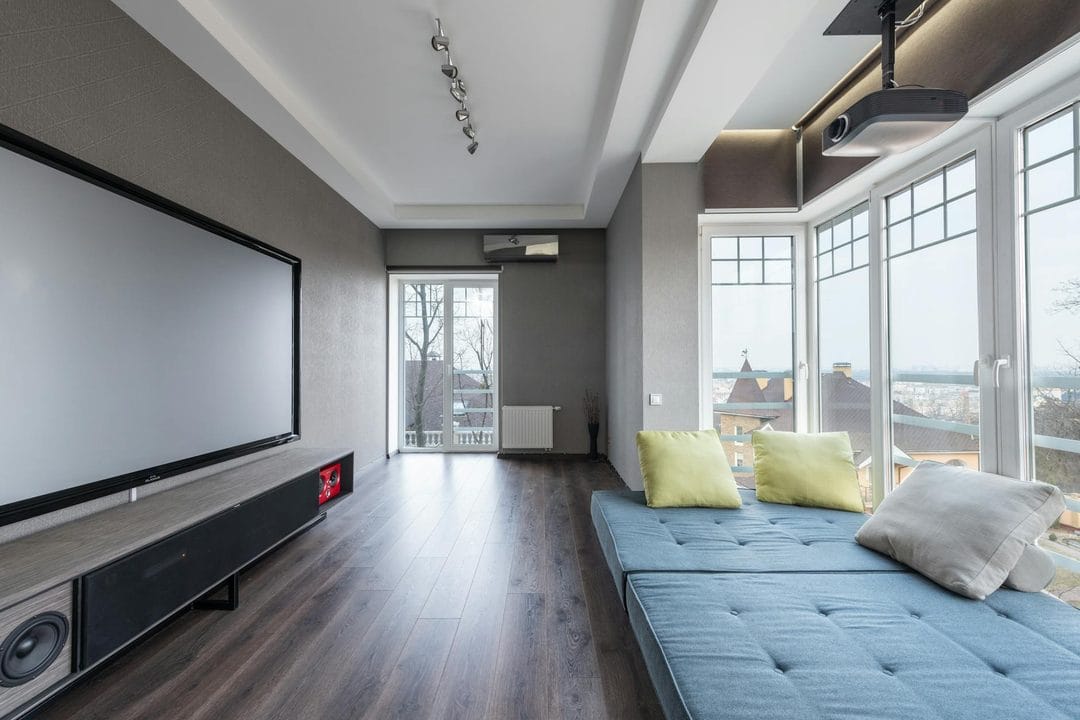
The projector case nobody makes clearly enough
Most men who want a big screen solve it wrong. They buy a 77-inch OLED — good TV, genuinely great picture — and then live with the fact that it's still a 77-inch rectangle bolted to a drywall. The picture is sharp. The room still feels like a room. A 100-inch image from a laser projector costs less, takes up no wall space permanently, and looks better in mixed light than any LCD projector made before 2024. That combination used to come with a catch. It doesn't anymore.
The catch used to be price. In 2022, a halfway decent 4K laser UST (ultra-short-throw) projector started at $3,500. The Hisense PX1-Pro, the Epson LS500 — capable machines, but priced for dedicated home cinema rooms with blackout curtains and a proper screen. By late 2025, that number has dropped. The Hisense PX3-Pro sits at $2,499, the BenQ V5000i at $2,699, and the XGIMI Horizon Ultra 2 — the first truly mass-market 4K laser UST — launched at $1,999 in March 2026. That last one changed the maths.
Laser versus LCD: what actually matters for a living room
The argument for LCD projectors still gets made — they're cheaper, and if you're projecting in a dark room onto a dedicated screen, an Epson EH-TW9400 at £1,800 is a genuinely capable machine. But LCD projectors have a problem most reviews euphemise: they need dark rooms. Not just dimmed rooms. Dark ones. The moment afternoon sun hits the wall, the image washes out to the point where you're watching a pale ghost of what you intended. Laser projectors generate far higher luminance — the XGIMI Horizon Ultra 2 puts out 2,400 ANSI lumens in standard mode; the BenQ V5000i reaches 3,200. That's the difference between needing blackout curtains at 2pm and being able to use the thing on a Saturday afternoon with the blinds half-open.
There's also the maintenance question. LCD lamp projectors need bulb replacement every 2,000–4,000 hours, typically running $150–$300 a lamp depending on the model. Laser light sources are rated at 20,000 hours before meaningful degradation — which, at two hours a day, is roughly 27 years. You'll replace the entire device before you replace the light source. That isn't a minor point; it's the kind of thing that turns a $2,000 projector into a cost-effective choice over a decade.
The other difference is startup time. LCD projectors warm up in 30–60 seconds and require a cool-down period before you move them. Laser is instant — on in three seconds, off immediately, move it if you need to. For a device you want to use casually, that matters.
UST versus standard throw: pick based on your room
Ultra-short-throw projectors sit 6–15 inches from the wall and project a large image upward — it looks like the image appears from nowhere, which is genuinely impressive. Standard throw projectors need 10–12 feet of throw distance for a 100-inch image. Both have their place, and the choice is mostly about your room geometry rather than image quality.
If your sofa is 10–14 feet from the wall, a standard throw 4K laser like the Optoma UHZ50 ($1,799) or the BenQ TK860i ($1,299 — the budget entry point for laser 4K standard throw) gives you excellent image quality at lower cost. Standard throw optics are simpler to manufacture, which is why the price gap between UST and standard throw persists. If you're projecting onto a surface that's within 6 feet of where people sit — a bedroom wall, or a compact living room where furniture placement doesn't allow for throw distance — UST is the only option that makes sense.
One thing worth knowing about UST: they're more sensitive to screen flatness. A slightly bowed drywall that reads fine to the eye shows noticeable geometric distortion on a UST projection. The fix is a proper ALR (ambient light rejecting) screen — the Elite Screens Aeon CLR2 Series starts at $599 for a 100-inch fixed-frame version, and it's worth it. Projecting onto painted drywall works for casual use, but if you're spending $2,000+ on the projector, spend another $600 on the screen.
The models worth considering in mid-2026
The XGIMI Horizon Ultra 2 at $1,999 is the easiest recommendation for most people — 4K, laser, Android TV built in, 2,400 lumens, standard throw. It doesn't have the image quality ceiling of the BenQ V5000i, but for a living room with mixed lighting conditions and no dedicated screen, it's the first laser projector that genuinely replaces a large TV without asking you to redesign the room around it.
The BenQ V5000i at $2,699 is the step up if image quality is the priority — 3,200 lumens, better contrast, a more configurable picture. BenQ's colour calibration out of the box is notably better than XGIMI's, which matters if you watch a lot of film. The Hisense PX3-Pro UST at $2,499 is the choice if you want the ultra-short-throw format and the cleaner furniture arrangement it allows.
Skip the Epson EF-21 and similar "laser" projectors under $1,000. Most of those use laser-phosphor hybrid light sources that deliver far less luminance than their marketing suggests, and they still suffer the same room-lighting limitations as LCD. The 20,000-hour rating is accurate; the usable brightness in real conditions is not.
What the setup actually costs
Budget for the projector, a screen if you're going UST, and either an HDMI streaming stick or a receiver if your setup is more complex. The XGIMI ships with Android TV, so if you're streaming Netflix, Disney+, and Apple TV+, the cable situation is simple — HDMI from a games console or laptop, everything else from the built-in apps. If you're running a full AV receiver with surround sound, budget another $400–$800 for a Denon AVR-X1800H or Yamaha RX-V4A to handle the audio side properly.
Total cost for a competent 100-inch laser setup: $2,599–$3,500 depending on the screen and audio choices. A 77-inch OLED in the same quality bracket — the LG C4 or Sony Bravia 8 — runs $1,800–$2,200 at mid-2026 pricing. The projector setup is more expensive, but it's not dramatically more expensive, and the scale difference is not subtle. Sitting 10 feet from a 100-inch screen versus a 77-inch screen is a qualitatively different experience. Whether that matters is a personal call; the price gap no longer makes the decision obvious.