Air Purifier Buyer's Guide 2026: Why CADR Beats Coverage Claims and a Coway Mighty Still Wins Most Rooms
A purifier sold for 1,800 square feet can be a bedroom machine in disguise. Here is how to size one with CADR and air changes per hour, and which Coway and Blueair models earn their price.
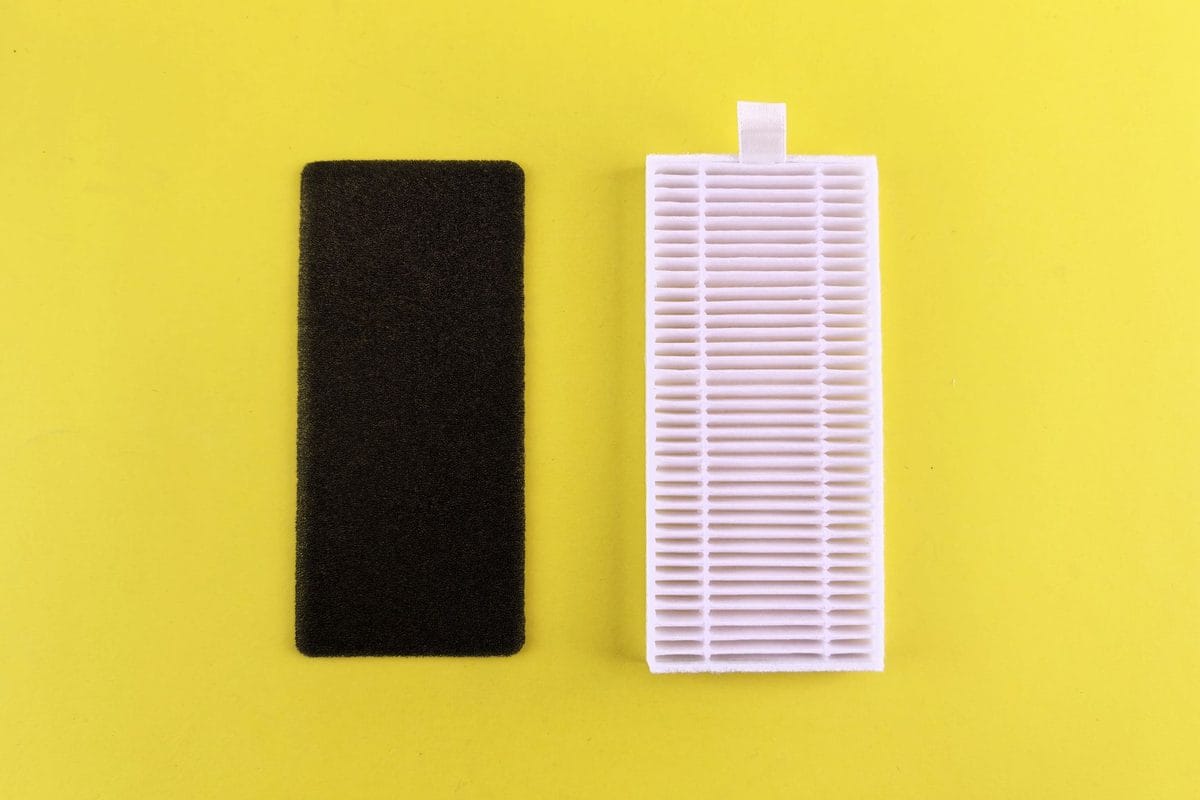
Coway's own product page for the Airmega Mighty says the machine "purifies 1,748 ft² in 60 mins" and, a few lines further down, that it covers rooms up to 361 square feet. Both statements are accurate, and the gap between them explains most of what goes wrong when people shop for an air purifier. The first figure assumes the room's air is swapped once an hour, which is a lazy rate of cleaning; the second assumes it is swapped 4.8 times an hour, which is close to what AHAM's two-thirds rule for a properly sized machine works out to. Box fronts love the big number, so a purifier sold "for up to 1,800 square feet" can turn out to be a bedroom machine wearing a warehouse label.
October is when this matters. In the United States, the American Academy of Allergy, Asthma & Immunology says ragweed pollination now starts in early August in many regions and runs through October, and a single plant can release up to a billion pollen grains. Add shut windows and the heating coming on, and you have a sealed box of air that a correctly sized HEPA purifier can turn over several times an hour. A wrongly sized one just hums and glows.
The one number worth reading on the box
That number is CADR, the clean air delivery rate. It is measured in cubic feet per minute under the Association of Home Appliance Manufacturers (AHAM) test, and it comes as three separate scores for tobacco smoke, dust and pollen. Go by the smoke score: Wirecutter, which has tested more than 70 purifiers over the past decade, points out that smoke particles sit right around the 0.3 micron size that is hardest to capture, so a machine that does well on smoke does better on pollen and dust. AHAM's own rule of thumb is a CADR of at least two-thirds of the room's floor area in square feet, assuming an 8-foot ceiling, so a 10 by 12 foot room (120 square feet) wants a smoke CADR of at least 80. For wildfire smoke AHAM raises the bar to a smoke CADR equal to the room's area. Wirecutter uses a slightly gentler floor of four air changes per hour, which in its testing cleans heavily polluted air quickly and almost completely. Both rules come from the same formula, air changes per hour = CADR × 60 ÷ room volume in cubic feet, and if your ceilings run higher than 8 feet, AHAM says to step up to a model rated for a larger room.
| Room (8 ft ceiling) | AHAM two-thirds rule | Four air changes an hour | Wildfire smoke (AHAM) |
|---|---|---|---|
| 120 sq ft (11 m²) | 80 | 64 | 120 |
| 200 sq ft (19 m²) | 133 | 107 | 200 |
| 300 sq ft (28 m²) | 200 | 160 | 300 |
| 400 sq ft (37 m²) | 267 | 213 | 400 |
The figures are smoke CADR in cubic feet per minute; the four-changes column is calculated from the formula above. If you shop in metric, one cubic foot per minute is about 1.7 cubic metres an hour, so the 233 CFM on the Coway's spec sheet is roughly 396 m³/h.
Four machines, sized with the real number
Prices below are US ones, taken from Coway's store and Wirecutter's retailer listings in early October 2026. UK and EU prices and model availability differ, so check locally before you commit; the sizing maths holds anywhere.
Coway Airmega Mighty (AP-1512HH): the default for bedrooms and living rooms
Coway lists the Mighty at $239.99, and the prices Wirecutter tracks across retailers run from $155 to $240 depending on colour and the week. Its smoke CADR is 233, with 246 for dust and 240 for pollen; 233 × 60 is 13,980 cubic feet an hour, which in a 361 square foot room with an 8-foot ceiling (2,888 cubic feet) gives the 4.8 changes Coway prints on the box. Hold it to Wirecutter's four-change floor and it stretches to roughly 437 square feet, so a large bedroom or a modest living room is comfortable territory. Noise runs from 24 to 53 dB(A), the HEPA filter is rated for a year, the deodorisation filter for six months, and Coway sells the filter set for $59.79. Wirecutter held the Mighty as its top pick for more than a decade, ran test units around the clock for years, and saw virtually no drop-off in performance on year-old filters. Buy this one if you can find it under about $200.
Coway Airmega Mighty2 (AP-1512N): worth the premium for a bedroom
Wirecutter's current top pick costs $270 and moves virtually the same amount of air as the original. What changes is the cost of living with it: 99.8% smoke reduction in half an hour on its highest of four fan speeds, 99.1% on the second-highest speed (which stays under Wirecutter's 50 dB limit), and a measured 48.4 watts at full blast against 68.7 for the original. On the three lower speeds it draws 5 to 20 watts, the ionising function is gone, and the front panel tilts open for the yearly HEPA and VOC filter swap. The catch is control: it has no app version, and the touchscreen panel has no tactile markers, which may be awkward if you have limited dexterity or vision. Pick the Mighty2 if the machine will sit next to your bed and you can stomach $30 more than Coway's list price for the old one.
Blueair Blue Pure 211i Max: the big-room upgrade
Beyond about 450 square feet, the Mighty runs out of road and the 211i Max takes over. Wirecutter says it can deliver four air changes an hour in spaces as large as 750 square feet on its highest setting, which works out to a CADR of around 400, and that it barely breaks 50 dB at full speed and stays at or below 41 dB on the four lower ones. It draws 41 watts on high, 18 on medium-high and 11 on medium-low, and its washable fabric cover doubles as a prefilter. Street prices in Wirecutter's listings ran from $257 at Best Buy to $349 at Amazon, and filters need replacing every six to nine months rather than the usual year. In a bedroom it is overkill, and the cover turns shaggy as hair and dust collect on it.
Blueair Blue Pure 511: the desk and small-room pick
At $75 on sale and $100 list, the 511 is the cheapest machine here that is worth owning. Its smoke CADR is 122, which suits rooms under about 180 square feet, and in Wirecutter's test it cut smoke by 96.9% in 30 minutes on high while staying at 48 dB. Power draw is 1.2, 3.5 and 13.6 watts on low, medium and high, and the filter lasts about six months at roughly $20. It has no app and no auto mode, and it weighs so little that a tugged cable will topple it off a bedside table. Skip the pricier 511i Max, which tested no more powerful.
The sticker price is half the bill
Run a purifier all year and the filters will out-spend the machine. The 511's roughly $20 every six months is about $40 a year, which means five years of filters cost twice what the purifier did even on a $100 list price. Wirecutter makes the same point against Dyson's HushJet Purifier Compact at $350: the five-year filter helps, but you could buy a 511 and five years of filters for under $300. Electricity is smaller: a Mighty2 on its three lower speeds, at 5 to 20 watts around the clock, uses about 44 to 175 kilowatt-hours a year.
Buy genuine filters. AHAM warns that off-brand replacements can fall short of the original's performance, restrict airflow and let allergens back into the room, and its Verifide programme now tests replacement filters against the manufacturer's own.
Claims to skip
Start with coverage numbers that ignore air changes. Wirecutter's testers noted that Sans advertises coverage "up to 1,854 square feet" with a CADR of 235, which at four air changes an hour (235 × 60 ÷ 32) covers about 440 square feet, roughly a quarter of the headline. The Canopy Bedside purifier has a CADR below 50 and is adequate only for about 90 square feet, even on its highest setting. IKEA's Förnuftig is not a true HEPA unit and removed just 85.2% of 3-micron particles in 30 minutes on high in a 200 square foot room, with 0.3-micron performance worse still.
On the HEPA label itself: in North America, true HEPA means at least 99.97% of 0.3-micron particles captured in a single pass, and the European H13 grade asks for 99.95% at the most penetrating particle size. Treat either as a prerequisite. Ionisers are the other thing to switch off: Wirecutter finds their efficacy unclear and notes that they release trace amounts of ozone, and it dismisses purifiers that rely on ozone entirely.
Setting it up so the maths holds
Placement and habits matter as much as the model. Wirecutter's setup advice is short:
- Take the plastic wrapping off the filters before you reinstall them; they usually ship sealed.
- Leave at least 12 inches between the machine and any wall or furniture, ideally near the midpoint of the room.
- One purifier per room works best, with doors and windows closed, since a draft or an open door can pull unfiltered air in faster than the machine can clean it.
- Run it around the clock on Auto, or on the highest setting that stays at or below 50 dB, which is usually medium on a three-speed unit.
- Vacuum, wipe or rinse the prefilter about once a month, and put the filter change in your calendar.
So will it fix a dusty house? No. Once particles have settled on floors and surfaces a purifier cannot lift them, and walking around stirs them up again, so a vacuum cleaner or a damp dust mop is still the tool for that job. Gaseous pollutants such as paint fumes and gas-stove emissions are a different problem as well, since only a handful of specialised purifiers deal with them. Wirecutter's answer for most households is the free one: open the windows every few days to flush out VOCs, even though pollen season argues for keeping them shut at other times.
This weekend
Measure the room, multiply length by width, and take two-thirds of the result as your minimum smoke CADR, or the full floor area if wildfire smoke is a worry where you live. Pick the cheapest machine on the shortlist above that clears that number with some room to spare, because manufacturers rate coverage on the highest, loudest setting and a bigger purifier can run quietly on a lower one. And on the day you plug it in, set a reminder for the filter: a Mighty started on 4 October wants its HEPA replaced around 4 October 2027.