The 2026 Smart Thermostat Buyer's Guide for Men: Why an ecobee Beats a Nest for Most Houses, and the Wire That Decides It
Before you compare apps, check for a C-wire behind your old thermostat. It decides whether the $139.99 ecobee Essential, the $259.99 Premium or the Nest Learning Thermostat is the right buy this heating season.
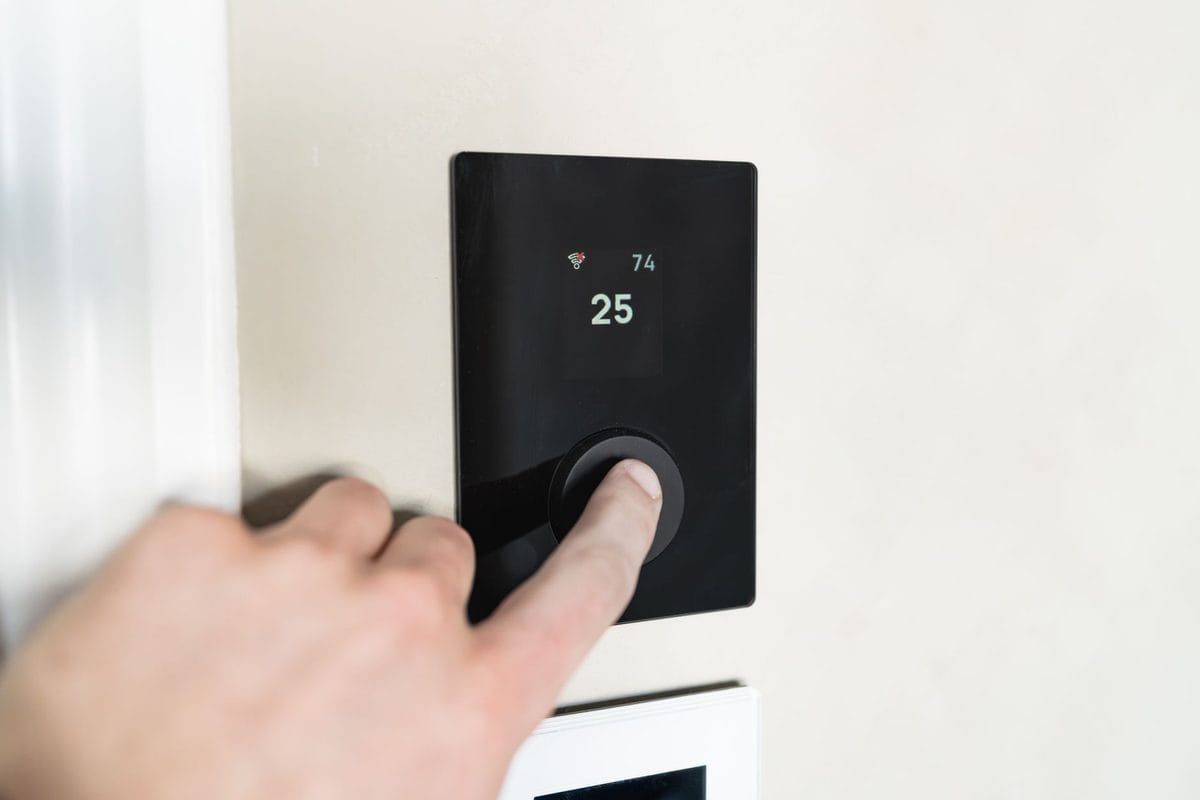
Heating and cooling take almost half of the average American household's annual energy bill, more than $900 a year according to ENERGY STAR. The device that decides when that money gets spent is a small box on the hallway wall that most of us haven't looked at since the clocks last changed. October is when it starts to matter, because the furnace is about to run every morning, and a smart thermostat is one of the few upgrades you can finish before lunch with a screwdriver and a phone. The catch is that the wire behind your old thermostat decides which models you can install without extra parts, and that matters more than the app, the display or the voice assistant. CNET's September 2026 roundup lists five of its six picks as needing a common wire, usually called the C-wire, with the Nest Learning Thermostat as the lone exception. Prices below are list prices from ecobee's and Google's own stores in early October 2026 (the Amazon model's price comes from CNET and Wirecutter), and the testing comes from Wirecutter and CNET, so you can check every claim yourself. Where a manufacturer's number is a marketing claim rather than a measurement, the text says so.
Check the wire before you check the price
The C-wire carries the constant low-voltage power that a Wi-Fi radio, a color screen and a room sensor need. Old programmable thermostats got by on a trickle from the heating wire, so plenty of houses were never wired for anything more. Here is the quick check, and it costs nothing:
- Switch off power to the furnace or air handler, at its wall switch or the breaker, and make sure the old thermostat's screen goes dark.
- Pull the faceplate off its wall plate and photograph the wires before you touch any of them.
- Go by the letters stamped beside each terminal rather than wire colors, and look for a wire sitting under C.
- Wires labeled for 120 volts or more point to electric baseboard heat or an older electric furnace, which is a different job entirely.
If the C terminal is empty, CNET lays out two ways around it: buy a thermostat that doesn't need the wire, or fit an adapter kit that turns one of your existing wires into a C-wire. ecobee sells its Power Extender Kit for $24.99 and says it allows installation in most homes without a C-wire. Google's Nest Learning Thermostat takes the other route, topping up its battery from the remaining wires through what Google calls Power Sharing, so no C-wire is needed in most homes. Wirecutter's review adds a warning that is easy to overlook: Nest says its thermostat technically doesn't require the C-wire, but running without one "may risk damaging some types of sensitive modern HVAC systems," and Wirecutter recommends using the wire whenever you have it. Baseboard owners are a separate case, because Wirecutter notes most smart thermostats don't support electric heating at all; its pick there is the Mysa Smart Thermostat (v2) at $127, which can't control cooling.
What each one costs and what's in the box
| Model | List price | Sensor in the box | Wire situation |
|---|---|---|---|
| ecobee Smart Thermostat Essential | $139.99 | None | Needs a C-wire; adapter kit ($24.99) and trim plate ($14.99) sold separately |
| ecobee Smart Thermostat Enhanced | $199.99 | None | Adapter kit and trim plate included |
| ecobee Smart Thermostat Premium | $259.99 | One SmartSensor (temperature and presence) | Adapter kit and trim plate included |
| Google Nest Learning Thermostat (4th gen) | $279.99 ($239.99 on sale through October 12) | One Nest sensor (temperature only) | No C-wire needed in most homes |
| Amazon Smart Thermostat | $80 | None | Needs a C-wire |
The ecobee Enhanced is the odd one out in the lineup, and the arithmetic explains why it exists. An Essential at $139.99 plus the $24.99 adapter and the $14.99 trim plate that hides the scuffs your old thermostat left behind comes to $179.97, which is $20.02 under the $199.99 Enhanced. For that gap the Enhanced adds a glass lens ecobee describes as 50 percent larger and puts both parts in the box. If you already have a C-wire and don't mind a few marks on the drywall, the Essential is the cheapest way into ecobee's app; if you're missing the wire and want a tidy wall, the Enhanced is the better value than assembling the Essential from parts.
Why the ecobee wins most houses
The sensor is the whole argument.
Wirecutter ran its picks for months on a heat-pump system in a roughly 1,500-square-foot, three-level house, and the ecobee Smart Thermostat Premium kept that house more consistently comfortable than any other model, which Wirecutter credits partly to the way it factors in indoor humidity when it adjusts the set point. The included SmartSensor reads temperature and also detects whether anyone is in the room, so the thermostat can favor the room you're sitting in instead of the hallway where it happens to hang. Nest's sensors, including the one in the 4th-gen box, read temperature only, which means you end up scheduling which room should win at which hour, or in Wirecutter's words, fighting the battle of the thermostat settings against yourself. That gap matters most in a house with one stubborn room, like a bonus room above the garage or a basement office that is always five degrees off. It matters much less in a small, open-plan place where one reading from the hallway is close enough to everywhere, and in that case the sensor is money spent on a problem you don't have.
Longevity is the second reason. On October 25, 2025, Google cut remote control, notifications and app connectivity for the first- and second-generation Nest Learning Thermostats, released in 2011 and 2012, leaving them as manual thermostats that still heat and cool but no longer talk to a phone. Later this month marks a year since that switch-off. Wirecutter, for its part, notes that ecobee still provides tech support for even its earliest models. A thermostat should outlast two or three phones, so that record counts for more than a nicer dial.
The ecobee isn't flawless, and Wirecutter says so. Its editor waited 30 minutes on hold while troubleshooting an ecobee that wouldn't connect to the internet, got a callback hours later, and a week later received an email closing the case without a fix (the thermostat eventually sorted itself out). The Premium also started badly on a heat pump: it changed temperatures too drastically at first, which kept the system running almost nonstop until the reviewer tuned it by hand, and after that it ran without incident for nearly a year and a half.
Buy the Premium at $259.99 if even one room never matches the rest, because it ships with the one sensor that can do something about it. Wirecutter puts the cost of adding ecobee sensors to an Essential at about $100 for a two-pack, so an Essential with sensors lands around $240, and you save very little by starting cheap if you already know you want them. If the temperature is the same upstairs and down, the Essential does the job. Skip the Premium's built-in speaker as a selling point, since the thermostat's real job is the sensor and the schedule, and you can switch Alexa off entirely in the app.
When the Nest is the better call
Buy the Nest Learning Thermostat if you have no C-wire and would rather not wire an adapter at the furnace, or if your phone, speakers and doorbell already live in the Google Home app. It lists at $279.99, with a $40 discount to $239.99 running on the Google Store until October 12, includes one sensor, and supports up to six, with extras at $39.99 each. Google says it works with most 24-volt systems and is Matter-certified, so it also answers to any Matter-compatible app, and Wirecutter agrees it's the easiest thermostat to set up. The trade-off is the learning itself. Wirecutter's reviewer found the AI overrode temperature preferences often enough to need manual correction, sometimes several times a day, even after turning off geofencing and the learning features, though Nest suggested an Auto-Eco setting was still switched on. The reviewer also said people who want to fine-tune comfort or savings will end up adjusting settings by hand. For a device sold on being forgettable, that is a real cost, and it is the main reason the ecobee gets the first recommendation here.
The $80 Amazon Smart Thermostat, made by Resideo's Honeywell Home brand, is a reasonable pick for a rental or a spare house. It needs a C-wire per CNET, has no remote sensors beyond a workaround using some Echo speakers, and Wirecutter's privacy notes say Amazon may share some personal data with third parties. For the main house, spend the extra $60 on an ecobee.
What it saves, and the setback trap
ENERGY STAR's figure for certified smart thermostats is an average of about 8 percent off heating and cooling bills, roughly $50 a year, and around $100 a year for homes with high bills. The numbers on the boxes are bigger: ecobee advertises up to 26 percent for its Enhanced and Premium, and Google claims up to 31 percent, but those are best cases, not forecasts for your house. At the $50 average, the $139.99 Essential pays for itself in under three years, while the $259.99 Premium takes a little over five, and a utility rebate shortens either one. Google says the 4th gen qualifies for energy-provider rebates, and ENERGY STAR's product finder is the place to look, so check before you pay full price.
The one setting that can wipe out those savings is the overnight setback. The Department of Energy estimates you can save up to 10 percent a year by dropping the temperature 7 to 10 degrees for eight hours a day, but heat pumps and radiator systems recover slowly, and a setback that deep can leave them running nonstop trying to catch up, which cancels the savings. HVAC experts quoted by Wirecutter suggest limiting the setback to three or four degrees. If you heat with a heat pump, cap the overnight drop at that range on day one and revisit it in January, once you have a real bill to compare against last year's.