The Weather Stations Weather Nerds Actually Use
Home weather stations are a surprisingly deep hobby. Here's what actual weather enthusiasts buy after years of use.
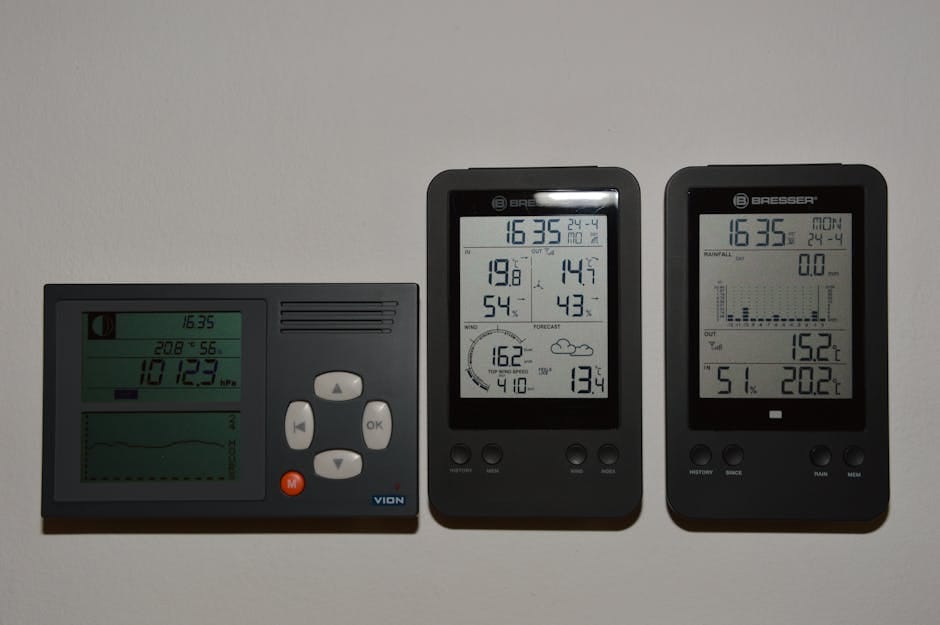
Home weather stations are a niche hobby that overlaps with tech enthusiasm. Some people want to monitor their microclimate accurately. Others want to contribute data to networks like Weather Underground. A few really want to know if they should close their windows right now.
The category ranges from $50 toys to $2,000 research-grade equipment. Most people who buy at the low end are disappointed; most who buy at the high end over-invest. The sweet spot for accurate, reliable, home-user weather data is between $200-500. Here's what to know.
Tempest Weather System — $359
The most innovative entry-level weather station. No moving parts — uses a haptic sensor for wind (instead of an anemometer cup) and a disdrometer (instead of a rain gauge).
Integration: excellent mobile app. Works with Alexa, Google Home, HomeKit, and other smart home platforms. Dashboards show your local weather plus forecasts.
Durability: extremely low maintenance. No moving parts means nothing jams, breaks, or needs lubrication. Bird-resistant design.
Accuracy: reasonable for home use. Not research-grade but sufficient for most curiosity.
The Tempest is the right pick for users who want a "set it and forget it" weather station with good app integration.
Ambient Weather WS-2902D — $179
The value king of home weather stations. Traditional cup anemometer and tipping-bucket rain gauge. Temperature, humidity, barometric pressure, UV index, solar radiation, wind direction/speed, and rain.
Connects to Wi-Fi. Integrates with Ambient Weather Network for accessing your data online. Optional integration with Weather Underground for contributing data.
Limitations: the anemometer is less accurate than premium options. Rain gauge requires cleaning occasionally.
For $179, it delivers surprising completeness of weather data. A serious upgrade from basic indoor/outdoor thermometers.
Davis Vantage Pro 2 Plus — $1,199
Professional-grade station used by meteorologists and serious hobbyists. Modular design — start with basic sensor suite, add others over time. UV, solar, leaf wetness, soil moisture all available as add-ons.
Accuracy: research-grade. The anemometer is calibrated professionally. The rain gauge handles heavy rain without overflow issues.
Durability: industrial. Built to survive decades of weather.
For serious weather enthusiasts who want accurate long-term data, this is the system. Not necessary for casual users.
WeatherFlow Tempest 2 — expected 2026
Rumored second-generation Tempest. Expected improvements in sensor accuracy and app features. If launching in 2026, may be worth waiting if buying a Tempest.
Ambient Weather WS-5000 — $499
Step up from the WS-2902D. More accurate sensors. Better displays.
Worth the $300 premium over the 2902D for users who specifically want more accurate data but don't need professional-grade accuracy.
What the data actually tells you
A weather station provides hyperlocal data. The 5-foot forecast for your backyard, not the regional airport forecast that news channels use.
Practical uses:
- Deciding whether to bike to work based on real current wind speed at your location.
- Knowing exactly how much rain your garden got.
- Tracking whether your AC bill reflects your microclimate (significantly colder or hotter than regional reports).
- Contributing to weather networks (Weather Underground, Ambient Weather) that use citizen data for hyperlocal forecasting.
For weather-curious people, the data is genuinely useful. For casual users, general weather apps provide enough information without the investment.
Setup considerations
Weather station placement matters enormously for data quality.
The ideal location
- At least 5 feet above ground (for temperature sensors).
- Clear of buildings, trees, and structures (for anemometer accuracy).
- Away from heat sources (HVAC exhaust, driveways).
- North-facing when possible (for rain collection without shelter from buildings).
Most residential setups fall short of ideal placement. That's fine for casual use; accept that your wind speeds are biased by neighboring structures.
Mounting options
Roof mount: best for wind accuracy but requires going up on roof for maintenance.
Pole mount: 10-foot pole in yard is a reasonable compromise.
Deck/railing mount: easiest but most affected by local structures.
For serious accuracy, a tall pole in an open area is best. For convenience, a railing mount is easiest.
Data access
Built-in display
Most stations include an indoor display that shows current data.
Mobile app
Check real-time and historical data on your phone.
Web dashboard
Online portals (Ambient Weather Network, Tempest Web) let you view historical trends, compare to nearby stations, and share data publicly.
API / Data export
For enthusiasts who want to do their own analysis, most stations offer data export via API or CSV download.
Contributing to citizen weather networks
Weather Underground: the largest amateur weather network. Your station's data contributes to hyperlocal forecasting.
CWOP (Citizen Weather Observer Program): NOAA's network for volunteer weather observations. Data is used in operational weather forecasting.
Contributing is free and satisfying for users who want their data to have broader impact beyond their own interest.
What to skip
Skip weather stations under $100. The sensors are toys. Temperature readings are inaccurate. Wind measurements are meaningless.
Skip "wireless" stations that claim to transmit data without setup. If a station doesn't need setup, it's not measuring reliably.
Skip stations without proper mounting hardware included. Ad-hoc mounting leads to inaccurate readings.
Skip cellular-only stations that require monthly subscription. The ongoing cost doesn't justify the benefit over Wi-Fi-connected stations.
Maintenance
Most sensors need occasional cleaning:
- Rain gauge: clean every 6 months. Remove debris and recalibrate if necessary.
- Anemometer: check monthly for bird nests or spider webs.
- Solar panel (if equipped): clean quarterly for optimal charging.
- Temperature/humidity housing: inspect annually for deterioration.
Tempest's moving-part-free design is significantly lower maintenance than traditional stations. For users who don't want to maintain a station, Tempest wins.
Battery life
Most stations are solar-powered with small internal batteries. Proper sun exposure means indefinite operation.
For stations in shaded locations, batteries need periodic replacement (every 1-3 years).
Some stations have hardwired power options. For permanent installations, hardwired is more reliable long-term.
The smart home integration angle
Home Assistant and similar smart home platforms can integrate weather station data for automations:
- Turn off sprinklers if it's raining.
- Alert when wind speeds are too high for patio umbrellas.
- Adjust HVAC based on microclimate vs indoor temperature.
- Close smart blinds on hot days.
For users with established smart homes, the weather station becomes another data input for intelligent decisions.
The enthusiast rabbit hole
Weather stations are a legitimate hobby. Online communities (Weather Underground forums, Tempest users, r/weatherstations) discuss optimal placement, sensor calibration, data analysis.
Getting deep into the hobby can consume time. Most users enjoy the general data without spending weekends calibrating anemometers.
Know yourself. Casual weather curiosity: Tempest for simplicity. Serious enthusiasm: Davis Vantage Pro 2 Plus. Budget interest: Ambient Weather WS-2902D.
Who weather stations are for
Gardeners who want exact rainfall data.
Pilots and sailors who want microclimate wind data.
Cyclists who want hyperlocal weather before rides.
Data enthusiasts who enjoy logging and analyzing personal data.
Smart home hobbyists who want another input for automations.
Solar panel owners who want to correlate production with weather.
For most other people, a weather app is sufficient.
The purchase decision
If you've read this far, you're probably at least weather-curious. The Tempest Weather System at $359 is the right entry point for most users. Easy setup, good app, no maintenance. Used for years without complaint.
If budget is a constraint: Ambient Weather WS-2902D at $179 is legitimate and provides most of the data without the premium features.
Skip the cheap toys entirely. They disappoint and give the category a bad name.
Weather stations are the kind of hobby that makes sense for a specific kind of person. If that's you, the investment is justified for years of hyperlocal awareness and data. If it's not you, no amount of marketing will make it make sense. Know which you are.