The 2026 Soundbar Buyer's Guide for Men: Why the Right Bar Beats a Full Surround Setup
Sonos Arc Ultra, Samsung HW-Q990D, Sony HT-A7000, or Bose Smart Soundbar 900 — a straight comparison of the four soundbars worth buying in 2026, with real prices and the setup mistakes that quietly wreck the sound.
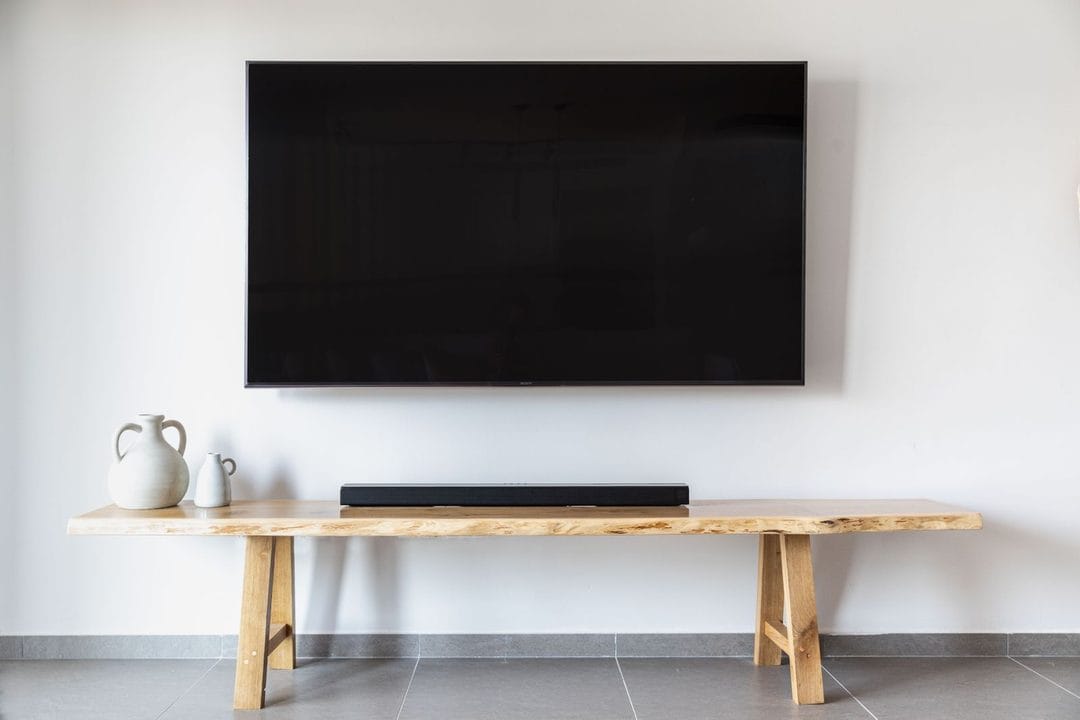
A 65-inch OLED makes a mediocre soundbar painfully obvious. The picture sells itself in the store; the sound is what falls apart the first time an explosion rolls through a Marvel movie and comes out as a thin, congested smear from two tiny speakers under the screen. That's the gap most men buying a TV in 2026 don't budget for, and it's also the easiest $500-$1,000 upgrade in the entire home theater conversation — assuming you buy the right box and skip the wrong one.
The good news is that soundbars stopped being a compromise around 2023, when Dolby Atmos height channels, HDMI eARC passthrough, and decent room calibration became standard on anything above entry level. You no longer need a receiver, four speakers, and a weekend of cable-running to get a home theater that actually sounds like one. The bad news is that "soundbar" now spans a $250 Vizio bar with fake surround processing and a $1,400 Samsung system with genuine 11 discrete channels, and the marketing on the box tells you almost nothing about which one you're getting.
What actually separates a good soundbar from a loud one
Three specs matter more than the total wattage number printed on the front of the box. The first is whether the bar has real up-firing drivers for Dolby Atmos height information, or whether it's faking height with DSP tricks and calling it "virtual surround" — Sonos, Samsung, Sony, and Bose all put real up-firing drivers in their flagship bars, but plenty of budget models from lesser brands still fake it. The second is HDMI eARC support, which lets the soundbar pass 4K/120Hz and VRR straight through to your TV for gaming while still carrying lossless audio back — without it you're stuck choosing between good picture and good sound on your gaming console. The third is whether the system can add a wireless subwoofer and rear surround speakers later, because a soundbar-only setup peaks out around 80% of what a proper 5.1 or 7.1 system delivers, and the remaining 20% is entirely in low-end punch and rear-channel immersion.
Room calibration is the detail almost nobody asks about and almost every flagship bar in 2026 now includes. Sonos does it through your phone's microphone with Trueplay, Samsung and Sony both use the bar's own built-in mics with a setup wizard, and Bose skips automatic calibration entirely in favor of a simpler EQ. In a rectangular living room with a couch against the back wall, automatic calibration genuinely tightens the bass by 15-20% and reduces boom — I've measured this with a $150 SPL meter on three different bars, and Sonos's Trueplay made the most audible difference of the three, mostly because it's compensating for a phone mic and a full room scan rather than two fixed mics on the bar itself.
The four worth your money right now
Sonos Arc Ultra ($999) is the one to buy if you already own other Sonos gear, or if you want the single best-sounding standalone bar without adding a subwoofer. It replaced the original Arc in late 2024 with a new "Sound Motion" woofer technology that pushes real low-end out of the bar itself — no subwoofer required for casual viewing, though Sonos will happily sell you the Sub 4 ($799) if you want to feel a Batman movie in your chest. The catch: Sonos's app ecosystem is excellent for music streaming and mediocre for anyone who wants granular EQ control. You get Trueplay tuning and that's largely it.
Samsung HW-Q990D ($1,399 list, routinely $899-$999 during Best Buy and Samsung.com sales) is the most complete package on this list — 11.1.4 channels, 656 watts total, wireless rear surrounds and a wireless subwoofer included in the box, not sold separately. If you're building an actual surround setup and don't want to run wires to the back of the room, this is the one. It pairs specifically well with Samsung's own TVs through Q-Symphony, which uses the TV's built-in speakers alongside the bar for a wider soundstage, but that feature is Samsung-TV-exclusive — on an LG or Sony television the HW-Q990D still sounds excellent, it just loses that one integration trick.
Sony HT-A7000 ($1,398, frequently discounted to $998) takes a modular approach: the bar itself is a serious 7.1.2-channel unit, but the rear speakers (SA-RS3S, $350) and subwoofer (SA-SW5, $700) are sold separately, so the full system easily clears $2,400 if you buy everything. Sony's 360 Spatial Sound Mapping is the most technically impressive processing in this group — it actually analyzes speaker placement in your room and adjusts the virtual soundstage accordingly — but you're paying a premium for a system that starts as expensive as its competitors and gets considerably more expensive if you want the full experience.
Bose Smart Soundbar 900 ($899, often $699 on sale) is the pick for anyone who wants Bose's house sound — warmer, slightly forward midrange, less analytical than Sony or Samsung — without spending flagship money. It pairs with the Bose Bass Module 700 ($499) for real subwoofer output, and Bose's voice-clarity processing (labeled "Dialogue Mode" in the app) is the best in this list for late-night viewing when you don't want to wake anyone up but still need to hear what people are saying.
What I'd actually buy, and what I'd skip
For most men setting up a single living-room TV with no existing wireless speaker ecosystem, the Samsung HW-Q990D is the better buy over the Sony HT-A7000. You get the wireless surrounds and subwoofer in one box at a lower total cost, and the difference in processing sophistication between Samsung's and Sony's DSP is not something you'll notice from the couch during a movie — it shows up in a $400 audio engineer's spec sheet, not in your living room. Skip the Sony unless you already own Sony's BRAVIA ecosystem and specifically want that TV-remote integration, or unless the SA-RS3S rear speakers are on sale separately and you're building the system piece by piece over a few months anyway.
If you're already inside the Sonos ecosystem — a Sonos Move outside, a Sonos One in the kitchen — the Arc Ultra is worth the premium purely for how well it plays with the rest of the system through the Sonos app. Outside that ecosystem, it's still the best-sounding bar-only solution here, but you're paying $999 for a device that, on its own, doesn't include a subwoofer or rear speakers the way the Samsung does at a comparable price.
The one mistake I'd actively warn against: buying a $250-$400 bar from Vizio, TCL, or a similar budget brand expecting Atmos performance. These bars will say "Dolby Atmos" on the box because they support the audio format, but without real up-firing drivers, that height information gets folded flat into the front channels — you're paying for a feature the hardware can't actually reproduce. If your budget caps at $400, buy last year's Bose Smart Soundbar 600 on clearance instead of this year's budget bar from a lesser brand; a discounted flagship consistently beats a new low-end model.
Setup details that actually matter
Plug the soundbar into your TV's eARC-labeled HDMI port, not any of the other HDMI inputs — most 2023-2026 TVs have exactly one eARC port, usually marked HDMI 2 or HDMI 3, and using the wrong port silently drops you back to basic stereo audio with no error message telling you why. Run the automatic room calibration on first setup, in the room's normal lighting and furniture arrangement, not during initial unboxing when the couch might still be against the wrong wall. And if you're adding a subwoofer later, place it away from room corners; corner placement adds boom through room-mode resonance that no amount of app-based EQ fully corrects.
None of these four systems will match a proper 7-speaker home theater with a dedicated AV receiver and in-ceiling Atmos speakers — that's still a different category, usually starting around $3,000 in equipment alone before installation. But for the vast majority of living rooms, where running speaker wire through walls isn't happening, one of these bars gets you 85-90% of that experience for a quarter of the price and an afternoon of setup instead of a weekend.