The Best Espresso Machines for Men Who Take Coffee Seriously
The espresso machine category is full of pod systems and underwhelming semi-autos. Here are the machines that actually make good espresso.
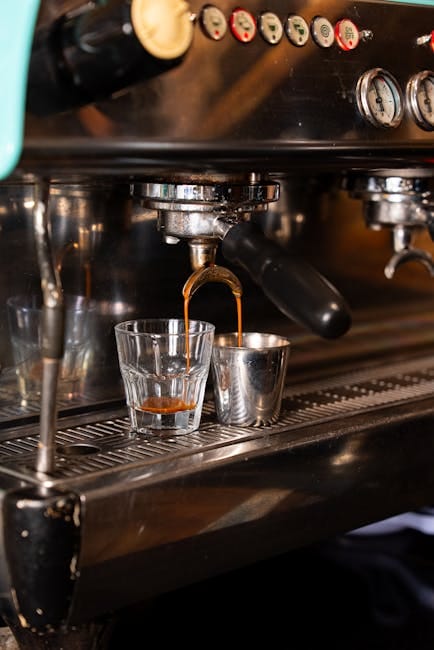
The coffee pod systems — Nespresso, Keurig, Illy — make serviceable coffee with zero effort. If you don't care about the process, one of those is the right answer. But if you've ever had a properly pulled espresso at a good cafe and wondered why your home coffee doesn't taste like that, you're in a different conversation. Home espresso done right is a skill and a hobby. It also requires hardware that most "espresso machines" in the $200-500 range can't actually deliver on.
Here's the honest hierarchy of home espresso machines, what each tier actually gets you, and where the diminishing returns start.
Understanding what matters
Three technical requirements separate a machine that can pull real espresso from a machine that pretends to:
Stable brew temperature: Espresso extraction wants water between 90-96°C (194-205°F), held within one degree during the 25-30 second pull. Cheap machines overshoot or undershoot. The $400 SOLO models use PID temperature controllers. Below that, the water temperature wanders.
9 bar of pressure at the puck: The pump has to deliver 9 bar of actual pressure at the coffee puck, not 9 bar at the pump head. Cheap machines advertise 15 bar (more is better, right?) but under-deliver at the puck due to line losses. Proper machines achieve 9 bar through adjustable OPVs (over-pressure valves) or pre-infusion.
Adequate grouphead thermal mass: The metal group head that the portafilter locks into needs enough mass to maintain temperature during extraction. Cheap machines have thin aluminum groups that cool rapidly. Serious machines have brass or E61-style groups with 1-4 pounds of brass maintaining temperature.
Any machine that doesn't deliver on all three of these produces inferior espresso regardless of the beans and grinder. Keep this framework in mind as you shop.
The entry tier: $400-800
Breville Bambino Plus — $499
The best entry-level home espresso machine sold today. PID-controlled thermoblock, 3-second warmup, 9-bar pre-infusion, and auto-milk texturing. Small footprint, which matters in a real kitchen.
The Bambino Plus gets you 80% of the way to proper espresso for a quarter of the price of a prosumer machine. The coffee won't be quite as rich or as consistent as what a $2,000 machine produces, but it's genuinely good — better than most cafes make for you.
Recommended starting point for anyone wanting real home espresso. If you don't love the process after a year, you haven't lost much. If you do love it, you'll want to upgrade eventually, and the Bambino Plus holds its resale value well.
Gaggia Classic Pro — $499
The alternative entry-level machine. Older design, all-metal construction, no PID (factory), but completely modifiable. The Gaggia Classic Pro is the beginner's gateway to the espresso community — there are hundreds of pages of forum advice on how to tune it, swap PIDs, adjust OPV.
For the mechanic's type of espresso enthusiast, the Gaggia is the pick. Lower ceiling than the Bambino out of the box, but higher ceiling with modifications.
If you just want good espresso without tinkering: Bambino Plus. If you want to learn to work on the machine: Gaggia Classic Pro.
The midrange tier: $800-1,500
Breville Barista Express Impress — $899
Grinder built in. Dose-control puck preparation. PID control. Thermoblock warmup still. For people who want one appliance on the counter instead of a separate machine and grinder.
The built-in grinder is the compromise — it's decent but not great. Below the quality of a dedicated $400-500 grinder. But for kitchen space reasons, it's the practical choice for people who won't dedicate counter space to two machines.
Rancilio Silvia — $895
The classic single-boiler home espresso machine. All-metal construction, real E61-style brass grouphead (with extra thermal mass vs plastic group heads), real steam wand for milk texturing.
The Silvia requires skill. No PID control out of the box (a third-party PID add-on is $150 and highly recommended), manual temperature management between shots and steaming, and a learning curve.
Reward: once you master it, the Silvia produces espresso indistinguishable from machines twice its price. It's a 20-year-old design that's still in production because it works.
The prosumer tier: $1,500-3,000
Breville Dual Boiler (BES920XL) — $1,499
Dual boiler (one for brew, one for steam) means you can pull espresso and steam milk simultaneously. For anyone who makes milk drinks, this eliminates the timing shuffle that defines single-boiler ownership. PID temperature control across both boilers.
The Breville Dual Boiler is the best home espresso machine under $2,000 for people who want convenience plus quality. Not quite as bulletproof as commercial machines, but excellent coffee at the price.
Rocket Appartamento — $1,895
Italian-made commercial-grade E61 grouphead heat exchanger machine. Beautiful chrome and stainless design that looks like a showroom piece. Heat exchanger means you can pull shots and steam milk from the same water supply (not simultaneously like a dual boiler, but with minimal delay).
The Rocket design language is iconic — polished stainless, chrome details, a proper manual lever machine vibe even though it's pump-driven. It's a joy to use. Cleaning is straightforward. Repair is possible for decades because it's a traditional design.
The luxury tier: $3,000+
ECM Synchronika — $3,500
German-made dual boiler with everything: rotary pump option, PID control, E61 grouphead, PID-adjustable steam boiler. The engineering is meticulous. Parts availability is excellent.
Serious hobbyists consider the Synchronika the best dual boiler home machine available. It's the last machine you'd need to buy.
La Marzocco Linea Mini — $6,200
A miniaturized version of the same machines found in commercial cafes worldwide. Made in Florence, Italy. Built to last 30+ years with proper maintenance.
This is professional-grade equipment in a home-friendly footprint. For people who would genuinely rather have a Linea Mini in their kitchen than a nicer car, the math works. For everyone else, it's overkill by a wide margin.
The grinder reality
The grinder is at least as important as the machine. A $3,000 espresso machine paired with a $150 grinder produces worse coffee than a $500 machine paired with a $500 grinder.
Target grinders for home espresso:
- Entry: Baratza Sette 270 ($549). Single-dose friendly, stepped adjustment but fine enough.
- Midrange: Eureka Mignon Specialita ($669). Stepless adjustment, excellent build quality.
- Prosumer: Niche Zero ($799) or Mazzer Mini ($899). Professional-grade for home use.
Plan to spend roughly equal amounts on the machine and grinder. A $500 machine + $500 grinder gives better results than a $1,000 machine + $100 grinder.
The beans and water
Fresh beans matter enormously. Buy from a local roaster or a specialty subscription (Trade Coffee, Counter Culture). Use beans within 2-3 weeks of roast date.
Water composition affects taste. Third Wave Water packets ($15 for 12) or RO-filtered water with mineral additions produce noticeably better espresso than tap water in most areas.
These aren't snob preferences. The difference is clearly audible in blind tastings even for non-coffee-nerds.
What to skip
Skip Nespresso for espresso pretensions. Nespresso is fine coffee — it's not espresso. The crema is produced by a small tube pushed through the pod, not by true emulsion. Drink Nespresso and enjoy it, but don't kid yourself that it's the same thing.
Skip pump machines under $200. The physics don't work at that price. The pumps aren't powerful enough, the group heads aren't thermal enough, and the pressure delivery isn't consistent. It's playing a video of espresso.
Skip "Keurig-style" espresso machines. Same issue — the pods don't pack enough coffee or allow enough pressure for real extraction.
Skip "super-automatic" machines that grind and brew in one cycle unless convenience genuinely matters more than coffee quality. The quality is lower than a proper prosumer setup but the convenience is high. Trade-off decision.
The time investment
A proper espresso setup requires daily maintenance (backflushing, wiping down the steam wand, keeping the grinder clean) plus a learning curve of weeks to months to consistently pull good shots. The process is part of the enjoyment for many owners. For others, it's friction.
If you want coffee in 20 seconds without thought, pod machines or drip coffee is the right answer. If making the coffee is part of the ritual, espresso is satisfying.
Be honest with yourself about which you are. The people who buy serious espresso machines and don't use them are a common pattern. So are the people who buy one and drink better coffee than any cafe for the next 15 years.
The upgrade path that actually works
Start with the Breville Bambino Plus at $499. Pair with a Baratza Encore ESP grinder at $199. Total: $698. Use this setup for a year. Learn the dynamics of dose, grind, time.
If you're still interested, upgrade the grinder first (Eureka Mignon Specialita at $669). Keep the Bambino Plus for another year while you dial in the grinder.
Then, if you're still invested, upgrade the machine to a Breville Dual Boiler at $1,499 or Rocket Appartamento at $1,895. Now you have a setup that will produce better coffee than 95% of cafes for the next decade.
This path spreads the $3,000+ investment across 2-3 years, lets you discover whether you're actually committed, and means every upgrade is used on coffee you're already happy with. Unlike jumping straight to a La Marzocco, you don't risk $6,000 on a hobby you might quit in six months.
Good home espresso is achievable and rewarding. The equipment you need exists at reasonable prices. The hobby has depth that rewards years of attention. But like most serious hobbies, the floor is higher than people expect. Start with the right entry-level machine. Skip the pretenders. The coffee is the point.