Best Home Theater Setups Under $2,000: A No-Nonsense Guide
Three $2,000 home theater builds that genuinely work, plus the two compromises that sink most setups at this price.
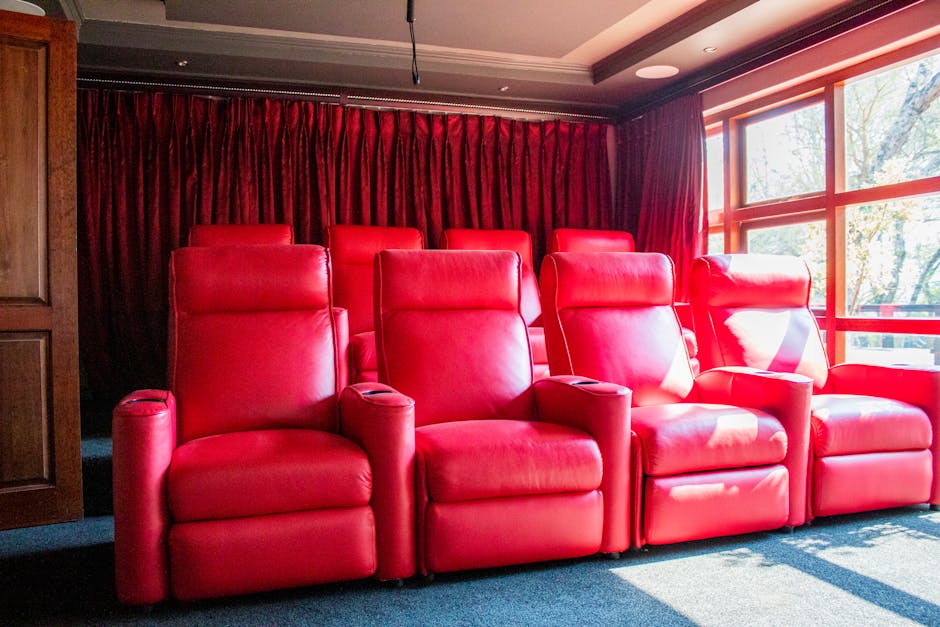
A $2,000 home theater in 2026 is a legitimate experience. A decade ago, this budget got you a decent TV and regret. Today it gets you a 65- or 75-inch OLED or Mini-LED, real audio, and maybe even ambient lighting if you shop carefully. The trick is where you spend.
Most people spend too much on the TV and almost nothing on sound. That's why their home theater is a very sharp picture with audio that sounds like a laptop speaker in a shoebox. Flip that math around and you'll get a better result for less money. The brain weighs audio heavily when judging whether something feels "cinematic." A great picture with bad sound is a presentation. A good picture with great sound is an experience.
I've built three home theaters in the last eight years. The first one was wrong. The second was better. The third is the one I'd build again today. What follows is the distilled version of what I learned and what I recommend.
The $2,000 OLED build
For the living room where you watch prestige TV, movies, and sports, this is where I'd put the money.
- TV: LG C4 55-inch — $1,299. OLED, 120Hz, four HDMI 2.1 ports, excellent for both film and gaming. The 65-inch is $1,699, which breaks the budget. Start with 55.
- Soundbar: Sonos Beam Gen 2 — $449. Dolby Atmos via upmixing (not true Atmos channels, but convincing in a small room). Voice clarity is the best in its class.
- Streaming box: Apple TV 4K 128GB — $149. A better picture processor than any TV's built-in streaming app, and the interface is faster.
Total: $1,897. You can skip the Apple TV if you only use Netflix and Amazon and save the $149. But the Apple TV handles color and motion better than the LG's built-in webOS, and the remote is genuinely superior. The webOS interface is cluttered with ads and promotional tiles; the Apple TV interface is clean and fast and doesn't try to sell you things.
This setup is excellent in rooms up to about 200 square feet. Above that, the soundbar runs out of headroom and you'll want real speakers. The LG C4's picture quality in a dark room is genuinely movie-theater-grade — pixel-level black, perfect contrast, accurate color. In a room with lots of daylight, you'll want the brightness of a Mini-LED instead.
Calibration matters. Run the built-in auto-calibration on the C4 (Filmmaker Mode + minor adjustments). Or pay $150 for a professional calibration — the difference on an OLED is immediately visible. Black level, color temperature, and gamma get nudged into what the content creators actually intended, which is the whole point of buying a high-end panel.
The $2,000 "actually hear the movie" build
If you watch films — and I mean really watch, with the lights off — buy less TV and more speakers.
- TV: Hisense U8N 65-inch — $899. Mini-LED backlight, 2,000+ nit peak brightness for HDR, 144Hz. Objectively worse than an OLED in a dark room, but outstanding value. For rooms with any daylight, the Hisense is brighter and more usable than any OLED at this price.
- AV receiver: Denon AVR-X1800H — $599. 7.2 channels, supports Dolby Atmos and DTS:X, 8K passthrough.
- Front speakers: ELAC Debut 2.0 B6.2 bookshelves — $349 pair. Crazy good for the money. Will embarrass soundbars costing twice as much.
- Subwoofer: Monoprice THX-365IW or Monoprice 12-inch subwoofer — $199. Adds the bottom octave that soundbars cannot deliver.
Total: $2,046 — slightly over, but you can find the AVR on sale for $499 and hit budget. This setup won't give you ceiling-bounced Atmos, but it will give you a genuine stereo music experience and a subwoofer that makes action scenes feel like action scenes.
Add a center channel speaker ($150) later when budget allows. That's the next logical upgrade. The center channel carries most dialogue — adding one transforms intelligibility on cinema content and is worth the hundred and fifty dollars the moment you hear it.
The receiver is the part people underestimate. A good AV receiver handles room calibration (Denon's Audyssey or Yamaha's YPAO), handles all your HDMI switching so you have one remote, and has enough power to drive speakers to reference levels without strain. A $599 receiver in 2026 is more capable than a $2,000 receiver from 2015.
The small-apartment build
Living in a 50-square-meter flat, you don't have room for a 65-inch TV and five speakers. This build is for the real world of city apartments.
- TV: Samsung S90D 55-inch OLED — $1,299. Brilliant in a small room. The QD-OLED panel is arguably the best in the price range.
- Soundbar + subwoofer combo: Sonos Arc + Sonos Sub Mini — $1,328. Yes, that's over budget by a few hundred. Drop to the Beam Gen 2 plus a Sub Mini ($449 + $429 = $878) if $2,000 is a hard cap.
Smaller room, smaller TV, higher investment in sound. The Sonos soundbar + subwoofer combination gives you genuine theater impact without running wires to rear channels. In a 30-square-meter room, this setup sounds excellent.
For apartment dwellers, subwoofers are tricky. Neighbors. Hollow floors. The Sub Mini is a good compromise — enough low-end to feel like a home theater, not enough to shake the ceiling below. If you have concrete construction, upgrade to the Sonos Sub at $799 and thank me later.
Mount the TV on the wall. Apartments waste too much floor space on TV stands. A quality wall mount is $80 and transforms how the room feels. The Sanus VMPL50A handles up to 70-inch TVs and tilts, which helps with glare from daylight.
The two mistakes that sink most home theaters
First: putting the TV above the fireplace. It's a decorator's instinct and an audiophile's nightmare. The viewing angle forces you to tilt your neck up for hours. Worse, the heat from the fireplace slowly degrades the panel. If the mantel is your only wall, buy the TV. If any other wall works, use it.
Second: bare walls and a hardwood floor. Audio loves soft surfaces. Bare walls reflect sound and cause smearing. A single thick rug in front of the seating area and a pair of curtains on the window behind the couch make more difference to perceived sound quality than any $300 speaker upgrade. The acoustics matter more than the gear at this budget.
A bonus third mistake: sitting too far away. Most people view their 65-inch TV from 14 feet back, which is absurd. The ideal distance for a 65-inch 4K TV is 8 to 10 feet. If your couch is farther, either move the couch or buy a bigger TV. A 65-inch at 14 feet feels like watching a 42-inch.
What about streaming quality
Spend $30/year for the 4K tier of your streaming service. Most people watch 4K TVs on the standard 1080p plan and wonder why the picture "only looks okay." Netflix's 4K tier, Apple TV+ defaults to 4K Dolby Vision, and Amazon Prime's 4K content is decent. The cost difference is small. The picture difference is enormous on an OLED or good Mini-LED.
Check HDMI cables too. The cable that came in the box with your soundbar is probably an HDMI 2.0a cable, not HDMI 2.1. For 4K at 120Hz — required for gaming and for some streaming — you need HDMI 2.1 certified cables. A 6-foot pack of two from Anker costs $15 and saves headaches.
Get your TV on Ethernet if possible. Wi-Fi drops during peak traffic. 4K streaming hates interruptions — a one-second buffer dumps you back to 1080p for the next three minutes as the algorithm cautiously climbs back up. A $10 powerline adapter pair fixes this for most homes without pulling cables.
A brief word on gaming
The LG C4 and the Samsung S90D both have excellent gaming features — HDMI 2.1, low latency, VRR. If you own a PS5 or Xbox Series X, buy one of those. The Hisense U8N is also good for gaming but with slightly higher input lag. Competitive gamers should look at a dedicated gaming monitor; single-player gamers on a couch will be thrilled with any of these TVs.
The order of purchases
If I were building a home theater from zero in 2026 on this budget, I'd buy in this order over three months: TV first. Soundbar and subwoofer together two weeks later. Streaming box if you watch more than one platform. Anything else is a future upgrade.
Don't buy everything on day one. Live with the TV. Figure out what actually bothers you about the sound. Then buy the exact speakers or soundbar that fixes it. Most people overspend on the wrong category and end up with a setup that has glaring weaknesses in one area and excess in another. Spend deliberately. Watch something you love on it tonight. Adjust from there.
Two last thoughts. If you can't decide between builds, the OLED plus soundbar build is the right answer for 70% of homes. It's balanced, forgiving of room conditions, and leaves room to upgrade later. The component system is for the 20% of homes that can devote a whole room to this, and the small-apartment build is for the 10% who live in space-constrained situations.
The home theater industry wants you to upgrade constantly. Resist. Build one well-balanced system, live with it for five years, and only upgrade when a specific weakness bothers you enough to solve it. That's how you end up with a room you actually use, not a gear collection.