Bluetooth Speakers Worth Your Money in 2026
The Bluetooth speaker market is cluttered with identical-looking cylinders. Here are the ones that actually sound good.
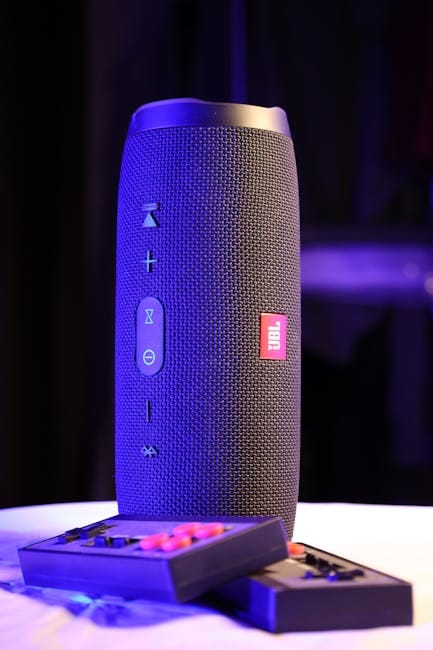
The Bluetooth speaker shelf at Best Buy has maybe forty products. Most of them look identical — matte cylinders in black, with one button on top and a fabric grille. Most of them sound almost the same. You'd be forgiven for thinking this is a solved category where brand matters more than anything.
It's not. There's real differentiation among Bluetooth speakers in 2026, but it's hidden behind a convergence of form factor. Once you know what to listen for — and what the actually good speakers do differently — the picks become clear.
Here are the Bluetooth speakers worth your money, organized by the way you'll actually use them.
The indoor lifestyle speaker
Sonos Move 2 — $449
This is what I actually own and use daily. The Move 2 has the sound quality of a full home audio product in a package that can be carried from kitchen to patio. It works on Wi-Fi inside the house (where it's part of a multi-room Sonos system) and switches to Bluetooth when you're outside range.
Battery life: 24 hours on a charge. That's a full weekend at a beach house or a long barbecue without concern. The charging stand is included — you drop the speaker onto it and it starts charging.
Sound quality is the best in its class. Bass extends deeper than speakers twice its size. The automatic Trueplay tuning adjusts for where you place it — EQ for a kitchen counter, EQ for a patio. The difference is audible.
What you're paying for: sound, build, integration. What you're not paying for: compact portability. This is an 8-pound speaker. It moves, but it doesn't travel in a backpack.
Apple HomePod (2nd gen) — $299
This is not a Bluetooth speaker in the traditional sense — it's primarily Wi-Fi, AirPlay, and Siri — but it plays via Bluetooth too and it's the best-sounding speaker under $400 for Apple users. The spatial audio processing creates a soundstage no traditional speaker matches in a small room.
If you're in the Apple ecosystem and the speaker will stay at home on a kitchen counter, the HomePod is a better indoor speaker than the Sonos Move 2. Stereo pairing two HomePods is excellent.
Caveat: if you leave Apple ecosystem, the HomePod loses most of its value. Sonos plays nicer with everyone.
The travel-first speaker
JBL Flip 6 — $129
If you want a speaker that fits in a backpack, comes to the pool, and survives actual use, the JBL Flip 6 is the answer. IP67 water-and-dust rated. Floats in water (useful in a pool). 12 hours of battery. Bass that's surprisingly good for the size.
The Flip 6 isn't going to fool audiophiles, but it delivers clean, cohesive sound that works for any casual use. Bluetooth 5.1, paired quickly, stays paired reliably.
The newer JBL Flip 7 ($149) adds a few features — PartyBoost 2.0 for stereo pairing and slightly better call quality for speakerphone use — but the Flip 6 is still on shelves at lower prices and is the better value.
Bose SoundLink Flex (2nd gen) — $149
The Bose SoundLink Flex 2 is in the same category as the JBL Flip. Similar size, similar battery, similar durability. The Bose has slightly warmer sound with more natural vocals. The JBL has more bass impact.
If you listen to podcasts, acoustic music, or audiobooks, the Bose is slightly better. If you listen to hip-hop, rock, or electronic music, the JBL is slightly better. Either is fine.
The party speaker
JBL Boombox 3 — $499
If you actually want to fill a backyard with sound, you need a party speaker. The Boombox 3 delivers 140W of output, 24 hours of battery, and genuine party-level volume. It's big and heavy (15 pounds), which is the whole point — physics demands size for real bass.
Two Boombox 3 speakers paired stereo produce enough sound for a 30-person backyard party without distortion. This is real-world audio reinforcement, not just a loud Bluetooth speaker.
You'll pay for the size. Carrying it anywhere that doesn't have a handle-friendly arrangement is a workout. For the right use case, it's worth it.
Ultimate Ears Hyperboom — $449
Similar category to the Boombox 3. Slightly smaller, slightly better build quality, equally loud. The UE has a more rectangular shape that's easier to carry. Battery life slightly lower (16 hours) but still more than you'll use in an afternoon.
Pair two for stereo and you have what's essentially a portable PA system.
The shower speaker
Tribit StormBox Micro 2 — $59
For $59, this is an absurd amount of value. Waterproof, palm-sized, 8 hours of battery, and sound quality that shouldn't be possible at this price. Attach it to a shower caddy with the built-in strap and you have a shower speaker that also goes in a beach bag.
Nothing else under $100 competes. I've owned the Anker Soundcore 2 and the JBL Clip 5 for this use case. The Tribit sounds better than both and matches or beats them on battery and features.
What to skip
Skip Beats by Dre speakers. The brand name has outlived the product quality. At every price point, other options sound better.
Skip any Bluetooth speaker with "360-degree sound" as its primary selling point. The tech is legitimate, but the tradeoff is weaker directional sound. Unless you're placing a speaker in the center of a room with listeners all around, directional sound is better.
Skip party speakers with RGB lighting. They're gimmick-first, audio-second. The lights look cool for five minutes and then become background. The sound quality typically suffers because the speaker's volume is dedicated to the light show.
Skip any Bluetooth speaker priced under $40. The transducers at that price level are so basic that the sound is fatiguing to listen to after an hour.
Skip "smart" Bluetooth speakers that route through another device. The whole point is simplicity — if you need an app to pair and configure every time, it's not actually serving its purpose.
What to actually listen for
The three things that distinguish a good Bluetooth speaker from a bad one:
- Bass without distortion. Every speaker will make some bass. Most distort badly when you turn them up. A good speaker stays clean at high volume.
- Vocal clarity. If you listen to any content with speech — podcasts, acoustic music, folk — vocal clarity matters. Cheap speakers smear voices into mud at high volume.
- Consistent output. Some speakers have thin sound at low volume that thickens as you turn them up. The best speakers sound balanced at any usable volume.
The way to test: play the same song at 20% volume, 50% volume, and 80% volume. A great speaker sounds better at louder volumes but proportionally — the character stays consistent. A cheap speaker sounds thin at low volume and distorted at high volume.
The pairing question
Two identical speakers paired in stereo mode usually sound dramatically better than a single speaker that costs the same total amount. Two Flip 6s at $258 combined outperform a single $250 speaker from most competitors.
If you know you'll use the speaker primarily at home, buy two of something rather than one larger. JBL's PartyBoost, Sonos's native pairing, UE's BoomBoost — all support two-speaker stereo in some form.
For travel or single-user, one speaker is obviously simpler.
The truth about Dolby Atmos on Bluetooth speakers
Marketing departments love to slap "3D audio" or "spatial sound" on Bluetooth speakers. These claims are almost always marketing rather than substance. Real spatial audio requires either multiple physical drivers pointed in specific directions (like the HomePod) or processing that genuinely changes the perceived soundfield (rare at this price).
Don't pay extra for spatial audio features on a single-driver speaker. The feature exists in name only.
Your buying decision
If you want the best sound and will mostly use the speaker at home: Sonos Move 2 at $449. If you want the best apartment-plus-ecosystem speaker: Apple HomePod at $299. For travel: JBL Flip 6 at $129. For parties: JBL Boombox 3 at $499. For the shower: Tribit StormBox Micro 2 at $59.
A full Bluetooth speaker lineup — Move 2 + Flip 6 + StormBox Micro — comes to about $640 and covers every realistic use case a household has. Add a Boombox 3 if you host parties in a backyard or garage. Skip the rest.
The category is crowded with fine products. The ones above are genuinely better than fine. Buy one of them and stop thinking about Bluetooth speakers for five years.