The Compact Camera Comeback: Why I Stopped Using My Phone for Photos
After five years of using my phone for everything, I bought a compact camera again. Here's what changed and which models are actually worth the money.
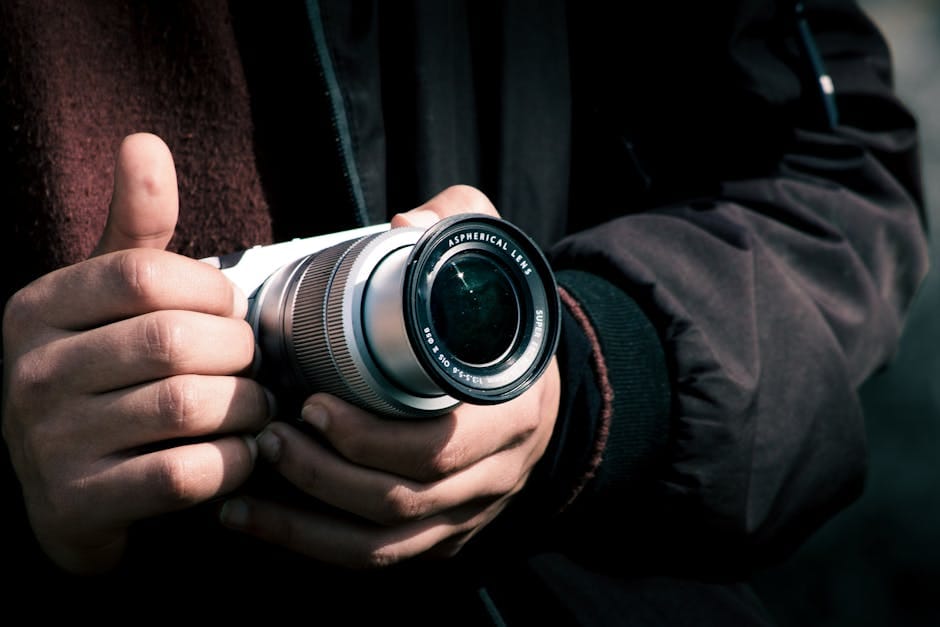
For five years my phone was my only camera. It was good enough. The HDR processing handled backlit scenes. The computational zoom faked a telephoto. Night mode turned dim restaurants into cheerful rooms. Every photo came out looking the same — smooth, perfect, and flat.
That last word is what finally got me. Every photo looked the same. I couldn't tell my Paris photos from my Barcelona photos from my kitchen photos. The phone's computational pipeline was so aggressive that the light in each scene disappeared. Everything converged toward a clean, bright, HDR-balanced middle. I picked up a camera again because I wanted photos that looked like places, not like phone output.
It took a few months to remember what a real camera does. The dynamic range is narrower. The autofocus is slower. You have to think about exposure. But in exchange, you get photos that look like something. The flare on a glass of wine at sunset. The grain of a street at dusk. The moment is preserved instead of processed.
Why a compact camera, not a big one
I've owned full-frame cameras. They produce better technical images than any compact. They also sit on a shelf because carrying a Sony A7 on a walk feels like a declaration. A camera that doesn't come with you is a worse camera than a phone.
The compact form factor — something that fits in a jacket pocket — is the difference between taking photos and not. That's why the compact camera segment, which everyone pronounced dead in 2018, is now selling out every refresh cycle. Fujifilm X100 series. Ricoh GR. Sony RX100. Used Fujifilm X-E4 bodies. All hard to find.
There's a principle here that applies to most gear, not just cameras. The version of a tool you'll carry every day is worth more than the version of a tool you'll carry twice a year. Photography teaches this lesson faster than almost any other hobby.
The Fujifilm X100VI
The X100VI is the reason compact cameras are a conversation again. It's a 40-megapixel APS-C sensor in a body that looks like a 1970s rangefinder. Fixed 23mm f/2 lens (35mm equivalent), which is the most versatile focal length ever defined. Hybrid optical-electronic viewfinder. Film simulations that produce JPEGs you don't need to edit.
Price: $1,599 if you can find one. They ship, sell out, ship, sell out. Waitlists at every major retailer are months long. Secondary market prices run over $2,000.
The X100VI is close to the perfect camera for someone who wants to start taking photos seriously. The fixed focal length forces you to compose with your feet. The film simulations mean you can post straight from the camera's SD card. The viewfinder makes you feel like a photographer instead of a phone user. I own one. It has changed what I photograph and how I pay attention.
The tradeoffs are real. The lens is slow to autofocus for action. The battery is small — plan on three per trip. The low-light performance is not what a full-frame delivers. But for the kind of photography most travelers and enthusiasts do — street scenes, portraits of friends, architecture, food on tables — it's extraordinary.
The film simulations bear special mention. Classic Chrome makes every overcast afternoon look like a 1970s magazine cover. Acros renders black and white better than any digital process I've used. Classic Negative has a color response closer to Kodak Gold than to any modern sensor. These aren't Instagram filters — they're the in-camera processing pipeline Fuji has spent thirty years refining. They're the camera's secret weapon.
The Ricoh GR IIIx
If the Fujifilm is sold out and you need a camera now, the Ricoh GR IIIx is the answer. 24-megapixel APS-C sensor. Fixed 26mm f/2.8 lens (40mm equivalent). Snap focus mode that lets you shoot street photography without even looking through the viewfinder. And the GR IIIx fits in any pocket — I mean pocket, not jacket pocket. Jeans pocket. That's the point.
Price: $1,099. The GR has an older sensor than the Fujifilm, but the lens is one of the best fixed lenses Ricoh has ever made. Image quality is superb in good light and adequate in low light. This is the camera serious street photographers have been using for two decades, and the reason it's lasted is that it does one thing extraordinarily well: takes sharp, honest photos in any light a person would actually shoot.
The Ricoh's weakness is battery life — three hours of active shooting, maybe. The camera has no viewfinder, just a rear LCD, which takes adjustment for anyone coming from a mirrorless or DSLR. But for the street photographer, the GR IIIx is the lightest, fastest way to work. Nothing else comes close.
There's also a wider-lens version, the Ricoh GR III at $999, with a 28mm equivalent. If you shoot mostly landscapes or environmental portraits, the wider lens is better. For general-purpose work and tighter frames, the IIIx is the pick.
The Sony RX100 VII
If you want a zoom lens in your pocket, the Sony RX100 VII is the only remaining serious option. 1-inch sensor, 24-200mm equivalent zoom, 20 fps burst, and 4K video that's actually usable. Price: $1,298.
The RX100 has been my recommendation for casual travelers who don't want to commit to a fixed focal length for years. A parent photographing kids at a soccer game needs zoom. A traveler photographing architecture and portraits from street distance needs zoom. The RX100 VII handles both.
The tradeoff: the 1-inch sensor is smaller than APS-C, so low light is weaker. The lens is slower (f/2.8-4.5) than either the X100VI or the GR. For most daylight shooting it doesn't matter. In a dim pub, it does.
Sony hasn't updated the RX100 line in several years and the product is starting to feel dated — the autofocus is good but not as advanced as current Sony mirrorless bodies, and the interface has the usual Sony quirks. Still, the camera exists and works and fits in a pocket, which is more than can be said for any other zoom compact in its class.
The used camera that's a steal
A used Fujifilm X-T30 II body with the 35mm f/1.4 lens is around $900 total on the used market. Same sensor as some newer Fujifilm bodies, a dedicated lens that's sharp and fast, and an interchangeable lens system if you want to expand. It's bulkier than an X100VI but not by much, and the versatility of being able to change lenses is real.
For anyone who wants to dip into photography without committing $1,600, this is the right path. Buy from MPB or KEH, not random eBay sellers. Both have return policies and rated condition scales that mean something.
An even cheaper alternative: a used Fujifilm X-E3 body ($450) with the 27mm f/2.8 pancake lens ($300 used). Total: $750 for a pocketable APS-C camera with outstanding image quality. It won't autofocus as fast as current bodies, but for deliberate photography — the kind most enthusiasts actually want to do — it's excellent value.
What to ignore
Ignore anything marketed as a "vlogging camera" unless you're actually vlogging. The Sony ZV-1 and Canon Powershot V10 are fine tools for their intended job, but they're worse still cameras than any of the above.
Ignore compact cameras with tiny 1/2.3-inch sensors regardless of price. Your phone has roughly the same sensor size with better processing. There's no reason to buy one in 2026.
Ignore Leica. They're beautiful cameras. They also cost $4,000 to $8,000 and don't take better photos than a $1,600 Fujifilm in any way the average person would notice. Leica is jewelry and craftsmanship. If you want the experience, you know who you are. If you're reading a practical gear guide, you don't.
Ignore the rumors about an Apple-branded dedicated camera. Every year someone claims it's coming. Every year it doesn't. Plan for what exists, not what might.
How a compact camera changes your phone use
My phone is still in my pocket. But it stopped being the default photo tool. I photograph the kids on the phone because candid moments happen in two seconds and the camera takes five. I photograph the trip, the meal I want to remember, the stranger on the corner with the dog on the compact camera because those are the photos worth taking carefully.
The phone gets the documentation shots. The camera gets the photographs. Some weeks they blur together. Other weeks the division is clear. Both matter.
A small suggestion
Shoot JPEG for the first year. The film simulations on Fujifilm and the color rendering on Ricoh are specifically designed to give you images you don't need to edit. Don't get pulled into a Lightroom workflow until you're sure you want to be a post-processing person. Most people don't — and that's fine. The whole point of a camera like the X100VI is that the image you see on the back of the camera is the final image.
The camera is a tool for paying attention. That's the feature your phone can't replicate. The phone is engineered to notice nothing and make everything look nice. The camera requires you to notice — the light, the angle, the moment. That act of noticing is most of what makes the photograph worth anything later.
A year from now the pictures you take will be a record of what you paid attention to. If you're happy letting your phone decide that for you, stay where you are. If you want the record to reflect what you actually saw, buy one of these and start working. The first three months will feel like learning. The rest of your life will feel like seeing.