EDC Tech for Grown Men: What to Carry, What to Skip
The EDC community is full of performative pocket dumps. Here's what actually makes sense for a working adult in 2026.
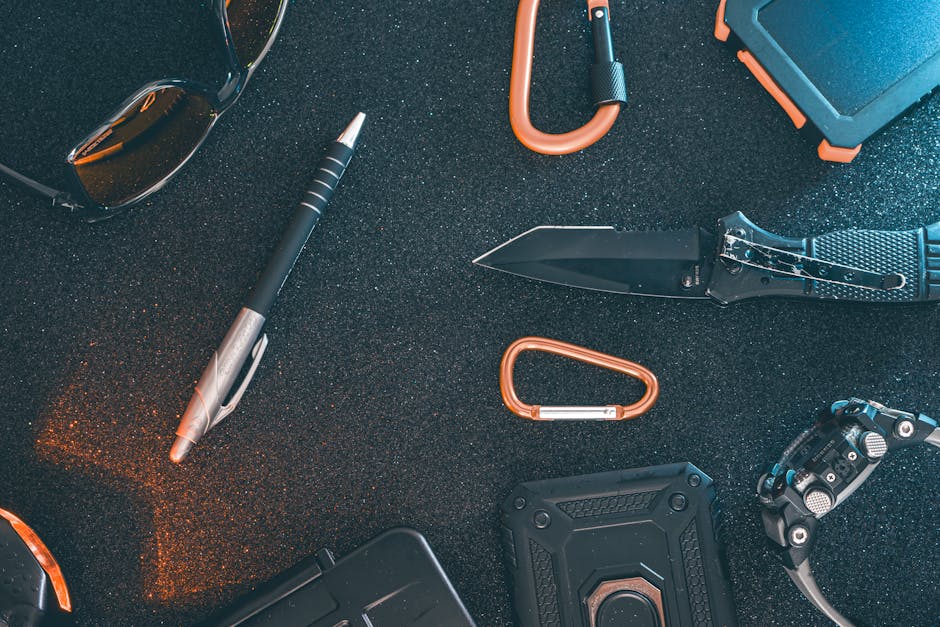
The EDC subreddit is a strange place. Knives sharp enough to butcher an elk, multi-tools with 40 functions, flashlights that could signal aircraft — all displayed on mossy tree stumps, arranged with military precision, photographed from above. It's a larping aesthetic pretending to be practical advice. If you're a grown man with a real job, your actual pocket contents look very different.
This is what EDC looks like for adults who don't harvest their own venison and don't carry a tactical axe to the office. The goal is a pocket kit that solves problems you actually have — not a pocket kit that prepares you for a zombie apocalypse.
The things that actually go in your pockets
Phone
Obviously. But the choice of case matters more than people admit. A minimalist case like the Apple Silicone Case or a Pitaka aramid fiber case adds durability without adding bulk. The MagSafe alignment matters if you use wireless charging. Skip the giant OtterBox unless you work construction — the weight and bulk create more friction than protection.
One opinion that will upset pocket-dump photographers: a PopSocket or ring holder is actually useful for reducing drops, even if it ruins the look. If your phone has fallen more than twice in a year, get one.
Wallet
For anyone who hasn't updated their wallet in five years: throw out the trifold leather folio from college. A minimalist wallet that holds 4-6 cards and a folded bill is what you actually need. The Ridge Wallet is the best-known option but overpriced at $95. The Bellroy Note Sleeve at $89 is better-crafted for the same money. The Pioneer Flyfold at $79 is the best value in minimalist wallets.
If you're in Europe, the Secrid Slimwallet at €45 is genuinely excellent — aluminum card holder with RFID blocking, built-in leather pouch for folded bills. Five years of daily carry and mine still looks fine.
An AirTag or equivalent in your wallet is one of the best $29 purchases ever made. Skip "smart wallets" with built-in tracking — they're heavier, charge more, and don't work as well as an AirTag slipped into a hidden slot.
Keys
A proper key organizer changes your daily life. The Keysmart Pro, Orbitkey, or one of the many knockoffs on Amazon — any of them is better than a jangling key ring. The Orbitkey at $69 looks the most professional if you work in an office where you might put keys on a desk during a meeting. The Keysmart at $30 holds more keys in less space.
Put a second AirTag on your keys. The price per anti-lost-keys event is so low it's embarrassing.
Watch
Covered elsewhere in more depth. A smart watch (Apple Watch) if notifications and fitness tracking matter to you. A nice mechanical watch (Tissot, Seiko, Hamilton) if the gadget feel bothers you. Don't own both and switch daily — pick the one that fits your life.
Skip anything in between — fitness bands that don't show notifications, smartwatches that look like jewelry but can't actually track fitness. A tool is better when it knows what it is.
Earbuds
AirPods Pro 2 if you have an iPhone. Sony WF-1000XM5 for Android. Both are small enough to live in a pocket. Both are the best in their ecosystem. If you commute, meet clients in public spaces, or take calls on the go, earbuds are a daily tool, not a luxury.
One practical note: carry the case in a pocket or a small pouch. Throwing earbuds loose in a bag means finding them at the bottom, or finding only one of them. The case is the storage.
The tools that earn their space
A small knife
Not a tactical combat blade. A gentleman's pocket knife — the Victorinox Classic SD at $25 is the definitive choice. It has a 1.5-inch blade that handles letter-opening, box-cutting, apple-slicing, and loose-thread trimming. It has scissors that actually work. The tweezers and toothpick are surprisingly useful.
For anyone who wants a step up, the Leatherman Free T2 at $79 is a pocket-sized multitool with real pliers. I carry one when traveling because loose screws and small repair needs come up. For daily city use, the Victorinox is enough.
Skip the CRKT, Benchmade, and Spyderco tactical knives unless you legitimately hunt, camp, or work outdoors. The "tactical folder" is a style decision, not a tool decision.
A small flashlight
The Olight i3T EOS at $35 is the best small flashlight under $50. It fits on a keychain, runs on a single AAA battery, and produces 180 lumens — enough to illuminate a dark parking lot, find something under a car seat, or navigate a blackout.
Your phone flashlight works for incidental use. A real flashlight works for the time the phone battery is at 4% or when you need both hands free.
Skip the 5,000-lumen "tactical" flashlights. They run hot, have short runtime, and are overkill for any scenario that doesn't involve signaling a helicopter.
A pen
In 2026 most things are digital, but a real pen is still useful. The Fisher Space Pen Bullet at $29 is reliable, compact, and writes on anything. The Baron Fig Squire at $69 is more upscale for people who sign documents regularly.
Stop buying free pens from hotels and conferences. A quality pen lasts years and makes every note you take slightly better.
What to leave at home
A full-size multi-tool. The Leatherman Wave is a wonderful object. It also weighs nearly half a pound. Unless you're working outdoors or in a trade, you don't need pliers in your pocket every day. Carry a multi-tool in your car or bag, not your pocket.
A paracord bracelet. Nobody has ever used one to survive. They're uncomfortable and look ridiculous at office jobs.
A tactical pen designed as a "last-resort self-defense weapon." You're not going to win a fight with a pen. If self-defense is a real concern for you, take actual classes and carry actual tools legally permitted where you live.
An "escape and evade" kit with handcuff keys and a ceramic razor. If you're being handcuffed, you've probably already made a series of mistakes the kit isn't going to fix.
Three flashlights. One. You need one.
A small notebook. Useful if you actually use it. 90% of people who carry a pocket notebook use it for the first two weeks and then carry a partially-filled notebook around indefinitely. Use your phone's notes app. Re-evaluate the notebook after six months of not using it.
The bag matters less than you think
A dedicated bag for daily use — not a gym bag, not a backpack for hiking, a real urban bag — is useful. The Bellroy Classic Backpack at $149 is the best value in minimalist city backpacks. Aer's Day Pack 3 at $149 is similar. Peak Design's Everyday Backpack at $260 is the premium choice.
Skip the "EDC sling bag" trend. They look military-surplus and attract weird attention in professional settings.
The real principle
The EDC community's aesthetic is preparedness. The actual job of your daily pocket contents is friction reduction. What problems do you run into in a normal day? Lost keys, phone battery dying, something to write with, a moment where you needed to cut a zip tie or a package seal, headphones you couldn't find.
Optimize the pocket kit for those. Skip the gear designed for movie scenarios. A knife for boxes, a flashlight for dark spots, a pen for forms, a wallet that doesn't bulge, keys that don't jingle — that's the adult EDC. The tactical fantasy is fun content; it's lousy real life.
The test I use
Once a month I empty my pockets and my bag onto a desk. Anything I didn't use in the previous month gets a question: why am I carrying this? Sometimes the answer is legitimate ("I used this during last month's trip"). Sometimes the answer is "because it looked cool when I bought it." The second category leaves the daily kit. I've eliminated more than I've added over the years, and my pockets are lighter, my bag is smaller, and I don't miss anything I removed.
Your daily carry should make your daily life slightly better. When it doesn't, simplify. The goal is a pocket you forget about because everything works — not a pocket worth photographing.