The 2026 Foldable Phone Buyer's Guide for Men: Why Samsung, Google, and Motorola Finally Made the Hinge Boring
Foldables stopped being fragile experiments in 2026. Here's which one actually earns its price, and which one is still a bet on next year's hardware.
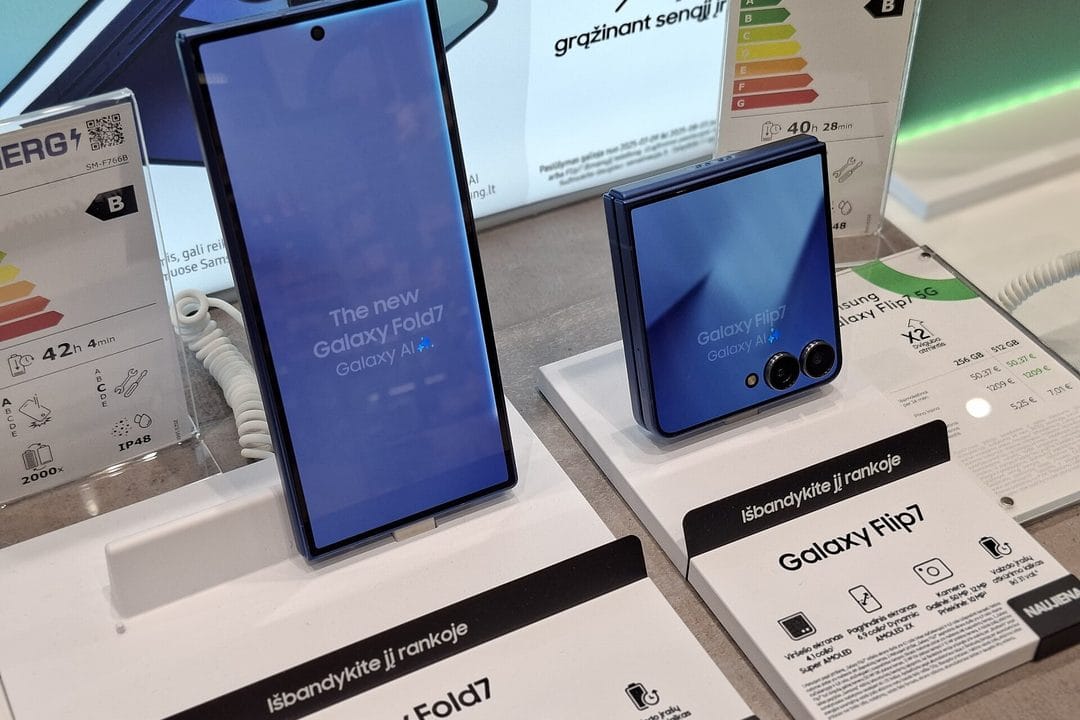
You're standing in a carrier store holding a phone that folds in half, and the salesperson is telling you the crease down the middle is basically invisible now. Two years ago that would have been a sales pitch dressed up as a fact. In 2026, for the first time, it's mostly true. Samsung, Google, and Motorola have all shipped foldables built on hinge mechanisms rated past 200,000 open-close cycles, and the panic-inducing teardown videos that used to define this category are getting harder to find. That doesn't mean every foldable on the shelf deserves your money, and it definitely doesn't mean you should buy the first one you pick up.
Why 2026 is the year the hinge stopped being the risk
For three generations, the pitch for a book-style foldable came with an asterisk: incredible screen, remarkable engineering, and a nagging worry about what happens at month fourteen. That asterisk is shrinking. Samsung, Google, and OPPO are now building hinges rated for 200,000-plus folds, which works out to roughly three to five years of normal daily use before you'd expect mechanical fatigue to show up. Google went further with the Pixel 10 Pro Fold, giving it an IP68 water and dust rating — the first time a book-style foldable has matched the sealing you'd expect from an ordinary flagship slab phone, achieved by re-engineering the hinge to be gearless.
None of this means every foldable on the shelf is durable, and you should walk in with that expectation set correctly. OPPO's Find N5 — the thinnest foldable on the market, sold overseas but not through official US retail — is the cautionary example: JerryRigEverything's bend test cracked its inner display with a line of dead pixels on the very first pass, while the OnePlus Open, Google's Pixel Fold, and Samsung's foldables all survived the same test intact. Thinness and structural margin are still a trade-off in this category, not a solved problem, and the internal display stack on any foldable remains more fragile than a normal screen — screen protectors on the inner panel lift over time, and drop damage hits a foldable harder than it hits a Galaxy S26 or an iPhone.
Samsung Galaxy Z Fold 7 — the safe, polished pick
The Z Fold 7 is the foldable most reviewers hand to someone who's never owned one, and that reputation is earned rather than inherited from brand loyalty. It's barely thicker than a pair of Galaxy S25 Edges stacked together when closed, the 200MP main camera actually holds up against non-folding flagships, and Samsung backs it with seven years of software updates — longer than almost anything else on this list. It launched at $2,000 for the base 256GB configuration and climbed to $2,500 for the 1TB model, and with Samsung's Z Fold 8 arriving via its July Unpacked event, retailers have discounted every tier this year — the base 256GB down to roughly $1,500, and the 512GB and 1TB configurations cut to around $1,700 and $2,000. If you want the fewest surprises and the best app optimization on Android's foldable-specific interface, buy the Z Fold 7. That's not a hedge — it's the strongest all-around recommendation in this category right now.
Google Pixel 10 Pro Fold — better durability, and $200 cheaper
Google's foldable finally closes the gap that made the first two Pixel Fold generations feel like beta hardware. Starting at $1,799 and going up to $2,149 for the top storage tier, it undercuts the Z Fold 7 by roughly $200 at every comparable configuration, and several reviewers now rate its battery life ahead of Samsung's — a real reversal from where this matchup stood a year ago. The IP68 rating matters more than it sounds like on paper: it's the difference between "don't get caught in the rain" and "don't think about it." Google also gives early access to Android beta features and a longer 5x telephoto reach than the Z Fold 7 offers. Skip it only if you specifically need Samsung DeX or you're already deep in the Galaxy ecosystem with a watch and buds that only pair cleanly with Samsung phones.
Choosing between these two comes down to a genuinely simple trade, and it's worth stating plainly instead of hedging around it. Buy the Z Fold 7 if camera quality and long-term software support matter more to you than saving $200. Buy the Pixel 10 Pro Fold if you want the better battery, the better warranty story via IP68 sealing, and you don't care about DeX. Both are safe purchases in a category that, until recently, didn't really have one.
Motorola Razr Ultra (2026) — the battery king, if you can stomach the price hike
The clamshell side of this category belongs to Motorola right now, at least on paper. The 2026 Razr Ultra jumped to a 5,000mAh silicon-carbon battery — Motorola is the first major manufacturer to bring that battery chemistry to a mainstream US phone — and Tom's Guide clocked 16 hours and 20 minutes of screen-on time in its drain test, the longest of any foldable the outlet has tested. Engadget's video rundown pushed it to 31 hours. That's a genuinely different battery experience from a flip phone, a category that has historically forced a trade-off between the fun form factor and getting through a full day.
Here's the part Motorola's marketing won't lead with: it now costs $1,499, a $200 jump over the 2025 model, and several reviewers found the actual year-over-year improvement thin outside of battery and camera. Android Authority measured gains in only two of five tested categories. Worse, a charging bootloop bug reported on last year's model is still present on some third-party USB-C chargers, including at least one Google-branded charger — Anker and UGREEN chargers reportedly work fine, but that's a real ownership annoyance nobody should have to troubleshoot on a $1,500 phone. If pure battery life is your top priority and you specifically want a flip form factor over a book-style fold, the Razr Ultra earns its price. If you're comparing it against the Galaxy Z Flip 7, which typically sells for under $1,000, the value case gets a lot harder to make.
What about OnePlus, OPPO, and the phones you technically can't buy here?
This is the part of any foldable roundup that gets messy, so it's worth being direct about it instead of pretending every phone reviewed online is actually purchasable. In the US, your official retail options are limited to Samsung, Google, Motorola, and OnePlus — that's it. OPPO's Find N5, class-leading for thinness but not for structural toughness as its bend-test results show, and the newer Find N6 aren't sold through official US channels, which means warranty support and carrier compatibility become your problem to solve rather than the manufacturer's. The original OnePlus Open is still around at its $1,699 MSRP direct from OnePlus, frequently discounted a few hundred dollars during retailer sales, with Amazon Renewed units running well below that for buyers comfortable with refurbished hardware — and it remains a genuinely strong piece of hardware for the money even two years after launch.
The OnePlus Open 2 is a different story, and it's one you should be skeptical of. It shows up in comparison articles with specific numbers attached — a 5,900mAh battery, 100W wired charging — but as of this writing it hasn't had an official launch or confirmed pricing, and those figures are circulating as rumor rather than tested spec. Don't plan a purchase around a phone that doesn't have a release date yet. If OnePlus's next foldable interests you, wait for verified reviews before treating any of those numbers as real.
Crease, warranty, and what actually breaks
Ask anyone who's owned a foldable for over a year what bothers them, and it's rarely the headline durability story — it's the slow stuff. Crease visibility tends to increase with age even on hinges that never fail mechanically, screen protectors on the inner display lift at the edges faster than most owners expect, and a drop that a slab phone shrugs off can crack the inner panel on a foldable in a way that's expensive to fix. Out-of-warranty screen repairs on a foldable frequently run past $600, which changes the math on whether an extended warranty is worth buying.
- If you carry your phone loose in a pocket with keys or coins, buy the extended warranty — the inner screen is not going to win that fight forever.
- If you plan to keep the phone past the standard one-year window, the math tilts further toward paying for coverage up front rather than gambling on a $600-plus repair bill later.
- If you already baby your phones and use a case with a built-in cover for the outer screen, you can reasonably skip it and put that money toward storage instead.
None of this is unique to one brand — Samsung, Google, and Motorola all sell some form of extended protection, and the pricing differences between them are usually small enough that brand loyalty is a fine tiebreaker.
So which one should you actually buy
If you want the single safest purchase in this category, buy the Samsung Galaxy Z Fold 7. It has the best software optimization for the foldable form factor, the longest confirmed update commitment, and enough market share that accessories, cases, and screen protectors are easy to find years from now — a real consideration on a phone this specialized. If you'd rather save roughly $200 and get better battery life and superior water resistance, the Pixel 10 Pro Fold is the better-engineered phone this year, and Google finally has the hardware to back that claim up. Neither choice is a compromise anymore, which genuinely wasn't true as recently as 2024.
Where this gets more personal is the flip side of the category. If you want a phone that disappears into a small pocket and don't mind paying a premium for the best battery life a flip phone has ever had, the Razr Ultra delivers on that one promise even if the rest of the upgrade feels thin. And if none of these price tags make sense for what you actually use a phone for, that's a completely reasonable place to land — a folding phone is still a specialized purchase, not a phone everyone needs to own in 2026, no matter how good the hinges have gotten.