Gaming Setups for Men Who Play Two Hours a Week
Gaming marketing targets 14-hour-a-day players. Here's what an adult who plays for two hours on Saturday actually needs.
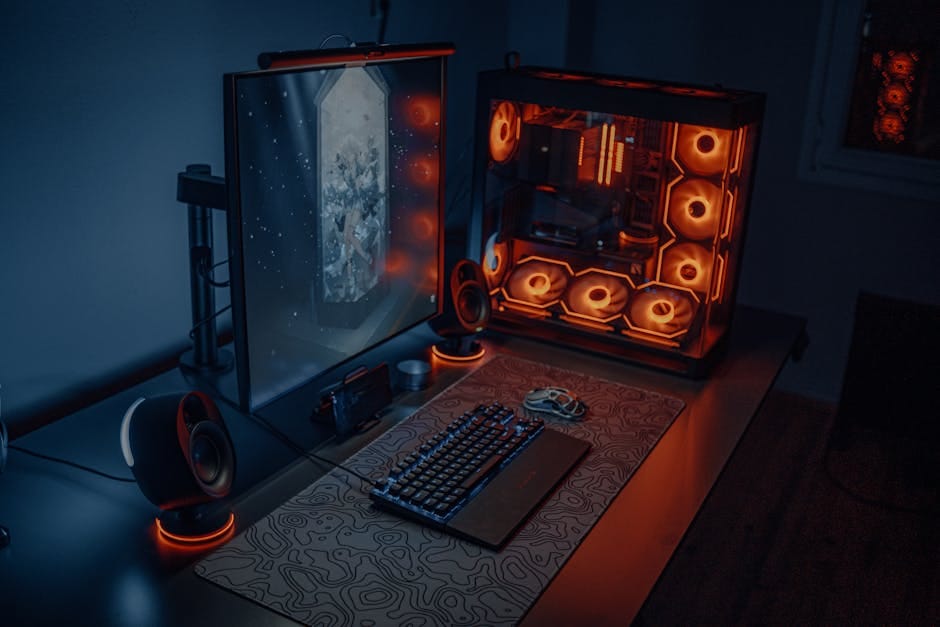
Gaming marketing is aimed at people who stream for a living and play eight hours a day. Every product page features RGB-soaked setups, mechanical keyboards with key-per-finger programmability, and displays with response times that matter for professional Valorant play. If you're 35, have a job, and play video games for about two hours a week, the marketing is absurd.
This guide is for the casual adult gamer. Someone who owns a PlayStation 5 or an Xbox Series X (or maybe a decent gaming PC), plays a few hours per week after the kids are in bed, and wants the setup to be genuinely enjoyable without spending like a professional esports player. Here's what actually matters.
Console or PC?
Console (PS5 or Xbox Series X) for most casual gamers
The PlayStation 5 and Xbox Series X both deliver excellent gaming experiences for under $500. They're simpler to use, require less maintenance, and run modern AAA games beautifully.
PlayStation 5 ($499 disc, $449 digital) wins for the exclusive library — God of War Ragnarok, Horizon Forbidden West, Spider-Man 2, Demon's Souls. If you want the best single-player experiences of the last five years, PS5 has more of them.
Xbox Series X ($499) is the better value for general gaming. Game Pass Ultimate at $17/month includes Microsoft's entire first-party library and hundreds of other games. Cheaper overall than buying games individually.
For most adult casual gamers, a console is simpler and cheaper. You turn it on, you play, you turn it off. No drivers, no updates, no troubleshooting.
PC gaming for specific reasons
A gaming PC makes sense if:
- You play multiplayer games that are PC-first (World of Warcraft, League of Legends, DOTA 2, Valorant).
- You want modding support and access to the vast Steam catalog.
- You use the computer for other things too (work, content creation).
For casual players who mostly play AAA single-player games, the PC premium isn't worth it. Consoles produce essentially the same experience for a fraction of the cost and maintenance.
If you're building a gaming PC
The budget that makes sense
$1,500-2,000 is the sweet spot for a 2026 gaming PC that plays current games at 1440p 120Hz without compromise. Below $1,000 you're making too many compromises. Above $3,000 you're paying for frame rates you'll never notice.
A reasonable specification:
- CPU: AMD Ryzen 7 7700X or Intel Core i5-14600K
- GPU: Nvidia RTX 4070 Super or AMD Radeon RX 7800 XT
- RAM: 32GB DDR5
- Storage: 1TB NVMe SSD + 2TB NVMe SSD for games
- Motherboard: mid-range B650 (AMD) or Z790 (Intel)
- PSU: 750W 80 Plus Gold
- Case: NZXT H5 Flow or Fractal Meshify 2
Buy prebuilt from Micro Center or iBuyPower if you don't enjoy PC building. The savings from building yourself aren't worth the hours unless you find the process enjoyable.
The monitor (or TV) situation
For console gaming
A good 4K TV with HDMI 2.1 (see my separate article on 4K TVs under $1,000). The LG C4 OLED, Hisense U8N, or TCL QM8 all deliver excellent gaming performance. VRR, ALLM, 120Hz at 4K.
For casual adult gamers, a TV is the right display. You play on the couch. The screen size is appropriate.
For PC gaming
A 1440p 144Hz gaming monitor at 27-inch is the sensible pick. The LG 27GP850-B at $349 or Samsung Odyssey G7 at $499 both deliver excellent performance without overspending.
Skip the 4K 240Hz gaming monitors at $1,200+ unless you're playing competitive shooters at a high level. The extra performance is genuinely unnecessary for casual play.
The seating question
Gaming chairs from Secretlab, DXRacer, and similar are designed for a specific posture (semi-reclined, racing-car style) that isn't actually ergonomic for long sessions. They look the part for streaming aesthetics.
A proper office chair (used Herman Miller Aeron or Steelcase Gesture) is better for gaming and for work. For casual gamers who also work from home, invest in a good office chair and use it for everything.
If you specifically want a gaming-aesthetic chair, the Secretlab Titan Evo at $549 is the best-built option. But honestly, the Aeron is better ergonomically for the same money used.
Controllers and peripherals
Console controllers
Both PS5 and Xbox Series X come with excellent controllers. The DualSense (PS5) has haptic feedback that genuinely enhances games that support it. The Xbox controller has the most comfortable ergonomics in the category.
Don't buy "pro" controllers unless you're competitive. The Xbox Elite Series 2 ($179) and DualSense Edge ($199) offer custom paddles and better stick tolerances. For casual play, the stock controller is fine.
Consider a second controller for local multiplayer gaming. $70 is cheap versus buying expensive peripherals you won't use.
PC gaming peripherals
Keyboard: a good office-tier mechanical keyboard (Keychron Q1) is fine for gaming. Purpose-built "gaming keyboards" with macro keys and RGB don't improve casual play.
Mouse: Logitech G Pro X Superlight at $149 is the professional gaming mouse. For casual play, the Logitech MX Master 3S ($99) from the productivity category handles gaming fine. The productivity mouse has more buttons and better ergonomics for varied use.
Headset: gaming headsets are overpriced for what they deliver. Better to use good wired in-ear headphones (Shure SE215 at $99) with a dedicated microphone (Audio-Technica AT2020 at $99). Total $200 for better audio than a $200 gaming headset.
Subscriptions worth having
For console gamers, one multi-game subscription is often the best value:
- Xbox Game Pass Ultimate ($17/month): Hundreds of games including all Microsoft first-party launches. Genuinely excellent value.
- PlayStation Plus Extra ($14.99/month) or Premium ($17.99/month): Similar catalog model for PlayStation. Less essential than Game Pass for Xbox, but still worthwhile.
For PC gamers, Game Pass Ultimate also includes PC games. If you're on the fence about Xbox vs PC, Game Pass makes Xbox more attractive.
Skip Stadia (defunct), GeForce Now (fine for specific cases but not essential), or smaller streaming services. Stick with one major subscription.
Games worth playing as a casual adult
Recommendations are subjective, but a few games that work particularly well for casual sessions:
- Destiny 2 (free to start, content expansions affordable) — fast to drop into for a 30-minute session.
- Fortnite (free) — quick matches, legitimate fun with friends.
- Hades or Hades 2 — perfect 20-30 minute session game with permanent progression.
- Elden Ring or Shadow of the Erdtree — for longer sessions when you have time.
- Any Mario game (Switch) — the pick-up-and-play standard.
Avoid games that require 40-hour commitments or demanding live-service schedules. Adult gaming works best with games that respect your limited time.
The setup aesthetic
RGB lighting is a distraction in a living room and unnecessary in a den. If you game after the kids are in bed, bright RGB is actively disruptive to anyone else in the house.
A clean setup looks better, lasts longer, and doesn't date itself. Plain black peripherals, no LED strips, no aggressive gaming-brand styling. The Secretlab chair in all-black is more tasteful than the Razer branded version.
Aim for "looks like a thoughtful professional's workspace that happens to have a console underneath" rather than "14-year-old's dream room."
What to skip entirely
Skip high-end gaming keyboards (over $200) unless you play competitive esports.
Skip "gaming desks" with built-in RGB and elevated monitor shelves. A regular Uplift or IKEA standing desk works fine.
Skip gaming-specific monitors over $600 for casual play. The returns vs quality 4K or 1440p monitors are minimal.
Skip motion simulator chairs, buttkickers, or other haptic gaming accessories. The novelty wears off in a month.
Skip streaming deck accessories (Elgato Stream Deck) unless you're actually streaming. They look cool; they're useless for just playing games.
The 2-hour-a-week budget
If you genuinely play about 2 hours a week, the total gaming budget that makes sense:
- Console + controller: $500
- One good TV (already have one): $0 incremental
- Subscription (annual): $200
- Games per year: $150 (heavily discounted by Game Pass or sales)
Total for year 1: $850. Recurring years: $350.
Over five years: $2,250. That's the cost of gaming well as a casual player. Significantly less than most enthusiast builds.
You don't need an RGB rig and a streaming setup to enjoy video games. The simple setup is often the most enjoyable because there's nothing in the way of the game. Turn on the console, play for an hour, turn it off, live your life. That's adult gaming. The industry doesn't market to you because you already have everything you need.