Garmin vs Apple Watch for Outdoor Use: Which Wins in the Backcountry
Garmin Fenix 8 vs Apple Watch Ultra 3 for outdoor use. A two-week backcountry trip settled the debate.
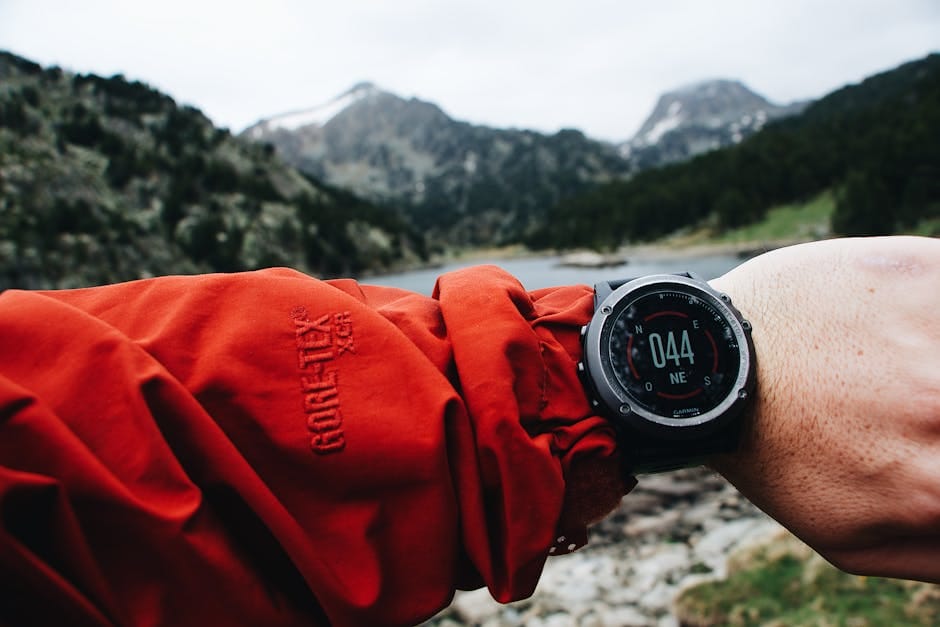
The Apple Watch Ultra 3 and the Garmin Fenix 8 Solar sit on my desk side by side. They cost almost the same ($799 vs $849). Both claim to be the outdoor athlete's wrist computer. Reading their respective marketing, they sound identical: multi-band GPS, long battery life, workout tracking, heart rate, altimeter, rugged build.
After a two-week backcountry trip where I wore both (one on each wrist, rotating which one I used primarily), I can tell you the spec sheet comparison misses almost everything that matters. These are fundamentally different watches for different users. Here's which one wins which use case.
The core difference
The Apple Watch is a smartwatch that does outdoor things well. The Garmin is an outdoor watch that does smartwatch things adequately.
This distinction shows up in every design decision. Apple's watchOS is an ecosystem: notifications, apps, payments, music, home controls. The outdoor features are a category within that ecosystem. Garmin's firmware is an outdoor toolkit: GPS, navigation, elevation, workout metrics. The smartwatch features are tolerated.
Which one is "better" depends on whether you're primarily a city-dweller who hikes occasionally, or primarily an outdoor enthusiast who happens to have a desk job.
Battery life: Garmin decisive win
Apple Watch Ultra 3: 52-60 hours of normal use with GPS workouts mixed in. A full GPS-intensive day (hiking, backpacking, ski touring) uses 30-40% of battery.
Garmin Fenix 8 Solar: 48 days normal use. 30-40 hours of continuous GPS. A week of backpacking with daily GPS use barely dents the battery.
On a three-day backcountry trip with heavy GPS use, the Apple Watch needs to be charged mid-trip. The Garmin finishes the trip with plenty of battery remaining.
For anyone doing multi-day trips, the Garmin is the only serious answer. Charging an Apple Watch in a tent at 10,000 feet is a logistical problem the Garmin solves by not needing to be charged.
Navigation: Garmin win
Garmin's topographic maps, GPX route loading, back-to-start navigation, and breadcrumb trails are purpose-built for backcountry use. You load a route, your watch shows your position on a real topo map, you follow the line.
Apple Watch's GPS works, but the navigation experience is much simpler. You can load routes, but the display is less informative. Recent watchOS updates have improved topo map support, but Garmin's is more refined.
For anyone doing actual wilderness navigation — not just fitness tracking in a city park — Garmin is significantly better.
Display readability in bright light
Both watches have excellent displays. Apple's is brighter in peak (3,000 nits). Garmin's uses a MIP (memory-in-pixel) transflective display that's always readable in direct sunlight without brightness issues.
On a sunlit trail, Garmin's display is simpler to read without squinting. Apple's brightness ramping has sometimes left me adjusting the watch angle to see it clearly.
Slight edge to Garmin for outdoor use. Apple for indoor/everyday use.
Button-first interface
Garmin Fenix 8 has 5 physical buttons. You can operate every feature with gloves on, in cold weather, without looking.
Apple Watch Ultra 3 has a crown, a side button, and the Action Button. Touchscreen for most operations. In cold weather with gloves, touchscreen is unreliable and the physical buttons are smaller.
For winter outdoor activity or any situation where gloves are involved, Garmin's button-first interface wins.
Workout tracking
Both watches record the major metrics: heart rate, pace, distance, elevation, calories. Accuracy is roughly equivalent.
Where Garmin wins: depth of post-workout analysis, training load metrics, recovery time calculations, heat acclimation tracking, altitude acclimation, and VO2 max estimates tuned to endurance athletes.
Where Apple wins: simpler to understand, better integration with iPhone-based fitness apps (Strava, TrainingPeaks, Nike Run Club), and the activity ring gamification keeps people motivated.
For serious training, Garmin. For casual fitness motivation, Apple.
Smart features
Apple Watch: full ecosystem. Answer calls, reply to messages, Apple Pay, Siri, HomeKit control, dozens of third-party apps. Works in the full sense of "smartwatch."
Garmin: basic notifications, music control, very limited app support (Garmin Connect IQ store exists but most apps are underdeveloped). Contactless payment works on some models. Not a replacement for a smartphone in the same way Apple Watch is.
For daily urban use, Apple is significantly better. This is the trade-off you're making when choosing Garmin — the watch does less smartwatch stuff.
Long-term ownership
Apple updates watchOS every year. Features improve across the life of the watch. New features in watchOS 12 worked on older Apple Watch Series 8 hardware.
Garmin updates firmware steadily, but major UX changes are less dramatic. The Garmin you buy today feels similar in 3 years to the Garmin you bought today. Not necessarily worse — just more static.
Apple's model is a smartphone-style yearly upgrade cycle. Garmin's is a professional-tool model where you buy once and use for 5-7 years.
The specific use case winners
Daily urban use + occasional hikes: Apple Watch Ultra 3
Better notifications, better ecosystem integration, better for meetings and calls. Enough outdoor capability for day hikes and car camping.
Multi-day backpacking or expeditions: Garmin Fenix 8
Battery life makes it the only real option. Navigation is superior. Button interface works in adverse conditions.
Serious endurance training (ultras, triathlons, big training blocks): Garmin Fenix 8
Training load metrics and recovery data are genuinely useful. Battery handles long sessions without charging interruption.
Triathlon: Garmin Fenix 8 or Forerunner 955/965
Multisport workouts with auto-transition. Apple Watch can do triathlon mode but Garmin does it natively better.
Most casual fitness users: Apple Watch Series 10
Not the Ultra. Not the Fenix. The Series 10 at $399 is enough for running, cycling, and general activity for the casual user. The Ultra's advantages only matter for specific use cases; most users don't need them.
The price question
Apple Watch Ultra 3: $799.
Garmin Fenix 8 Solar: $849.
Garmin Epix Pro 51mm: $899.
These are all flagship outdoor watches at similar prices. None is a bad choice. The question is whether you use the watch's features often enough to justify the premium over a $399 Apple Watch Series 10.
For day-hikers, occasional weekend adventurers, and mostly urban users: the Series 10 is enough and saves $400. The Ultra or Fenix is overkill.
For people whose hobbies genuinely involve extended outdoor time, the premium watches pay back their cost in functionality used weekly.
Heart rate accuracy
Both watches use optical heart rate sensors at the wrist. Both struggle with the same limitations: wrist HR is less accurate than chest-strap HR for high-intensity interval training.
For typical use — running, cycling steady-state, hiking — both are accurate enough. For HIIT or strength training, neither is perfect and both are roughly equivalent.
For serious training that requires precise HR zones, use a chest strap regardless of which watch you wear.
What I actually do
I wore both for a month. Then I returned to the Apple Watch Ultra 3 as my daily watch because I'm primarily an office-dweller who does outdoor activity sometimes rather than mostly.
For a multi-day backcountry trip, I now borrow my brother's Garmin specifically for those expeditions. It's annoying to switch, but the battery life benefit for multi-day trips is worth it.
For anyone whose outdoor trips are multi-day: the Garmin is your daily driver. For anyone whose outdoor trips are day-hikes punctuating a mostly-urban life: the Apple Watch Ultra 3 is yours.
The wrist question nobody admits
Both these watches are big. 49mm cases, substantial bezels. On an average-size wrist, they look like equipment rather than accessories.
Is that wrist look okay with your wardrobe and work environment? A watch this size under a dress shirt cuff is tight. At an office wedding, it looks industrial.
If you need subtler aesthetics, consider the Apple Watch Series 10 (46mm) or Garmin Vivoactive 5 (42mm) instead of the flagship models. You lose some outdoor capability but gain social flexibility.
The Apple Watch Ultra 3 and Garmin Fenix 8 are both excellent at what they do. Neither is "better" in absolute terms. The right choice depends on the split of your life between indoors and out. Be honest about the ratio. Most people would be better served by the Series 10 than they realize, but the right flagship for the right user is still a significant upgrade over a basic fitness tracker.