Your Wi-Fi Is the Problem: Mesh Systems That Actually Work
If your Zoom calls stutter and the smart TV buffers, the issue usually isn't your ISP. It's the hardware they sent you. A mesh system fixes it — if you pick the right one.
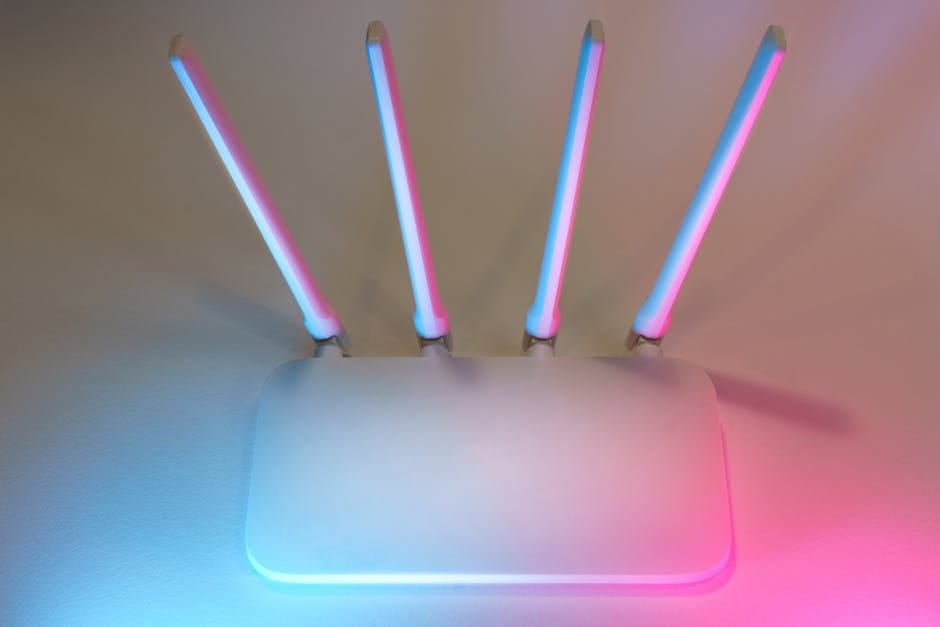
Your internet speed test says 900 Mbps. The ISP swears the line is fine. Your smart TV in the back bedroom still buffers in the middle of every episode. Your partner's Zoom call freezes every time they move to the kitchen. The router, sitting on the shelf where the cable modem came in, is doing its job as badly as possible.
Most homes have the same problem: a single router, placed where the cable enters the house, attempting to cover rooms it can't reach. The fix is a mesh system. But the mesh market is crowded with products that don't do what they promise, so let's sort it out. Spending $500 on a mesh system that isn't meaningfully better than your old router is a worse outcome than just moving your existing router to a central location.
What a mesh system actually does
A mesh system is two or more access points that communicate wirelessly to blanket a larger area. Instead of one router pushing signal through three walls and a chimney, three smaller access points each cover their section of the house and hand off your phone seamlessly as you walk between them.
That's the promise, anyway. In practice, the quality of the handoff and the backhaul between nodes varies enormously between brands. A bad mesh system is barely better than the single router it replaced. A good one feels like having fiber in every room.
The key specification people misunderstand: total bandwidth across the mesh. Manufacturers list numbers like "AX6000" or "BE22000" that sum the theoretical maximums of every radio. These are marketing numbers. What matters is the actual throughput from a client device to the internet gateway, measured in a real home. That number is almost always 30-60% of the marketing figure. Keep that in mind when you see a "fastest mesh ever!" ad.
The four that actually work
Eero Pro 6E (or Eero Max 7 if you have Wi-Fi 7 clients)
Eero is owned by Amazon, which bothers some buyers. It's also the most reliable mesh system for non-technical users, full stop. The app setup takes five minutes. The handoff between nodes is nearly perfect. Firmware updates happen automatically in the background. A three-pack of Eero Pro 6E covers 6,000 square feet and runs about $499. The Eero Max 7 three-pack is $1,699 if you have newer Wi-Fi 7 devices.
The downside: some advanced features are behind the Eero Plus subscription ($9.99/month). You can use the system without it. The tradeoff is you lose features like ad blocking and parental controls that are free on competitors.
For a family with older parents, kids, and a mix of devices who need it to just work — Eero is the answer. For someone who wants to tinker with VLANs, block specific devices by MAC, or run pi-hole — look elsewhere.
TP-Link Deco BE85
If you want Wi-Fi 7 without Eero's price, the TP-Link Deco BE85 two-pack at $999 is the best value. TP-Link's app is less polished than Eero's, but the hardware is excellent. Dual 10-gigabit Ethernet ports per node means you can actually use multi-gig internet if you have it. The 6 GHz band is wide open, which matters for future devices.
Caveat: TP-Link's handling of firmware has been criticized in enthusiast forums. The system updates, but the release notes are thin. For the average user, the Deco works. For a power user who wants detailed control, it's fine but not ideal.
The Deco is the right pick for anyone with a recent MacBook Pro M4 or newer iPhone that supports Wi-Fi 7, or anyone planning multi-gig internet service. If you have 500 Mbps cable and Wi-Fi 6 phones, save the money and buy Wi-Fi 6E instead.
Ubiquiti Dream Router + U7 Pro access points
This is what I run. It's also a system I cannot recommend to most people. The Ubiquiti setup requires 20 minutes of config, understanding of VLANs if you want to use them, and comfort with a dashboard that looks like enterprise networking gear. In exchange, you get a network that will not go down for three years, enterprise-grade hardware at prosumer prices, and features no consumer mesh offers.
A Dream Router ($199) plus two U7 Pro access points ($279 each) covers a 3,000 square foot home with rock-solid performance. Total: $757. Add a PoE switch ($99) to power the APs, and you're at $856 for a better system than any mesh at twice the price.
Ubiquiti is my answer when someone knows what they're doing. For everyone else, Eero.
Netgear Orbi 970
Expensive ($1,499 for a three-pack), but the most powerful consumer mesh I've tested. The Orbi's dedicated Wi-Fi 7 backhaul between nodes means devices at the far end of the mesh actually get full speed. Most mesh systems lose 40-60% of throughput at the outer node. The Orbi 970 loses about 15%.
The app is decent. The Netgear upsells are aggressive — the company wants you on its Armor subscription. You don't need it.
Orbi is the pick for large homes — 4,000+ square feet — where nothing smaller can cover the far ends of the house at usable speed. Below that size, you're paying for capability you can't fully use.
What to actually check before buying
Speed test your current router at the furthest room you care about. Write down the number. That's your baseline. A mesh should at least double that number.
Count your devices. An average home has 25-40 connected devices now, including smart bulbs, thermostats, doorbells, phones, laptops, TVs, and watches. Cheap mesh systems fall over around 50 devices. Any of the four above handles 100+.
Check your internet speed. If you have a 300 Mbps plan, you do not need Wi-Fi 7. Wi-Fi 6E is more than enough, and costs less. If you have a 1 Gbps or faster plan, Wi-Fi 7 is starting to make sense because its wider channels use that bandwidth better.
Consider your house's construction. Stud walls and drywall are friendly to Wi-Fi. Lath and plaster with metal mesh destroys it. Concrete is nearly opaque. A 2,500 sq ft stud-and-drywall house is a two-node territory; the same house in lath-and-plaster needs three nodes. Old Victorian homes with brick interior walls need even more.
The setup mistake that kills performance
Every mesh system has a main node (connected to your modem) and satellite nodes. The satellite nodes need to be within reasonable range of the main node or each other. Not 30 feet through two concrete walls. Not in the garage across the backyard. If the satellites can't talk to the main node reliably, the whole mesh collapses.
Rule of thumb: place each node so it's within line-of-sight of at least one other node, or through only one interior wall. The app on every system I've used shows you the backhaul quality. If the color is anything but green, move the node.
If you have Ethernet in the walls — and many newer homes do — wire the backhaul. Plug the satellite nodes into Ethernet. Performance roughly doubles versus wireless backhaul. This is the single biggest improvement most users miss.
A few networking habits worth adopting
- Restart your mesh every 60 days. Not because the hardware needs it, but because routers accumulate state that firmware doesn't always clean up. A midnight restart takes two minutes and prevents 90% of "the internet is slow tonight" calls to the ISP.
- Don't broadcast two separate SSIDs for 2.4 and 5 GHz. Use one SSID for the mesh and let band steering handle the rest. Unless you have a specific smart home device that only joins 2.4 GHz — in which case enable the "legacy 2.4 GHz" option most systems offer.
- Change the default admin password. It is 2026. People still don't do this.
- Enable WPA3 where possible. Every mesh in this guide supports it. Every reasonably modern phone and laptop works with it. WPA2 is fine but WPA3 is better, and there's no downside to switching.
What not to do
Do not buy the mesh system your ISP rents you. It's almost always an underpowered router with basic features, and the monthly rental adds up to more than a good mesh within 18 months. Return the ISP hardware and buy your own modem too, if local rules allow.
Do not buy a $99 three-pack from a brand you've never heard of. Saving money here is saving money on the foundation that every other device in your house depends on. The $500 you "save" costs you three years of bad Zoom calls and rebooting the router twice a week.
Do not install your main router inside a closed cabinet or TV console. Wi-Fi signal doesn't appreciate wood more than it appreciates drywall. The main node sits in the open, on a shelf, eye level if possible. The one change people resist most is the one that helps most.
Do not buy more nodes than you need. A two-node mesh in a 1,200 square foot apartment covers better than three nodes in the same space, because the nodes aren't competing for channel space. More is not better past the point where you have basic coverage.
The real test after you install
Walk the entire house with your phone. Have something playing — Spotify, YouTube, a Zoom call with yourself on a second device — and see if the stream continues uninterrupted as you move between rooms. The handoff should be invisible. If you hear a stutter when you cross from one coverage zone to the next, either the handoff is poorly configured or you're at the edge of both nodes' coverage and neither is quite strong enough.
Good mesh systems handle this seamlessly. If yours doesn't, the fix is usually adding or moving a node, not replacing the system. Spend an hour on placement before giving up.
The goal isn't the shiniest router or the highest-numbered Wi-Fi generation. The goal is that you stop thinking about Wi-Fi. The good mesh systems make that happen. Buy one, place the nodes where the app tells you, and get on with your life.