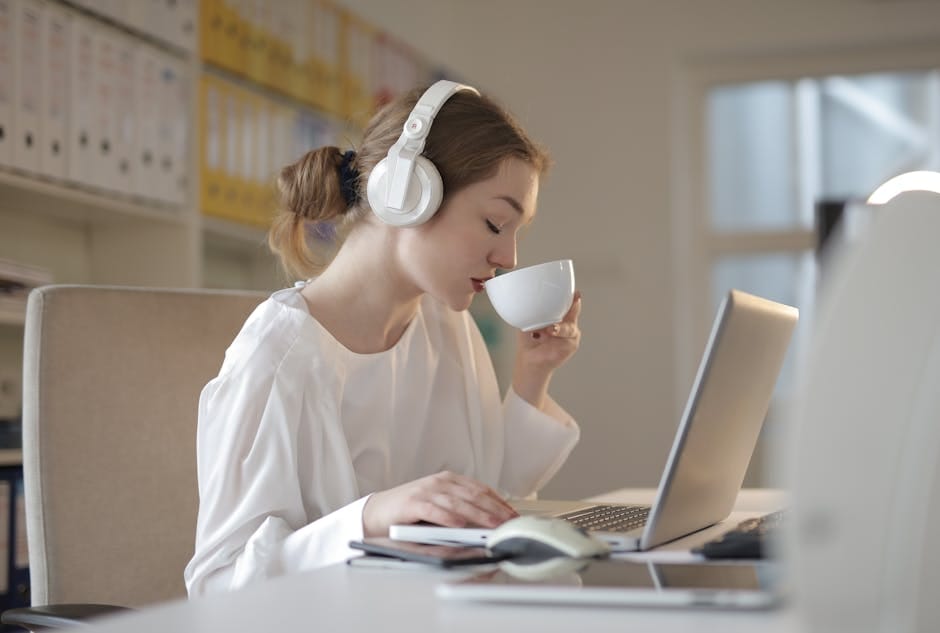
Most noise-cancelling headphone reviews focus on the wrong use case. They test them on airplanes, where ANC is easy (constant drone, wide spectrum). They don't test them in the one situation most readers care about: a mid-afternoon office where colleagues are talking, the HVAC kicks on, someone's eating chips at the next desk, and you need to focus for ninety minutes.
I've worn all three flagship ANC headphones — Sony WH-1000XM5, Bose QuietComfort Ultra, and AirPods Max — as my daily office headphones over extended periods. Here's which one actually solves the office use case.
The short answer
For pure office use (8+ hours daily, long focus sessions, comfort over sound quality): Bose QuietComfort Ultra.
For best sound quality + ANC in the office: Sony WH-1000XM5.
For seamless Apple ecosystem integration with excellent ANC: AirPods Max.
These aren't interchangeable. Each wins at something specific. Let me walk through why.
Bose QuietComfort Ultra — $449
Best-in-class ANC for consistent noise. The ANC is slightly more aggressive than Sony's in blocking out HVAC hum, nearby conversations, and keyboard noise. Office ambient noise feels further away.
The real advantage: comfort. Softer earcups with deeper foam. Lighter clamping force. You can wear them for eight hours without fatigue. I've done full workdays in the Bose without even noticing them on my head.
The trade-off: sound quality is a step behind Sony. The tuning is slightly bass-heavy and slightly recessed in the mids. Fine for podcasts, audiobooks, and most music. Less ideal for critical listening to acoustic or jazz recordings.
Battery: 24 hours with ANC on. Covers a full workday with margin. Quick charge 15 minutes for 2 hours of use.
For pure office use, this is the pick. The comfort advantage over 8 hours outweighs the sound quality advantage of Sony.
Sony WH-1000XM5 — $399
Best balance of ANC and sound quality. The ANC is slightly less aggressive than Bose but more even — it handles sudden loud noises (door slams, laughter) with less artifact. The sound signature is more neutral and detailed than Bose.
Comfort: good but not Bose-level. The XM5 clamp is firmer and the earcups are smaller. After 4-5 hours of continuous wear, you start to notice them.
Software integration: the Sony Headphones Connect app is genuinely useful. Multi-point pairing works reliably (connect to both laptop and phone simultaneously). Custom EQ is available if you want to tune the sound. Spatial audio upmixing works well on certain content.
Battery: 30 hours with ANC on. Best in class.
If you care about music quality during office breaks, or you wear headphones in various non-office contexts, the Sony is the better all-rounder.
AirPods Max — $549
Best-in-ecosystem headphones for Apple users. The physical build is premium — aluminum and memory foam construction. The sound signature is detailed and balanced.
What AirPods Max does uniquely: automatic switching between iPhone, iPad, and Mac. Spatial audio on supported content. Seamless integration with Find My (important given the $549 price). H2 chip for low-latency audio.
The problems: weight. The AirPods Max is 385 grams — heavier than Bose (254g) or Sony (250g). After 4 hours of continuous wear, the weight is noticeable as pressure on the top of the head. Uncomfortable for all-day office use.
No active cooling. The ear cushions trap heat. In a warm office they're uncomfortable for long sessions.
Battery: 20 hours with ANC on. Lowest of the three, but still a full workday.
If you're deeply in the Apple ecosystem and use headphones for multiple device scenarios (office Mac, iPhone calls, iPad video), the AirPods Max is worth the price. If you'll wear them all day at a desk, they're not the right tool.
ANC performance details
The constant noise problem
HVAC systems. Air purifiers. The dehumidifier. These constant low-frequency noises are the easiest thing for ANC to block. All three headphones handle them exceptionally well. Turn any of them on and the background noise disappears.
The human voice problem
Human voices are the hardest sound for ANC to block. Voices have complex harmonics and frequent transients. The algorithms fight against them harder, with visible artifacts.
Ranked for voice blocking: Bose > Sony > AirPods Max. The Bose specifically is better at reducing nearby conversations to muffled background. The AirPods Max tends to let more conversation through.
The transient noise problem
Door slams, laughter, glass breaking, anything sudden and loud. ANC reacts to these events by temporarily increasing volume of ambient, which can cause a "pop" sensation. Sony handles transients best — they pass through with minimal artifact.
Transparency modes
All three headphones can switch from ANC to "transparency" (passing external sound through) for conversations without removing headphones.
Ranked for transparency quality: AirPods Max > Sony > Bose. The AirPods Max transparency is so natural it sometimes feels like the headphones aren't on. The Bose transparency is functional but less natural.
For office use, transparency mode is surprisingly useful. Colleague walks up to your desk, tap the side of the headphone, talk normally, tap again to return to ANC. No headphone removal.
Microphones for calls
All three have mic arrays with beam-forming for clearer calls. In quiet rooms, all three sound excellent on the other end.
In noisy environments (open office, home with kids), ranked: AirPods Max > Sony > Bose. The AirPods Max has the most sophisticated beamforming and produces the cleanest call audio in noisy conditions.
For someone who takes 4+ calls daily, this matters.
What to avoid
Skip the Bose 700 (the older model). The Ultra is genuinely better in every dimension.
Skip the Sony WH-1000XM4 if you can afford the XM5. The XM5's improvements are meaningful.
Skip second-tier ANC headphones (Anker Soundcore, JLab, etc.) for office use. They're fine for commuting and casual use. For 8+ hours of all-day wear with focus work, the flagships are in a different class.
Skip "studio-style" headphones for office use (Beyerdynamic DT 990, Sennheiser HD 800). These are open-back — they let sound out and don't have ANC. Inappropriate for open offices.
The office-specific decision
If I had to buy one pair of headphones specifically for office work in 2026 and nothing else, it would be the Bose QuietComfort Ultra at $449. The comfort alone is worth the $50 premium over Sony.
If the headphones are for general use that includes office work but also music appreciation, commuting, and travel, Sony WH-1000XM5 at $399 is the right pick.
If you're an Apple user deeply in the ecosystem and will use the headphones across iPhone, iPad, and Mac constantly, AirPods Max at $549 justifies its price.
None of these are wrong. All three are excellent. The specific use case matters.
What about the new category: Sennheiser and McIntosh?
The Sennheiser Momentum 4 Wireless at $349 is worth considering as a value pick. Slightly less refined ANC than the three flagships, but excellent sound quality and lighter weight than AirPods Max. For music-focused users who want ANC as a bonus feature, it's underrated.
The Focal Bathys at $899 competes with the flagships on sound quality but costs significantly more. For pure audiophile desk use, it's a different tier.
McIntosh, Mark Levinson, and other premium audio brands have entered this category with $1,000+ ANC headphones. Skip them. The flagship three above are all that's needed; premium brands are paying for badges.
One habit worth adopting
Take the headphones off every 90-120 minutes. Even the most comfortable pair creates pressure over time. A five-minute break without headphones resets the comfort cycle and prevents the afternoon fatigue that defines long headphone sessions.
Your ears also need acoustic variety. Being in ANC silence for 8 hours straight is unusual for human hearing. A few minutes of normal ambient hearing in the middle of the day is actually refreshing.
For a pair of headphones you'll wear hundreds of hours a year for work, spending $449 is reasonable — less than a dollar per hour of use over a three-year ownership period. The quality-of-work improvement from being able to focus in a noisy office makes the ROI clear. Buy the Bose, use them for two weeks, decide if they're right. If they don't work out, return them. None of the three flagships are bad; they just have slightly different strengths. Find yours.