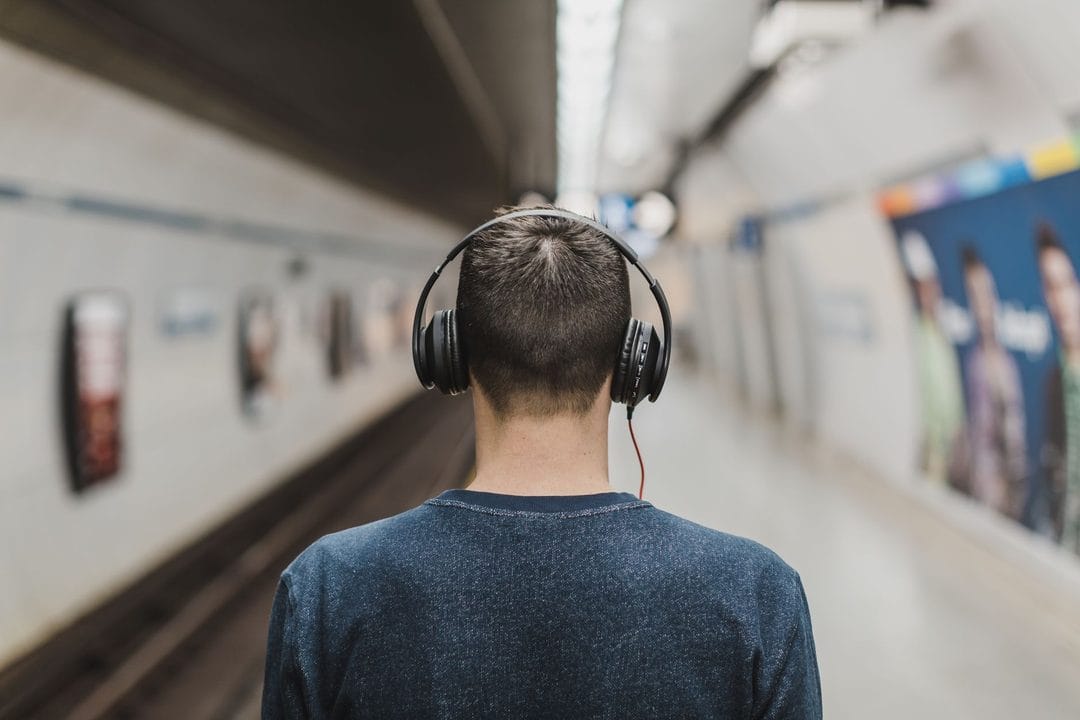
What noise cancelling does on a train
Active noise cancelling headphones put microphones on the outside of each ear cup, sample the sound around you, and play back an inverted copy of it inside the cup, so the two waves cancel out. Because the circuit works by timing, it handles steady, predictable sound best. Engine rumble on a bus, the low drone of a Northern line train between stations and the hum of an air-conditioning unit all fall into that group. Voices, station announcements, a child crying and the clatter of a ticket barrier are a different problem, because they change too quickly for the circuit to match. Most people notice the rumble disappear within a few seconds of switching the feature on, and that is the effect the product photos sell. The part the photos skip is the person talking next to you, which passes through almost unchanged.
The fit decides how much you hear
Fit does more for the sound than any feature on the box.
Over-ear models with a good seal block more low-frequency sound than in-ear models that sit loosely in the ear. Silicone tips on earbuds are easy to get wrong, and a poor seal makes the cancelling weaker and the music thinner at the same time. Try the earbuds in the shop, or at home with the cancelling on, and check the seal by covering the ear with your palm and listening for the change. Over-ear headphones are heavier to carry but usually more comfortable on journeys longer than an hour, which is why most people who ride the train daily choose them. Earbuds win on pocket size and on the walk from the station to the office, and if your commute is ten minutes, that is the better trade.
Battery, transparency and the features you will use
- Battery life is quoted under ideal conditions, and active cancelling drains it faster than the box suggests.
- Transparency mode passes station announcements through without taking the earphones out.
- Multipoint pairing connects the headphones to a laptop and a phone at once, which saves a fiddly reconnect every morning.
- Case size, the charging port and whether the case charges wirelessly matter when the set lives in a jacket pocket.
Mainstream models from Sony, Bose and Apple cover most of what a commuter needs, and the differences sit in tuning and fit rather than in headline features. Sony's WH-1000XM range and Bose's QuietComfort line are the usual over-ear picks, while Apple's AirPods Pro suit anyone already working across Apple devices. Check the current model before you buy, since these lines are refreshed on a regular cycle and the previous generation is often cheaper on the same shelf.
Testing a pair in the shop
Ask the shop to play a recording with steady background noise and a voice over it, because a demo track of a rainforest tells you little about a train. Put the headphones on for two minutes, then take them off and check whether your ears feel tired or hot. Ask the assistant to switch transparency on and off, and listen for how natural the voice sounds in that mode. A good transparency mode sounds almost like taking the headphones off, while a weak one sounds hollow and slightly delayed. Repeat the check with the cancelling on, and note the level of hiss in quiet passages, because that hiss is audible in a silent station.
Sound quality matters less than the spec sheets suggest for a commute. Codec names, frequency charts and driver sizes look impressive on paper, but on a moving train the cancelling and the fit decide what you hear far more than the drivers do. If a pair hurts after an hour, the bass will not matter on the way home. Spend the budget on comfort and seal first, and treat the rest as a bonus.
The price question
Prices move quickly, so compare current listings rather than remembering a figure from a review. Mid-range over-ear models from the major brands usually sit well below the flagship price, and a model from the previous generation often delivers most of the same cancelling. The flagship earns its extra cost in call quality, battery management and small comfort details rather than in a dramatically quieter train. Buy the flagship only if you take a lot of calls on the move and the difference shows up in your work.
Who should skip them
Some commuters are better served by an open design, and it is worth saying so plainly. If your commute is a short walk or a bus you can see from the stop, the silence that cancelling creates adds little and removes the ambient sound you use to plan the next minute. Parents who need to hear a child in the next room, and anyone who must catch a spoken prompt while sitting with a laptop open, will find a fully sealed set frustrating for the same reason. Open-ear designs that sit beside the ear canal and leave the ear free trade some cancelling for awareness, and for those groups that trade is usually the better one. Choose the headphones that match the moments you most need to hear, not the ones with the biggest cancelling number on the box.
Commuting safely with sealed headphones
Keep cancelling on for the train, and switch it off or to transparency when you cycle or walk near traffic. You need to hear a bus coming from behind, and a sealed headset removes that margin. Set the volume low enough that someone a metre away can still get your attention without raising their voice. Many commuters forget this part until a near miss at a junction, and by then the habit is hard to break.
Noise cancelling is not for everyone, and the honest case against it deserves a hearing. Some people feel a pressure in the ears, a faint hiss or a dull headache after a long session, and the effect varies from person to person. A few people find the silence unsettling in a crowded station, because they lose the audio cues that tell them a train is arriving. Try a pair for an hour before you commit if the shop allows it. For a daily train commute longer than an hour, buy over-ear active cancelling. If you cycle more than you ride trains, skip full cancelling altogether and buy headphones for the sound, not the silence.