Outdoor Speakers: Sonos Move 2, UE Hyperboom, JBL Boombox 3
Three big Bluetooth speakers compete for your backyard. Here's which one earns its place — and which is the wrong choice for your use case.
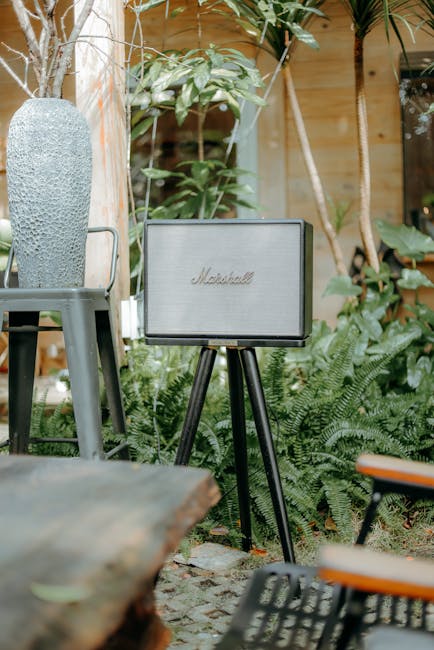
A backyard speaker is a specific tool. It needs to be louder than you think, rugged enough to survive real weather and spills, and capable of filling not just a patio but a backyard with 15-20 people on it. Regular Bluetooth speakers are fine on a deck table. For a 20-person barbecue, or a pool party, or any event where you want music to carry beyond conversational range, you need different hardware.
The three flagship large outdoor speakers are the Sonos Move 2 ($449), the UE Hyperboom ($449), and the JBL Boombox 3 ($499). All three are portable, loud, and weather-resistant. They're also wildly different in what they're optimized for. Here's which one suits which use case.
Sonos Move 2 — $449
Best for Sonos-ecosystem users who want portable outdoor sound paired with an existing home audio system.
What it does right: full Sonos multi-room integration. When not at the patio, the Move 2 drops into the living room as a Sonos speaker synced with the rest of your Sonos speakers. Switch to portable mode and carry it outside. The transition is seamless.
Sound quality: the best of the three for music appreciation. Automatic Trueplay tuning adjusts EQ for the environment. Balanced, warm, detailed sound signature. Works well for background music at a dinner party.
Battery life: 24 hours. Covers a full day of outdoor use.
Limitations: not as loud as the UE Hyperboom or JBL Boombox 3. For a 20+ person party, it may struggle to carry over conversation. For a smaller gathering of 8-10 people, it's the best-sounding option.
UE Hyperboom — $449
Best for loud party situations where sound quality takes a back seat to volume and battery.
What it does right: loudest of the three for its size. The Hyperboom uses an adaptive EQ that boosts mid-range at loud volumes, which helps voices carry over music during conversations. Rectangular form factor with handle, easier to carry than the cylindrical Boombox.
Sound quality: biased toward bass and vocals. Can sound a little muddy in acoustic music. Works excellently for pop, rock, and hip-hop.
Battery: 24 hours. Works with included power cable for extended use at the beach or pool party.
Limitations: no multi-room integration with home audio systems. Standalone device.
JBL Boombox 3 — $499
Best for the biggest parties and the most traditional boombox aesthetic.
What it does right: the loudest of the three. 140 watts of output. Handles outdoor parties with 30+ attendees without distortion. Water resistant (IPX7). The cylindrical form factor is iconic and lets you orient the speaker for directional sound.
Sound quality: punchy bass, forward vocals. Not balanced in the way the Sonos is, but immediately satisfying for pop, rock, and dance music.
Battery: 24 hours. Fast charging (3 hours for full charge).
Limitations: heaviest of the three (15 pounds). Least portable despite the handle. No home audio integration.
The size and form factor reality
The Sonos Move 2 is the most compact. It's the size of a large thermos. Weighs 6.6 pounds.
The UE Hyperboom is a rectangular cube. Larger than Sonos. Weighs 13 pounds.
The JBL Boombox 3 is a cylinder with a handle. Biggest of the three. Weighs 15 pounds.
For pool parties and beach trips, the Sonos is easiest to carry. For set-it-and-leave-it outdoor setup, weight matters less.
The waterproof question
Sonos Move 2: IP56 (water and dust resistant, can survive light rain and splashes).
UE Hyperboom: IPX4 (splash-resistant, not water-proof).
JBL Boombox 3: IPX7 (fully waterproof, can survive being dropped in a pool).
For pool use specifically: JBL is the right pick. It survives real water exposure. The other two don't.
For dry weather outdoor use, all three are fine.
Audio party with two speakers
Most outdoor parties benefit from two speakers positioned to provide even sound across the space. The three brands handle this differently:
Sonos: pair two Move 2 speakers for true stereo. Requires both to be on the Sonos network.
UE Hyperboom: connect two Hyperbooms via PartyUp for stereo or left/right separation.
JBL Boombox 3: connect via JBL PartyBoost to multiple JBL speakers.
For parties with 25+ people, two speakers roughly doubles the usable volume without distortion. Worth considering if you host often.
The "at the beach" test
All three work at a beach. Sand is the enemy — once sand gets into the speaker, no warranty covers it. Avoid setting any speaker directly on sand. Use a cooler or a towel as a barrier.
For pool parties specifically, the JBL Boombox 3's waterproof rating matters. The speaker can go at the edge of the pool, get splashed repeatedly, and keep working.
What to skip
Skip Bose SoundLink Max ($399). It's a fine speaker but smaller than the three above and not optimized for large outdoor spaces. For a patio dinner, fine. For a party, underpowered.
Skip generic "outdoor Bluetooth speakers" under $150. They're smaller and quieter than what you need for real outdoor use. Use your existing Bluetooth speaker, or buy one of the three flagships.
Skip portable speakers with "party lights." RGB lighting on speakers is a distraction during a real party. The speaker should be functional; lights should come from separate party decor.
Skip permanent outdoor speakers (ceiling speakers or rock speakers) unless you're installing them professionally. DIY outdoor speaker installation often produces disappointing sound due to placement issues and weather degradation.
The ownership reality
A portable outdoor speaker lives indoors most of the time. Taken outside for specific occasions — barbecues, pool parties, outdoor movie nights.
Honest question: how many of these events do you actually host per year?
If you host 4-6 outdoor gatherings annually: a $449 flagship speaker makes sense.
If you host 1-2: a $150 mid-tier Bluetooth speaker is sufficient. You don't need flagship volume for occasional use.
If you use it daily (as a home speaker that occasionally goes outside): Sonos Move 2 earns its place.
Indoor use as home speaker
All three work as indoor speakers. Sonos is by far the best indoor use thanks to multi-room features and Trueplay tuning.
UE Hyperboom and JBL Boombox 3 sound fine indoors but lack the home audio integration features. They're party speakers that happen to work at home, not home speakers that also travel.
For indoor daily use plus occasional outdoor, Sonos wins.
The verdict
Buy the Sonos Move 2 if: you already have Sonos at home, you care about sound quality, you host smaller gatherings (8-15 people), or you want a speaker that works equally well indoors and out.
Buy the UE Hyperboom if: you host larger parties, you want the loudest speaker possible without compromising on form factor, and you don't need home audio integration.
Buy the JBL Boombox 3 if: you go to the beach regularly, you want full waterproof rating, and you host the biggest parties where absolute volume is the priority.
None of these is a bad choice. All three are well-built speakers that deliver on their specific design goals. The category is well-served at the $449-499 price point.
Maintenance tips
After any outdoor use, wipe the speaker down with a damp cloth to remove dust, pollen, sand. Let it dry before storing.
Don't leave the speaker outside permanently. Even weather-resistant speakers degrade faster when exposed to sun, rain, and temperature cycles. Bring inside after each use.
Charge to 100% before storing for more than a week. Then charge to 60-80% if storing for months. Lithium batteries last longest when stored partially charged.
Replace the battery when noticeable (usually 3-5 years). Most of these speakers allow battery replacement via customer service, though the cost is approaching half of a new unit. Weigh new-purchase vs battery replacement at that point.
One thing often forgotten
A great outdoor speaker needs a great music source. Your Spotify at 160 kbps through Bluetooth is worse than the same track at 320 kbps. Any track with heavy dynamic range compression will sound worse than carefully mastered tracks on any of these speakers.
A good playlist of well-produced music delivered at higher bitrate is worth more than upgrading from a $250 to $450 speaker. The signal matters as much as the hardware.
Pick the right speaker for your actual hosting patterns. Don't buy the Boombox 3 for a quiet patio dinner because the marketing videos show pool parties. Buy the speaker that fits the life you actually live. That's the speaker that gets used and earns its place in your gear collection.