Projectors vs 85-Inch TVs: The Honest Verdict for Home Cinema
The projector versus big TV debate has a clear winner for most people — but the answer isn't what the enthusiasts claim.
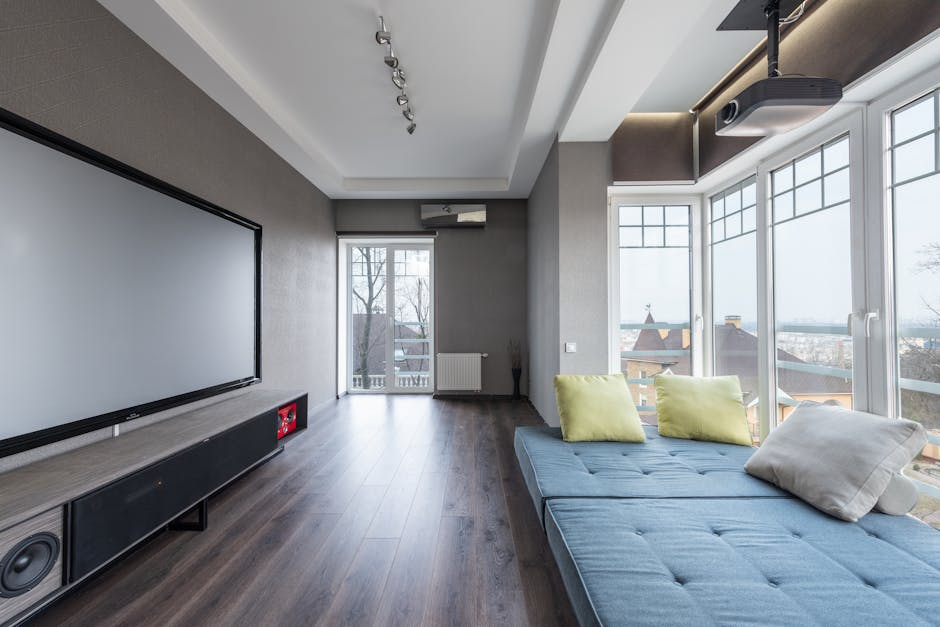
For ten years, home theater enthusiasts have been telling people to buy a projector instead of a bigger TV. The pitch is compelling: for the price of a 75-inch TV, you can get a screen that's 120 inches. You can't fake that with any display, so the argument goes. But the pitch leaves out some important details, and the answer depends much more on your specific room than most online discussions acknowledge.
I've owned both. I had an Epson laser projector for two years, paired with a 120-inch screen in a dedicated home theater room. I replaced it with a 85-inch TCL QM8 in the same room. Here's the honest comparison, and why most people should buy the TV.
The projector promise
A good 4K laser projector (Epson LS800, BenQ TK850i, JVC DLA-NP5, or Hisense PX3-PRO) produces a 100-120 inch image for $2,500-5,000. That's genuinely bigger than any TV. The cinematic feeling of a proper home theater is unique.
The projector wins for:
- Maximum screen size at a given budget.
- The cinematic immersive feel of a genuine "movie theater" experience.
- Flexibility — the projector doesn't dominate the room when not in use.
The projector reality
The cinematic feel requires a dark room. Not dim — actively dark. Any ambient light destroys contrast. Daytime viewing is unwatchable on most projectors.
Setup is real work. Proper projection requires a screen (real screen, not a wall). Keystone correction introduces image quality compromises. The projector needs to be mounted or placed precisely. Cable management gets complicated.
The maintenance schedule: projector lamps (for traditional bulb projectors) last 2,000-4,000 hours and cost $150-300 to replace. Laser projectors last longer (20,000+ hours) but cost more upfront. The filters need cleaning periodically.
The image quality is real but specific. Peak brightness of even the best consumer projectors is 2,500 lumens. An 85-inch TV has 2,000+ nits peak brightness, which is brighter for HDR content per unit area.
The 85-inch TV reality
The TCL QM8 85-inch costs $1,999. The Hisense U8N 85-inch is $2,499. Both produce image quality that was $10,000 five years ago.
What the TV wins:
- Brightness, enormously. HDR content actually looks HDR.
- Works in any lighting. Daytime, dim, or dark.
- Zero setup complexity. Plug it in, turn it on.
- Color accuracy out of the box.
- Lower total cost over 10 years (no lamp replacements, no screen purchase).
The TV loses:
- Maximum size. 85-inch is the largest TV in reasonable budget ranges. 98-inch TVs exist but cost $8,000-15,000.
- The cinematic "feel" of a truly dark room with 120+ inch screen is unique to projectors.
The room question
Everything about this debate hinges on the room.
Dedicated home theater room (basement, spare room)
No daytime viewing. Absolute light control. Large enough for 10+ feet viewing distance. A projector genuinely wins here. The large-screen advantage exceeds the projector's compromises because those compromises don't matter in a dark basement.
If you have this room, get a projector. The Epson LS800 at $3,299 is the best value in proper home theater projection. Pair with a 120-inch ALR (Ambient Light Rejecting) screen for $899-1,299.
Living room or family room
Kids watch during the day. Lights are on for dinner. Windows exist. A projector in this room is frustrating — you dim the room for movies, otherwise the projector is unusable.
A TV is the right answer. An 85-inch TV is already larger than most people need. It works at any time of day. Picture quality is excellent.
Garage, man cave, or hobby room
Depends on what it's used for. A garage theater room can support a projector if light control is possible. If it's also a workshop, TV is better.
The specific scenario: 85-inch TV wins
For a typical American or British family's living room, the 85-inch TV wins every comparison metric that matters:
Daytime watching: TV wins.
Kids in the room: TV wins (projectors require immobile setup, kids bump them).
Streaming with quick setup: TV wins.
Ten years of reliable use: TV wins (no bulb replacements, simpler hardware).
Total cost over 10 years: TV wins by about $2,000 after accounting for lamp replacements and screen purchase.
The only metric where projector wins is "screen size." And for most people, 85 inches is already bigger than they need. The projector's 120+ inches becomes overwhelming in a typical family room.
When the projector is the right answer
Dedicated home theater enthusiasts: projector wins. You've committed a whole room to watching movies. You want the screen size. You accept the dark-room requirement.
Renters who move frequently: portable projector (Xgimi Horizon Pro or LG CineBeam HU810P) + portable screen combination is more flexible than a 85-inch TV that's hard to move.
Homeowners with specific viewing habits: if you exclusively watch movies in the evening with lights off, projectors deliver something a TV can't match.
Short-throw projectors for small rooms: these are a different category. The Xgimi AURA at $2,499 sits on a credenza under the projection area and works in rooms where long-throw projectors can't fit. Interesting technology for specific spaces.
The budget math
Projector setup: $3,299 (Epson LS800) + $1,099 (screen) + $200 (mounting) + $500 (10 years of lamp replacements for alternative projectors) = $5,098.
85-inch TV setup: $2,499 (Hisense U8N) + $199 (wall mount). Total: $2,698.
TV saves $2,400 over 10 years. That's meaningful money for a family or for someone on a budget.
For the enthusiast who values the projector experience, the extra money is justified. For the casual viewer, it's overspending for a specific experience rarely accessed.
Technology considerations
Laser projectors last vastly longer than lamp projectors. A laser projector bought in 2024 should work without significant service through 2035 or later. A lamp projector bought in 2024 will need 3-5 lamp replacements in that time.
Triple-laser projectors (RGB laser, rather than single-color laser with phosphor) have better color accuracy and higher peak brightness. They cost more. The Hisense PX3-PRO at $3,499 is a good example.
Ultra short throw projectors (UST) project from very close to the screen. Useful for renters and for rooms where ceiling mounting isn't practical. Less image quality than long-throw projectors at the same price.
The projector technology is mature and works well. The issue isn't the projectors themselves — it's the match between projector and use case. Get the match wrong and you have expensive regret.
The right test before buying
Before buying a projector, watch a movie in your actual living room with all shades drawn and lights off. Do this at 2 p.m. on a sunny Saturday. Does the room actually get dark enough that you'd be happy watching HDR content?
Most people find their "dark" living room is still too bright for a projector. The windows let in ambient light through shades. The hallway lights leak. The refrigerator light comes on.
If your living room can truly go dark, a projector is viable. If it can't, you're buying the wrong tool.
What to do instead
If you want the largest possible screen in a typical living room: buy the biggest TV your budget allows. 85-inch is the right target for under $3,000.
If you want a dedicated home theater experience: build a proper home theater room (basement, enclosed room) and invest in the projector. Don't compromise with a half-measure in the living room.
If you have a specific use case where projectors' flexibility matters (outdoor movie nights, portable setup, etc.): consider a portable projector as a secondary device alongside your primary TV.
The projector vs TV debate isn't about technology. It's about matching the display to the room. 10 years of home theater advice dressed up as "projectors are better" has led many people to buy projectors that sit unused because they can't use them in their actual rooms. The 85-inch TV is a significantly better choice for most homes. Spend the difference on a great TV, proper HDMI cables, and a good streaming device. That's the setup that will get used.