Sous Vide, Air Fryer, Instant Pot: What Earns Kitchen Counter Space
Your counter has room for maybe three kitchen gadgets. Here's how to pick the three that actually earn their space.
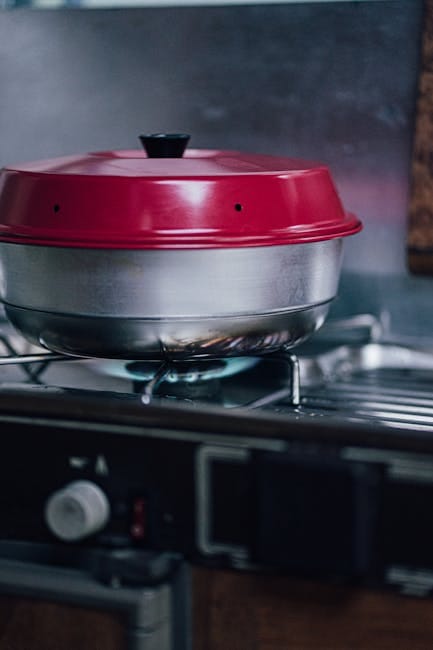
Every kitchen gadget launched in the last decade has been promoted as life-changing. The Instant Pot was going to replace five pots. The air fryer was going to replace deep frying. The sous vide circulator was going to turn every home cook into a chef. The bread machine, the juicer, the soda maker, the countertop pizza oven — all of them promised to earn their counter space forever.
Most of them got used for six weeks and then lived in a cabinet, occasionally dragged out for a specific dish, then returned to storage. Counter space is finite. Which gadgets actually earn it?
Here's the verdict after years of owning most of these, using some daily, and quietly donating others.
The gadgets that earn their space
Air fryer: yes, for most families
The air fryer is the rare kitchen gadget that delivered on the hype for most of the people who bought one. It makes frozen food crispy, reheats leftover pizza perfectly, roasts vegetables quickly, cooks chicken wings better than a conventional oven.
Best pick: Ninja Foodi 10-in-1 or Cuisinart TOA-70 ($199-249). Dual-basket models (Ninja Foodi DZ090 for $229) let you cook two different foods at different temperatures simultaneously, which is genuinely useful.
The air fryer gets used 3-5 times a week in most households. It earns its counter space.
Caveat: if you have a modern convection oven, a good toaster oven with convection (Breville Smart Oven Air Fryer Pro at $399) does the same job. You don't need both a toaster oven and an air fryer.
Instant Pot (multi-cooker): yes, with caveats
The Instant Pot is useful. It's also less revolutionary than the 2017 hype suggested. What it actually does well: beans from dry in 30 minutes, stocks in 2 hours instead of 8, beef stew that's genuinely tender in an hour, yogurt if you're into that.
What it doesn't replace: a good Dutch oven (the Le Creuset-style heavy pot). Braises, bread baking, risotto, and anything that benefits from extended simmering still do better in a Dutch oven.
Best pick: Instant Pot Pro (6-quart) at $129 or Instant Pot Max (8-quart) at $199. The 8-quart is right-sized for families of 4+. The 6-quart is enough for most couples.
Verdict: earns counter space for households that batch-cook beans, stocks, and large portions of soup or stew. Less essential for households that cook more improvised daily meals.
Immersion blender: yes, always
The most under-rated kitchen tool. An immersion blender at $69 (KitchenAid or Cuisinart) blends soup directly in the pot, emulsifies salad dressings in a jar, makes smoothies, and purees baby food. All without dirty blender pitcher.
Doesn't count as "counter space" since it lives in a drawer, but belongs in every kitchen. Replace a $300 blender with a $69 immersion blender if you don't make protein shakes.
Sous vide: yes, for specific cooks
Sous vide cooking is genuinely excellent for specific foods: eggs (perfect soft-boiled), steak (edge-to-edge medium-rare), chicken breast (moist, not dry), large cuts of pork.
Best pick: Anova Precision Cooker Pro at $399 or Breville Joule Turbo at $249. Both work well. The Breville Joule is WiFi-enabled with a nice app; the Anova is more rugged.
Caveat: sous vide has a learning curve. You need vacuum bags (or Ziploc with the water-displacement method), a pot large enough for the circulator, and patience. For people who embrace the process, it's life-changing. For people who just want to cook, it's overkill.
Only buy if you've been curious about sous vide specifically. Not a "have in the kitchen just in case" gadget.
The gadgets that lie in cabinets
Bread machine: mostly no
Bread machines produce acceptable bread with minimal effort. The problem is that acceptable bread isn't memorable bread. If you're going to make bread at home, you'll end up using a Dutch oven and regular oven method — which produces better bread than any machine.
The Zojirushi Home Bakery at $349 is the "good" bread machine. Still, most of them sit unused after six months.
Exception: people with busy schedules who want simple sandwich bread on a timer. For this use, a bread machine earns its space. For anyone who wants bread-as-a-hobby, the machine is a dead-end.
Juicer: almost always no
Juicing is a brief hobby for most people. The cleanup overhead kills it faster than anyone expects. An expensive juicer like the Breville 800JEXL ($299) produces great juice and sits idle.
Blenders are more versatile (smoothies, soups, sauces). Buy a Vitamix or Blendtec instead if you want whole-food liquid nutrition.
Popcorn maker, snow cone maker, chocolate fondue: no
Single-use novelty appliances. Popcorn can be made on the stove in 4 minutes. Chocolate fondue uses a pot with a candle. None of these require dedicated equipment.
Smart scale: no, unless you bake seriously
A regular digital kitchen scale ($20) does everything a "smart" scale does. The app integration doesn't add value. Smart scales are about $60-100 more than unnecessary.
The kitchen tools that matter more than gadgets
A chef's knife that's actually sharp. A cutting board that's large enough. A cast iron skillet. A Dutch oven (Lodge 6-quart at $79 or Le Creuset 7-quart at $379). A solid heavy-gauge stainless skillet. A fine-mesh strainer. A real thermometer (Thermapen ONE at $129, or the Thermapen Classic at $75).
These tools cost a fraction of the appliance collection most people accumulate, and they genuinely improve every meal.
A $400 air fryer paired with a $20 knife and a $30 pan produces worse food than a $70 pan paired with a $129 knife. Fundamentals matter more than gadgets.
The counter space test
Before buying any kitchen appliance, ask: is there counter space for this? Not "can I find room by moving things?" but "will this live out on the counter?"
If an appliance goes in a cabinet, it gets used half as often. Eventually it gets used rarely. Eventually it gets donated or forgotten.
Counter appliances that live out: air fryer, Instant Pot, coffee maker, toaster oven, maybe a stand mixer. That's about it for a normal kitchen.
Anything that has to go in a cabinet is a sometimes-tool, not a daily-tool. Be honest about whether you'll use it "sometimes" enough to justify storing it.
The appliances worth buying over time
If you build a kitchen over the years, the order I'd add appliances:
- Good knife and cutting board (year one).
- Cast iron skillet and Dutch oven (year one).
- Immersion blender (year one).
- Thermapen or good instant-read thermometer (year one).
- Electric kettle (year one) — genuinely useful daily tool.
- Air fryer or convection toaster oven (year two).
- Instant Pot if you eat a lot of beans and braised meats (year two).
- Stand mixer if you bake regularly (year three, and only then).
- Sous vide circulator if you've decided you specifically want this (year three+).
The stand mixer is the controversial item. A KitchenAid at $400-500 is beautiful and reliable. It's also overkill for anyone who doesn't bake weekly. Hand mixers at $40 cover 80% of household baking needs.
The kitchen tech I'd actually recommend most
The most useful "tech" upgrade for kitchens in 2026 isn't an appliance — it's a meat thermometer. A Thermapen ONE at $129 reads temperature in 1-2 seconds, accurate to 0.7°F. Using it transforms meat cooking from guesswork to precision.
A steak pulled from the pan at 130°F internal, rested 5 minutes, and served is consistently medium-rare. Without the thermometer, you're guessing. Every home cook who adopts this tool reports the same thing: the food gets instantly better.
Spend $129 on a Thermapen before spending $400 on an air fryer. You'll improve more meals, more often. The meat you cook daily matters more than the occasional air-fried snack.
The cognitive load question
Every kitchen appliance you own is cognitive overhead. You remember where it is, when to clean it, when the seal needs replacing, how to use the fiddly controls. A kitchen with 15 appliances has 15 small mental items.
A minimalist kitchen with one cast iron skillet, one Dutch oven, one stainless pan, good knives, a thermometer, and one or two electric gadgets (kettle + air fryer) is cognitively simpler and often produces better food than the 15-gadget kitchen.
The people who cook best often have fewer tools, not more. They master what they own. Keep that in mind when the next "must-have" kitchen gadget launches and promises to change everything. It won't. The fundamentals still matter.
Three or four appliances earn counter space. A few more live in cabinets for occasional use. Everything else is clutter. Buy the ones on the earn-space list, ignore the rest, and get better at using what you have.