Travel Tech That Earns Its Place in Your Carry-On
Forty flights in the last year taught me which gadgets earn their weight in the carry-on and which are dead weight.
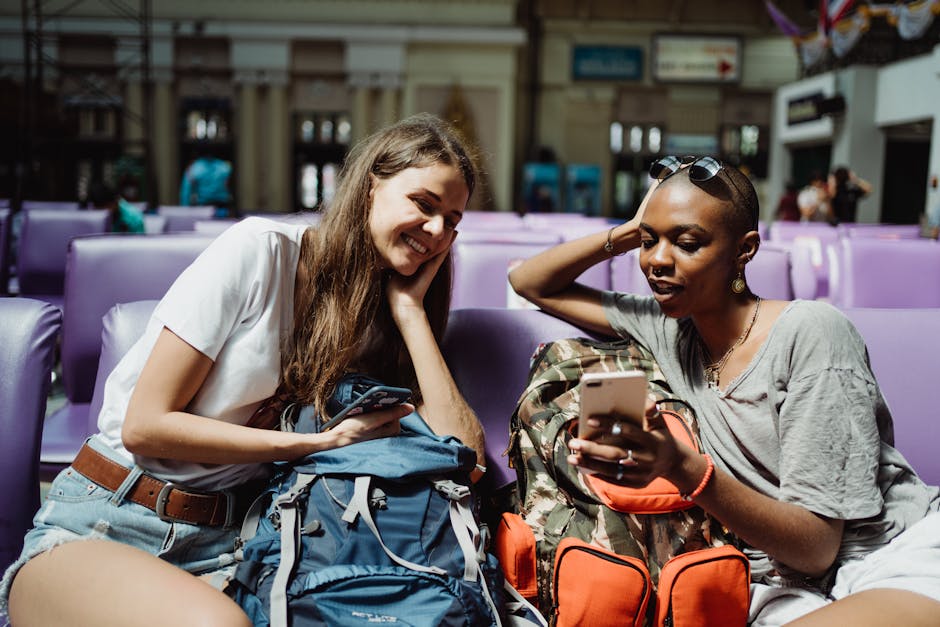
A friend once asked me to show him what I pack for a two-week international trip. I emptied my carry-on. He looked at the pile and said, "That's not much." It wasn't always that way. For years I traveled with three bags and a 6-pound camera. The difference is that I finally stopped packing things I didn't use.
Below is the tech that earns its place in my carry-on now, plus the items I've left at home for good. This isn't a gear-list romance. It's forty flights of experience condensed, and it took many trips of dragging unused hardware through airport security to learn each lesson.
The essentials
A real power bank — not a slim one
The 5,000 mAh "credit card" power banks are fine for a morning. They will not get you across a 14-hour flight plus a delayed transfer. The Anker 737 Power Bank — 24,000 mAh with 140W output — is the best travel power bank made today. It charges a MacBook Pro at full speed. It charges an iPhone eight times. It fits in the jacket pocket of a hoodie.
Price: $149. Check airline carry-on rules — the 737 is under the 100Wh limit, but airlines vary in how they interpret that. I've never been stopped. Some travelers report issues on certain carriers. Bring the spec sheet printed, or at least screenshotted.
The alternative is the Baseus Blade 100W laptop power bank at $89. Thinner form factor, slightly lower capacity (20,000 mAh), but still covers most travel scenarios and slides into a laptop sleeve more comfortably. I've used both. For serious trips I bring the Anker. For short hops the Baseus is enough.
One cable that does everything
Stop carrying four cables. One Anker 240W USB-C cable ($19) charges your laptop, phone, earbuds, and watch (via a USB-C to Apple Watch puck, which is a separate item). If you have any Lightning holdouts — older iPhones, certain accessories — add a single USB-C to Lightning. That's two cables total.
I used to pack five cables. I now pack two. Whatever failure mode you're imagining, the universal USB-C handled it.
Also bring a short cable (6 inches) for power bank use. Long cables tangle in a bag. A short one stays neat, connects the power bank to your phone, and tucks back in a pocket without ceremony. Nimble makes a good 6-inch USB-C cable for $9.
Noise-cancelling headphones
The Bose QuietComfort Ultra or Sony WH-1000XM5 transform an economy flight. Both deliver roughly 24 hours of battery life with ANC on, which covers two long-haul flights and the transfer in between. I prefer the Bose for comfort on long flights — softer cups, lighter clamp — and the Sony for sound quality when I'm not wearing them for eight hours straight.
Do not cheap out here. A $150 pair of ANC headphones actively cancels engine drone; a $90 pair makes you aware the drone exists. The difference at the end of a transatlantic flight is enormous. If you travel regularly, flagship ANC headphones are the single best investment you can make in travel comfort. More than seat upgrades. More than frequent-flyer status.
Do bring the airplane adapter if your headphones support wired mode. Most in-flight entertainment uses 3.5mm or the dual-prong aviation jack. Some newer aircraft have USB-C inputs. Carry a 3.5mm cable + aviation adapter ($15 combined). For true cordless use on the plane, the AirFly Pro ($55) is a Bluetooth transmitter that plugs into the IFE output — excellent piece of gear.
A small laptop stand
The Roost laptop stand ($85) folds to the size of a rolled-up newspaper. It turns a hotel desk into an ergonomic workstation. For any trip where I'll work more than three hours total, it earns its weight. For beach vacations, I leave it home.
The Rain Design iLevo folding stand ($55) is a cheaper alternative that works almost as well. It weighs slightly more and doesn't fold as compactly, but for the price difference it's an honest competitor.
Eye mask plus earplugs
Not tech, but the best sleep accessory pair ever. A contoured eye mask (Manta $30) plus Loop Quiet earplugs ($24) turn any seat into a bearable sleep location. Beats $300 of "sleep headphones" that aren't as comfortable.
The conditional items
A Kindle or Kobo
On a trip where I'll be reading for pleasure, the Kindle Paperwhite Signature Edition ($199) is in the bag. On a work-focused trip, it stays home. The distinction matters because my phone is always available for reading, and carrying a second screen I don't use is the definition of dead weight.
For pleasure reading, the Kindle delivers in a way the phone can't — paper-like screen, no notifications, and a battery that lasts the whole trip. But if you're working fourteen-hour days and collapsing in hotel beds at night, you won't touch it. Be honest about which trip you're going on.
A Sony RX100 or Fujifilm X100VI
For trips where photography is part of the point — a new city, a trip with family, somewhere I won't return to — the camera earns its weight. For a conference in a city I've visited five times, the phone is enough. Most travelers would be honest with themselves and leave the camera home.
If you're a parent traveling with kids, the phone is almost always the right answer. You need speed and availability more than image quality. The camera spends too much time in the bag waiting for a moment that has already happened.
An Apple AirTag in every bag
Since 2023 I've had zero lost bags. I've had one misrouted bag and tracked it myself before the airline admitted the problem. AirTags are $29 each, the battery lasts a year, and the tracking works reliably worldwide. This is one of the best $100 I've ever spent on travel.
Put one in your checked bag. Put another in your laptop bag. If you travel with a partner, put one in their bag too. The Apple ecosystem means any iPhone nearby anonymously relays location, so even in remote places you often get updates. On a recent trip through rural Portugal, my bag pinged location from a village with 200 people. Good enough.
What I've permanently removed
International power adapters
Most modern chargers are universal (100-240V). You need plug shape adapters, not "travel adapters" with built-in electronics. A two-pack of USB-C wall adapters with interchangeable plugs (Zendure Passport III for $59 is the gold standard) replaces the entire adapter kit. Smaller, lighter, and works everywhere I've been.
A Bluetooth travel speaker
I don't use it in a hotel room — my headphones are already there. I don't use it at the beach — the room speakers at any vacation rental are adequate. After three trips of not touching it, it stayed home permanently. The Anker Soundcore or JBL Flip are great speakers; they just aren't necessary travel gear.
A portable hard drive
Cloud storage and a 1TB laptop SSD handles everything now. If you're shooting 4K video as a creator, that's different. If you're a normal traveler backing up iPhone photos, iCloud is enough.
A physical dongle collection
The "dongle bag" I used to carry — VGA, DVI, older HDMI, SD card readers — is obsolete. Most hotels now have USB-C connections. Most conference spaces do too. I pack one USB-C to HDMI cable ($15) and call it done.
The backpack it all fits in
I alternate between a Peak Design Everyday Backpack 20L and an Aer Travel Pack 3. The Peak Design is better for work-focused trips where the gear needs protection. The Aer is better for multi-day personal travel where the bag doubles as the carry-on and duffel. Both sit within carry-on dimensions on every airline I've flown, including the stricter European budget carriers.
For the weekend trip that's genuinely one bag, the Aer Travel Pack 3 at $249 is my strongest recommendation. It opens flat like a suitcase, has excellent laptop protection, and survives four or five days of clothes plus all the tech above. I've used mine for five years. The zipper on the main compartment is starting to wear, but otherwise it looks new.
Packing order that keeps security lines short
Laptop and electronics in the same compartment, together, on top. Charger and power bank together with them. That way when TSA or customs asks for electronics out, it's one motion. Headphones in the top pocket so I can grab them for the flight without unpacking.
Liquids in a single zippered cube with the 3-1-1 bag right on top. Toiletries separate from electronics.
This organization costs zero dollars and saves about five minutes per checkpoint. Over a year of travel, that's a full day of my life back.
The rule I follow
After every trip I empty the bag completely. Anything I didn't touch gets a strike. Three strikes, it leaves the travel kit. That rule is the reason my packing has gotten simpler, not more complicated, over time. The bag gets lighter as I figure out what I actually need versus what I imagine I might need. The bag you carry on the fifteenth trip should be smaller than the one you carried on the first.
One last piece of advice: don't plan your gear around worst-case scenarios. Plan it around the 80% case. If your laptop battery has died on a plane once in three years, you don't need to optimize for that. If your phone has died in a taxi, you do. Preparing for rare problems adds weight you carry every single trip. The travelers I respect most pack exactly enough for the trip they're actually taking, and nothing for the trip they might hypothetically take someday.