The 2026 Robot Vacuum Buyer's Guide for Men Who Don't Want to Think About It Again
Extendable arms, obstacle-climbing legs and self-emptying docks have turned robot vacuums from a gimmick into genuine floor-care hardware — here's which ones in the UK are actually worth the money in 2026.
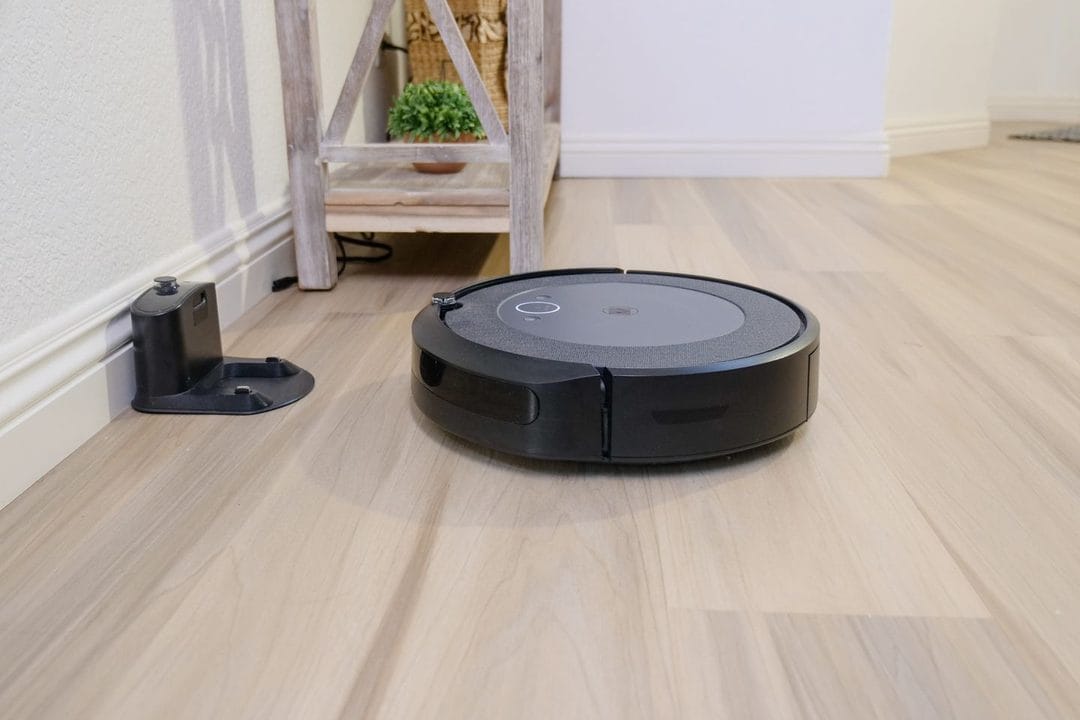
A robot vacuum used to mean bumping into table legs for twenty minutes and leaving the corners untouched. That's not what you're buying in 2026. The current generation climbs door thresholds and low furniture legs, empties its own bin for months at a stretch, and increasingly mops as a second pass without you swapping any attachments. The price gap between "actually good" and "looks good in the John Lewis display" has also widened, which means picking the wrong one at £600 can cost you more in frustration than spending £1,000 on the right one. Manufacturers know this and have leaned hard into spec-sheet numbers that don't translate to a better clean — Pascal ratings on suction being the worst offender, since a robot with higher Pa on paper can still lose to a rival with smarter brush-roll design and better carpet detection. None of that shows up until you've lived with the thing for a month, which is exactly why most buying decisions here go wrong.
Three things separate a good robot vacuum from a bad one in 2026: obstacle handling, dock intelligence, and suction that doesn't fall apart on carpet. Everything else — app design, voice control, the colour of the housing — is decoration. Buy on those three, and the model with the nicer app becomes an easy tiebreaker rather than the main decision. Dock intelligence in particular gets underrated in most reviews, because a robot that empties, washes and refills itself without supervision is the difference between forgetting the thing exists and it turning back into a Sunday chore within six weeks. Suction on carpet is the other number worth actually checking rather than trusting — plenty of models perform fine on hardwood and fall apart the moment they hit a rug, and manufacturers rarely lead with that comparison because it doesn't flatter them. Obstacle handling rounds out the list because it's the one flaw you can't fix after the fact with a firmware update or a different cleaning schedule — a robot that can't get past a door threshold on day one still can't get past it a year later.
The one to buy if budget isn't the constraint
Roborock's Saros 10 is the current benchmark, and at roughly £1,199 it should be. Its signature feature is a retractable arm-mounted mop that lifts and pivots to clean tight against skirting boards and furniture legs — the single worst spot for every robot vacuum before this generation. Suction sits at 22,000Pa, genuinely useful on thick carpet rather than the marketing-only numbers some rivals quote, and the auto-empty dock holds close to seven weeks of debris on a typical two-bedroom flat.
The catch: the Saros 10's arm mechanism is a moving part that didn't exist on last year's model, and early adopter reports on Roborock's own community forum flag occasional arm-retraction faults after six to eight months of daily use. Roborock covers it under the standard two-year UK warranty, so it's a manageable risk rather than a dealbreaker, but it's the reason to wait for a firmware-mature unit rather than buying in the first shipping batch if you can help it.
The genuine obstacle climber
Dreame's X50 Ultra earns its "Ultra" tag honestly. Extendable legs lift the entire chassis over obstacles up to 6cm — door thresholds, thick rug edges, the lip on some skirting boards — that stop nearly every other robot dead. At around £1,299 it costs more than the Saros 10, and for most UK homes that's paying for a problem you don't actually have; the legs matter most in period properties with uneven flooring transitions between rooms; a modern new-build flat with level flooring throughout won't get much use out of them.
Where the X50 Ultra pulls ahead regardless of flooring is edge and corner cleaning — its side brush and chassis geometry get noticeably closer to right-angle corners than the Saros 10 manages, which matters more than the leg-lifting party trick for most living rooms.
The one that makes sense for most people
Eufy's X10 Pro Omni, at roughly £599, is the model to actually recommend to someone who wants this solved without spending four figures. It self-empties, self-washes its mop pads, and self-refills its water tank from the same dock, which covers the three maintenance tasks that make cheaper robots a chore rather than a convenience. Suction tops out at 8,000Pa — noticeably behind the flagships, and it will leave a faint line of debris on deep-pile carpet that the Saros 10 wouldn't — but on hardwood, laminate and low-pile carpet, which describes most UK living rooms, it's not a meaningfully worse clean.
Ecovacs' Deebot X11 OmniCyclone sits between the Eufy and the two flagships at roughly £999, and its main selling point is the cyclone-based auto-empty system, which uses less consumable bagging than rivals over a year of ownership. It's a genuinely good machine. It's also not different enough from the Saros 10 to justify the near-identical price when the Roborock has the better obstacle handling — skip it unless you specifically want to avoid Roborock's ecosystem for privacy or app reasons.
Multiple floors and noise, the two things nobody asks about
If your home has more than one level, check multi-map support before anything else on the spec sheet — every model here handles it, but the number of separately saved floor plans differs, and running out mid-ownership means re-mapping a floor from scratch. Roborock and Dreame both support at least four saved maps as standard; Eufy's app caps out lower on some regions' firmware, which is worth confirming directly with a retailer like Currys or John Lewis before ordering rather than assuming parity across brands.
Noise is the other spec nobody reads until it's too late. Every flagship here runs a "quiet" or "night" mode around 55–60 decibels, roughly the sound of a normal conversation, but full-power cleaning on carpet on any of these models pushes past 65 decibels, loud enough that a video call in the next room will pick it up through most stud walls. Schedule the clean for when you're out, or use the app's quiet-hours setting — all four models support it, and it's one of the few features that's genuinely identical across the price range.
What still trips people up
Pet hair is where the marketing gap is widest. Every manufacturer claims "tangle-free" brush rolls now, and none of them are fully true past six months of daily use with a shedding dog. The Saros 10 and X50 Ultra both use anti-tangle comb systems that genuinely reduce the problem versus 2023-era robots, but "reduce" is the honest word — budget for five minutes of brush-roll maintenance every couple of weeks if you've got a retriever or a husky, regardless of which model you buy.
Mopping is the other overclaimed feature across the board. Every model in this guide mops as a secondary function using a rotating or vibrating pad, and every one of them is worse at actual stain removal than fifteen minutes with a Bona mop and a proper cleaning solution. Treat robot mopping as light maintenance between real cleans, not a replacement for them — it's good at daily dust and light spills, not the coffee ring from last Tuesday.
LIDAR-based navigation (Roborock, Dreame) maps your home more accurately than camera-only systems on the first run, but it also means the robot needs a completely unobstructed initial mapping pass — move loose cables and shoes out of the way before the first clean, or you'll spend twenty minutes re-mapping instead of five.
What to actually do
If money genuinely isn't the constraint and you've got furniture with tight legs or low skirting, the Saros 10 is the better buy over the X50 Ultra — the arm mechanism solves a more common problem than extendable legs do for the average UK home. If your flooring has real obstacle transitions — a period conversion, a raised threshold between rooms — get the X50 Ultra instead and don't second-guess it.
For everyone else, the Eufy X10 Pro Omni at £599 does 90% of what the flagships do for half the price, and that's the one worth buying unless a specific problem in your home points you toward the more expensive options above.