The 2026 Smartwatch Lineup for Men Who Hate Wearables: Apple, Garmin and the One That Looks Like a Watch
The smartwatch finally grew up. Three picks for men who care how a watch looks - plus the luxury option that almost works.
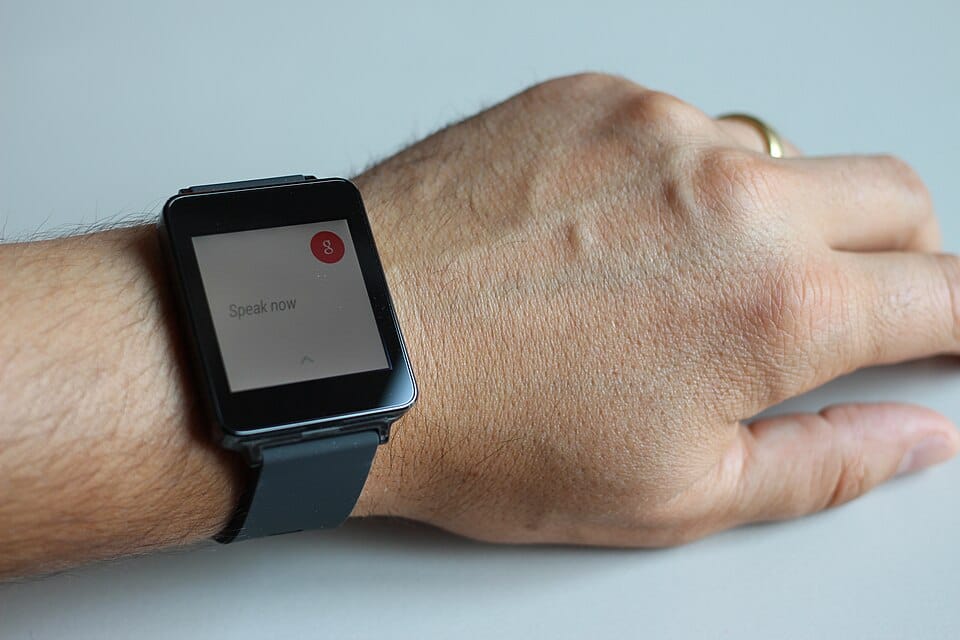
I have spent twenty years on a stainless-steel Submariner and exactly nineteen months wearing various "lifestyle" smartwatches. Most of them came off after a week. They looked like fitness trackers grafted onto plastic. They beeped. They demanded charging cables every other night. They felt like a teenager's gadget on a 42-year-old's wrist.
2026 is the first year I would actually recommend a smartwatch to a man who cares how a watch looks. The hardware has caught up. The software has matured. And critically, the design language has stopped trying to look like science fiction. Here are the three that earn the wrist - and one that almost does.
Apple Watch Ultra 3 - $799
The Ultra 3 launched in September 2025 with the changes Apple should have made in 2023. The case is now titanium grade 5 with a brushed finish, the bezel is smaller, and the screen is a 3,000-nit micro-LED panel that is genuinely readable in direct desert sun. The case dimensions stayed at 49mm, which still feels large on smaller wrists, but the reduction in lug-to-lug length makes it sit dramatically better than the Ultra 2.
Battery life is the headline. Apple claims 72 hours in normal use, and in my testing with always-on display, full notifications, and a one-hour daily workout, I got 68. That is genuinely Garmin territory. Charging from 0 to 80 percent now takes 45 minutes.
Where the Ultra 3 Wins
- Health sensor suite - blood oxygen returned in the US after the patent dispute resolved in early 2025; ECG; the new sleep apnea screening introduced in watchOS 12
- Watch face options - the new Modular Ultra and the analog Photographic faces are the first Apple faces that don't look like a phone
- Diving - depth tested to 100 meters with the Oceanic+ app, the only mainstream smartwatch with real dive computer functionality
- Carrier connectivity - cellular without the phone, including the new satellite messaging in dead zones
The Ultra 3 is the right call if you live in the Apple ecosystem and want one device for sport, daily wear, and everything in between. It does not look like a Submariner. It does not pretend to.
Garmin Fenix 8 - $999 to $1,299
The Fenix 8, released in late 2024 and now in its mature firmware cycle, is the answer for the man who actually trains. It is a serious sports computer first and a smartwatch second. The 47mm AMOLED model is the sweet spot - bright enough to read in summer sun, with battery life of 16 days in smartwatch mode and roughly 30 hours in full GPS with multi-band positioning.
Garmin's training metrics remain the most respected in endurance sport. VO2 Max estimation, lactate threshold, training load, recovery time, race predictions for distances from 5K to marathon - these are not gimmicks. They are calibrated against decades of physiological data and used by serious cyclists, runners, and triathletes who know the difference.
The Catch
The Fenix 8 user interface is dated. The notifications are functional but ugly. The smart-home integration is minimal. If you are looking for a watch that handles your iMessages elegantly, this is not it. If you want every metric known to endurance science, you have arrived.
The new sapphire solar version at $1,099 adds genuinely useful battery extension in long-distance backcountry use - I tested it on a five-day hut trip in Colorado and never charged. That is a meaningful proposition for backcountry skiers, expedition hunters, and ultramarathoners.
Withings ScanWatch Nova Brilliant - $719
This is the watch that looks like a watch. The Nova Brilliant is a 42mm hybrid with a stainless steel case, a real ceramic bezel, sapphire crystal, and analog hands over a small circular OLED for notifications and metrics. From three feet away, no one knows it is a smartwatch. From the wrist, it is.
What it does:
- Heart rate, ECG, blood oxygen, sleep tracking, basic workout detection
- Up to 30 days of battery life on a single charge
- FDA-cleared atrial fibrillation detection
- iOS and Android compatibility, with a clean Health Mate app
What it does not do: GPS for sport, cellular, contactless payment, or rich notifications. You can see who is calling and read the first line of a message. That is it. For the man who wants the health data without the lifestyle takeover, that is the right tradeoff.
Why This Matters
The Nova Brilliant is the proof point that you do not have to wear a small computer to get the value of a smartwatch. The medical-grade sensors are equivalent to anything Apple ships. The watch gets out of your way. And on a casual evening at a restaurant, no one mistakes it for a fitness tracker.
Honorable Mention - Tag Heuer Connected Calibre E5 ($2,450)
This is the watch that almost makes the cut. Tag's fifth-generation Connected uses a 45mm titanium case, a sapphire crystal, and a Wear OS-based platform with a Tag-skinned interface. It looks like a Carrera. It is built to the standards of a Carrera. And it has GPS, heart rate, and proper notifications.
The problem is the price-to-feature ratio. At $2,450 you are paying for the brand, not the technology. Battery life is 24 hours - mediocre by 2026 standards. The platform is Wear OS, which is fine but not class-leading. If you want a Tag, buy a mechanical Tag and a separate fitness band. If you want a great smartwatch in a Tag-shaped body, the Withings does it for a quarter of the price.
Which One
The decision tree is short:
- Apple ecosystem, want it all - Apple Watch Ultra 3
- Train seriously, run/bike/hike/ski - Garmin Fenix 8
- Want it to look like a watch - Withings ScanWatch Nova Brilliant
- Want a luxury brand on the dial - Tag Heuer Connected, but expect tradeoffs
The era of the ugly smartwatch is mostly over. Charging cables every night are mostly over. The era of the smartwatch that earns the wrist of a grown man who already owns watches has, finally, arrived.