Power Bank Buyer's Guide 2026: What the mAh Number Won't Tell You
The headline capacity on every power bank is a lie. Here is what actually decides whether a portable charger is worth your money, with real models and prices.
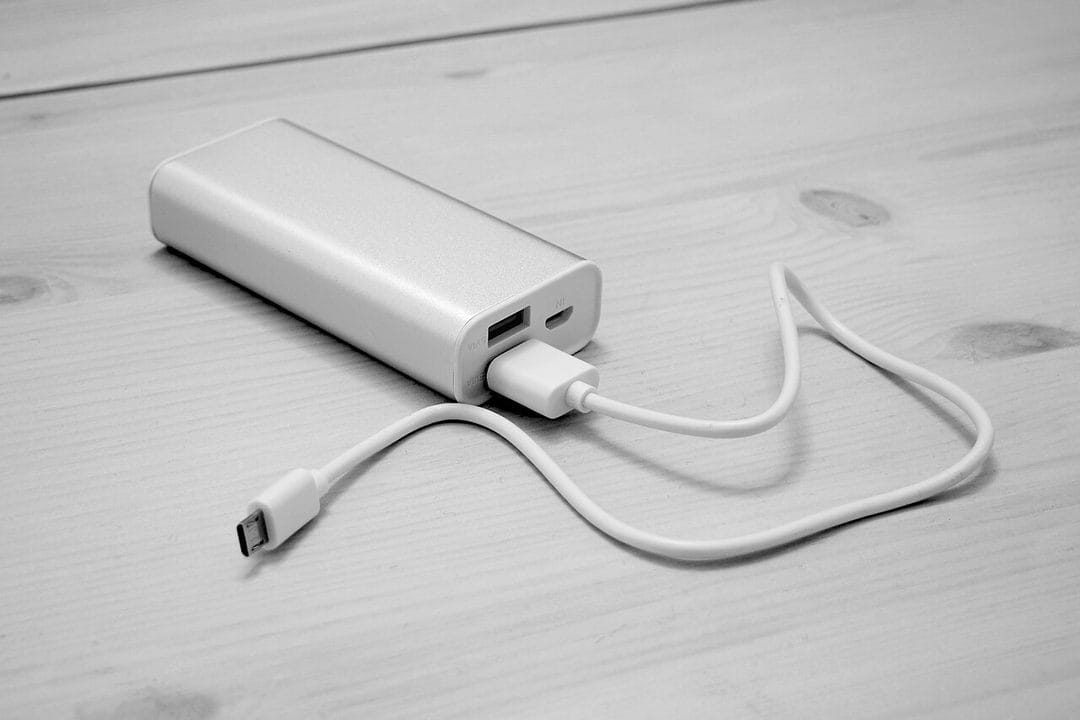
The power bank market runs on one number printed in giant font on the box, and that number lies to you. A pack labeled 10,000 mAh will not put 10,000 mAh into your phone. It will put roughly 6,000 to 6,500 mAh of usable charge into it, because every charge cycle bleeds energy through voltage conversion and heat. So before you spend a dime, understand that the headline capacity is the manufacturer's best-case lab figure, measured at the battery cell, not at your phone's port. The gap between those two points is where most of the marketing happens.
I have bought more of these things than I want to admit, mostly because the cheap ones die, swell, or quietly lose half their capacity after a year. What follows is the stuff that actually decides whether a charger is worth carrying, plus specific models at specific prices that I would hand a friend without a second thought.
What the mAh number actually buys you
Here is the math nobody on the packaging wants to show you. Lithium cells inside a power bank run at 3.7 volts. Your phone charges at 5 volts or higher. Stepping that voltage up costs energy, and the conversion runs somewhere around 60 to 70 percent efficient in real-world testing. Multiply 10,000 mAh by roughly 0.65 and you land near 6,500 mAh delivered. That is still enough to refill a typical 4,500 mAh phone battery about one and a half times, which is honest and useful.
So think in phone-charges, not in mAh. A 10,000 mAh pack is "one and a bit full charges." A 20,000 mAh pack is "three full charges, or one for you and one for the friend whose phone is always at 4 percent." A 5,000 mAh pack is "a top-up, not a rescue." Once you translate the number into charges, the whole category gets easier to shop.
Capacity tiers worth knowing
- 5,000 mAh (~$20–30): Pocketable, slips in a jacket. Good for a single emergency top-up and not much more. Honestly, most guys overestimate how often they need more than this for a normal workday.
- 10,000 mAh (~$25–45): The sweet spot. One and a half phone charges, still fits in a coat pocket, weighs about half a pound.
- 20,000 mAh (~$40–70): Weekend trips, camping, the guy who runs a phone plus earbuds plus a tablet. Heavier, and this is the tier where the TSA 100 Wh airline limit starts to matter.
- 26,800 mAh and up: Borderline a portable wall socket. Useful if you charge a laptop, otherwise overkill you will resent carrying.
Watts matter more than capacity
If you only learn one thing here, make it this: the wattage rating decides how fast you get power, and a slow high-capacity brick is more frustrating than a fast small one. A 10-watt power bank takes nearly three hours to refill a modern phone. A 30-watt unit does the same job in about an hour and ten minutes. For a laptop you want 65 watts minimum, and 100 watts if you run anything heavier than a thin ultrabook.
Watch for the marketing trick where a bank advertises a big total wattage spread across several ports. A pack might claim "65W" but only deliver 18 watts to any single port once you plug in two devices. Read the per-port spec, not the headline. The number that matters is what one port pushes when it is the only thing connected.
Quick wattage targets
- Phone only: 20–30W is plenty, and going higher buys you almost nothing because most phones cap their intake anyway.
- Phone plus tablet: 45W, with at least two USB-C ports.
- Laptop (MacBook Air, most Windows ultrabooks): 65W.
- Gaming laptop or 16-inch MacBook Pro: 100W, and accept that the brick will be heavy and the price will sting.
The specs the box hides
Two things separate a charger you keep for three years from one you toss in six months, and neither shows up in the big font.
The first is cell chemistry. The newest packs use LiPo or, increasingly, lithium-iron-phosphate cells, and the LFP ones survive far more charge cycles before they degrade. Anker started shipping LFP in its Prime line for exactly this reason. They cost a little more up front and they last roughly three to four times longer in cycle count, which makes them cheaper per year of actual use. A $50 pack that lasts four years beats a $25 pack you replace annually.
The second is whether the thing can pass power through while charging itself, and whether it supports your phone's specific fast-charge handshake. USB Power Delivery is the universal standard now, but Samsung's Super Fast Charging and a few others layer proprietary protocols on top. If you own a Samsung Galaxy and want the full 45W, the pack has to specifically support PPS (Programmable Power Supply). A generic 45W bank without PPS will throttle your Galaxy to a crawl, and nothing on the front of the box warns you.
Models I would actually buy in 2026
These are not the only good ones, but each earns its spot, and I have either owned them or watched them survive abuse without complaint.
Everyday carry: Anker 522 PowerCore 10,000 (~$30)
Ten thousand mAh, a built-in USB-C cable so you are not hunting for a wire at the worst moment, and 30W output that refills a phone fast enough to matter during a coffee break. This is the one I tell most people to buy and stop thinking about. It is boring, it works, and that is the whole point.
The slab with a screen: Anker Prime 20,000 (~$130)
Expensive, yes, but it runs LFP cells, pushes 200W total across three ports, and has a tiny display that shows exactly how much charge is left as a percentage instead of three cryptic LED dots. The display alone is worth a surprising amount when you are deciding whether you can make it to tomorrow without a wall outlet. Overkill for a phone, ideal if you also charge a laptop.
The travel laptop brick: UGREEN Nexode 25,000 100W (~$90)
Cleared for carry-on at 96 Wh, just under the 100 Wh airline ceiling. It charges a MacBook Pro, it charges your phone, and it does both at once without choking. The catch: it weighs about a pound and a quarter, so it is a deliberate "I need this" item, not something you forget is in the bag.
The dirt-cheap backup: Anker 323 PowerCore 10,000 (~$22)
No fast charging worth bragging about, no screen, plastic shell. But it is twenty-two bucks, it holds its capacity reasonably, and keeping one in the car glovebox has saved me more than once. Buy it for the second-car-charger role, not as your daily.
Where the money gets wasted
Solar power banks are mostly a scam for anyone who is not genuinely off-grid for days. The panel on a pocket-sized unit is so small it would take a week of direct sun to refill the battery, and you will reach for a wall outlet long before that. Buy one only if you are backpacking somewhere with no power for three days straight, and even then, carry a second regular bank.
The other trap is the no-name 30,000 mAh brick selling for $19 on a marketplace. Those capacity claims are routinely inflated by half, the cells are often recycled, and a poorly protected lithium pack is a genuine fire risk in your bag or on your nightstand. Independent teardown channels keep finding $20 "30,000 mAh" packs that test closer to 10,000. Spend the extra fifteen dollars on a brand that publishes real numbers and warranties them.
One more: wireless charging power banks feel like the future and charge like the past. Magnetic wireless tops out around 15W on a good day and wastes a chunk of that as heat, so a 5,000 mAh wireless pad delivers maybe two-thirds of what a plain cabled unit would. Convenient on a desk, frustrating when you actually need speed. If you go wireless, treat it as a nice-to-have and keep a cable port on the same device for when the battery is genuinely low.
The short version
Buy a 10,000 mAh pack with at least 30W of USB-C output from a brand that warranties it, and you have solved this for ninety percent of your life. Step up to 20,000 mAh with LFP cells if you travel or carry a laptop. Ignore the giant mAh number, read the per-port wattage, and never trust a $19 brick promising 30,000 mAh. The Anker 522 at thirty bucks is the answer most guys are looking for, even if the spec sheet is too quiet to say so.